
Tag: Sustainability knowledge

Find the latest knowledge about sustainability, linked with procurement.

  • Sustainable Sourcing: 7 Powerful Ways to Turn Your Next Tender into a Sustainability Win

    Sustainable Sourcing: 7 Powerful Ways to Turn Your Next Tender into a Sustainability Win

    Beyond the Usual Priorities in Tenders

    Sustainable sourcing is no longer optional—it’s a strategic advantage. When companies launch sourcing projects, they typically focus on cost, risk, delivery timelines, and supplier reliability. But today’s business environment demands more. Every tender is now an opportunity to drive sustainability—both environmental and social.

    With growing pressure from consumers, investors, and regulators, sourcing isn’t just about savings. It’s a lever for long-term value, resilience, and positive impact.

    Here’s how to embed sustainability into every step of the sourcing process.

    1. Defining the Needs: Set the Right Foundation

    Sustainable sourcing starts by asking the right questions:
    • What environmental or social impacts does this purchase have?
    • Can we reduce quantities or opt for recycled or low-carbon alternatives?
    • Are there opportunities to align this tender with our sustainability goals (e.g., circular economy, carbon neutrality)?

    Tips for Success:

    • Involve departments like sustainability, operations, and product development from the start.
    • Clearly define how this sourcing activity supports company-wide goals.
    • Share early drafts with suppliers to understand feasibility and spark input.

    Example: For packaging, require recycled content, recyclability, and local sourcing.

    2. Market Research: Find the Right Partners

    Go beyond price when exploring the supplier market. Look for those who can deliver both performance and sustainability.

    What to Look For:

    • Certifications (e.g., ISO 14001, B Corp, Fair Trade)
    • Repairable, recyclable, or low-impact product design
    • Evidence of carbon reduction, water stewardship, or waste minimization

    Tip: Ask suppliers for innovation ideas or examples of recent sustainability improvements.

    Example: For electronics, seek repairable designs and track record in reducing e-waste.

    3. Drafting the RFP: Make Sustainability Core

    Your Request for Proposal should reflect your sustainability ambition.

    What to Include:

    • Specific requirements (e.g., recycled content, energy use, labor standards)
    • Requests for sustainability performance data (e.g., carbon footprint, lifecycle analysis)
    • Scoring criteria that give sustainability real weight—not just a footnote

    Encourage Innovation: Include a section for “alternative sustainable proposals”—allowing suppliers to suggest better or greener options.

    Example Clauses:

    1. Minimum % of sustainable materials
    2. Carbon reduction commitments
    3. Waste reduction and take-back programs

    4. Evaluation and Selection: Think Long-Term

    Choose suppliers based on total value—not just price.

    Evaluate Based On:

    • Lifecycle costs, including energy use and end-of-life disposal
    • Compliance with EU regulations (e.g., CSRD, Taxonomy)
    • Carbon footprint, water use, and overall environmental metrics

    Example: For transport, prioritize providers with low-emission fleets or alternative fuels.

    5. Negotiating Contracts: Lock In Accountability

    Once selected, the contract should reflect your sustainability expectations.

    Clauses to Include:

    • Periodic reporting on sustainability KPIs
    • Penalties for non-compliance or bonuses for overperformance
    • Continuous improvement targets across contract duration

    6. Monitoring and Collaboration: Keep It Going

    Sustainability doesn’t end when the contract is signed. It requires consistent review and dialogue.

    Key Actions:

    • Schedule performance check-ins with sustainability metrics
    • Conduct site visits or audits
    • Partner on joint initiatives (e.g., waste reduction, product redesign)

    Example: For packaging, track % of recycled content used year over year.

    7. Ask Your Suppliers — It Pays Off

    Leaving space in your tender for alternative proposals can lead to unexpected sustainability wins.

    Why?

    • Suppliers bring deep market and technical knowledge
    • Co-creation increases commitment and performance
    • You might discover lower-impact or more cost-effective solutions

    Real Examples:

    • Unilever adopted post-consumer recycled plastic after a supplier proposed it
    • IKEA improved textile dyeing practices based on supplier innovation

    Turn Every Tender Into a Sustainability Win

    Sourcing is no longer just a function of cost control—it’s an opportunity to drive systemic change.

    Start small. Add one sustainability clause. Invite one supplier suggestion. Score one RFP with emissions in mind.

    Because what you source is how your business shows up in the world.

    Let each tender bring you closer to your sustainability goals—while building more resilient, future-ready supply chains.

    Ready to Act?

    Sustainable sourcing doesn’t require a total overhaul—just the willingness to start. Whether you’re updating your next tender or reviewing supplier performance, small changes can drive big impact.

    📌 Need support embedding sustainability into your sourcing strategy?
    📩 Reach out or explore more resources on The Procurementor to start making every tender a sustainability win.

  • A Step Backwards? France’s Delay on CSRD and CSDDD

    A Step Backwards? France’s Delay on CSRD and CSDDD

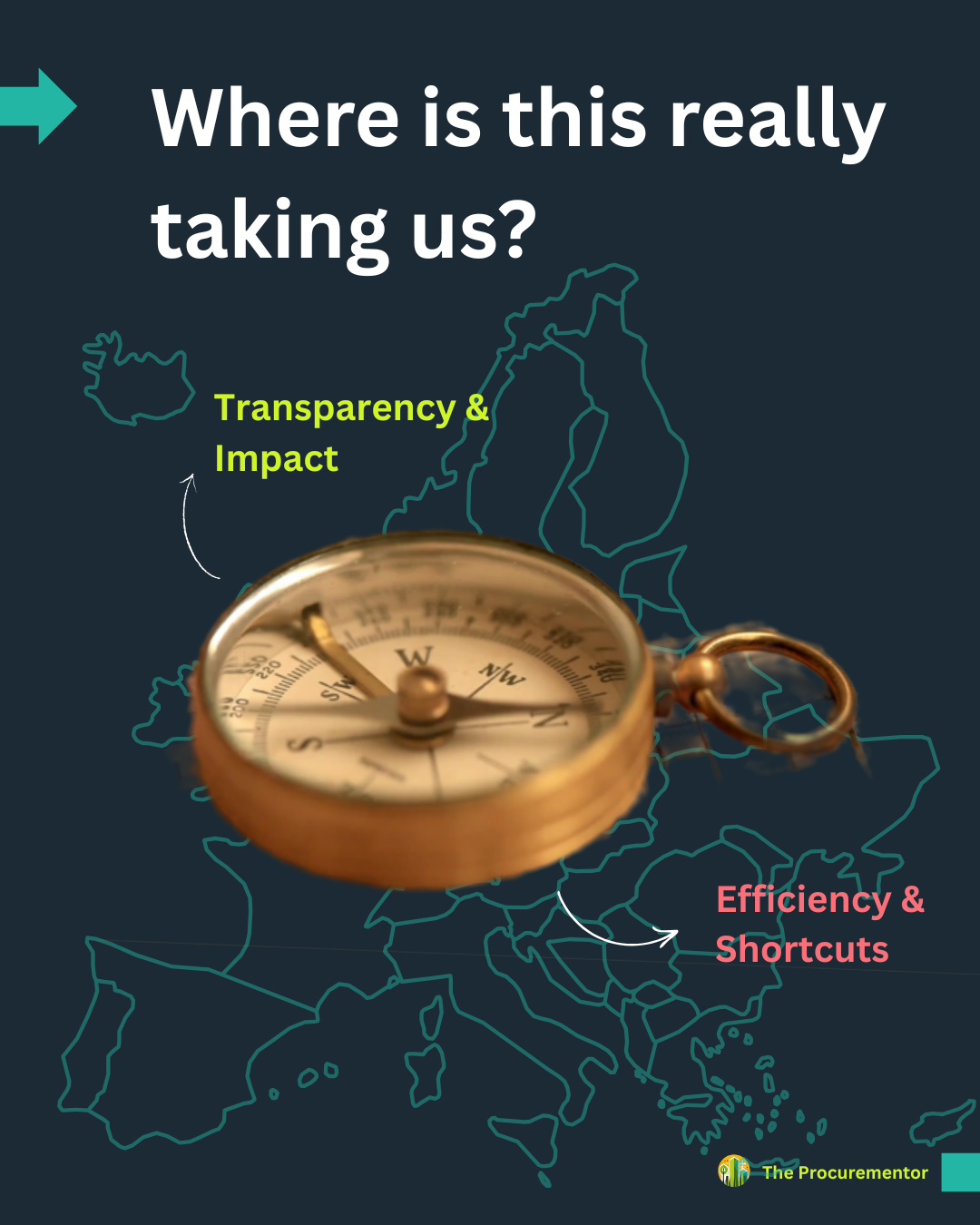
    On April 14, 2025, the Council of the European Union gave its final approval to the “Stop-the-Clock” mechanism, effectively postponing the implementation of the Corporate Sustainability Reporting Directive (CSRD) and the Corporate Sustainability Due Diligence Directive (CSDDD).

    This decision aligns with France’s earlier calls for delay. It is part of the broader Business in Europe: Framework for Strategic Autonomy (BEFSA) strategy, which aims to boost EU competitiveness by reducing administrative burdens on businesses.

    While the intention is to enhance competitiveness, this move sends a concerning signal across Europe. It’s not merely about postponing reports; it’s about delaying the transformation of how we conduct business in Europe.

    The CSRD and CSDDD are more than just reporting obligations. They are about shaping the future of Europe by:

    • Creating markets accessible only to responsible players who prioritise sustainability.
    • Fostering innovation and promoting a circular economy, driving Europe towards a regenerative future.
    • Ensuring Europe’s autonomy in technology, manufacturing, and energy, reducing reliance on external powers.

    This is about defining Europe’s role in the 21st century. Sustainability isn’t just another policy; it’s an existential necessity. Europe can either lead in building a resilient, future-proof economy or risk becoming irrelevant in a rapidly changing world.

    Why This Matters More Than Ever

    1. Economic Sovereignty: Europe’s reliance on external markets for energy, technology, and manufacturing makes it vulnerable. By building self-sustaining ecosystems, Europe can reduce dependence and increase resilience.
    2. Competitive Advantage: In a world where consumers demand transparency and sustainability, Europe has a chance to lead by setting global standards for responsible business practices.
    3. A Just Transition: The CSRD and CSDDD are designed to protect human rights, ensure fair labor practices, and promote environmental stewardship. Delaying them has now become official policy — but that doesn’t make it the right direction.

    Europe’s Existential Choice

    This isn’t just about regulatory compliance; it’s about writing Europe’s history. We have a choice:

    🌱 Embrace sustainability as a driving force for economic growth, social justice, and environmental stewardship, or

    🍂 Delay and dilute our commitments, risking the opportunity to shape the global narrative on sustainability.

    What Can We Do?

    This isn’t just a policy debate—it’s about the future of Europe. Even with the delay confirmed:

    • We must keep pressure and expectations high, so that when these laws return, they come back stronger..
    • Engage with policymakers, industry leaders, and civil society to build a united front for sustainability.
    • Demand transparency and accountability in the decision-making process.

    Europe didn’t cancel its sustainability commitments — it just bought itself time. What we do with that time is up to us.

    💬 Are we risking Europe’s future by delaying these crucial regulations? Let’s discuss in the comments.

  • Is the Corporate Sustainability Reporting Directive Signaling the End of Greenwashing in Europe?

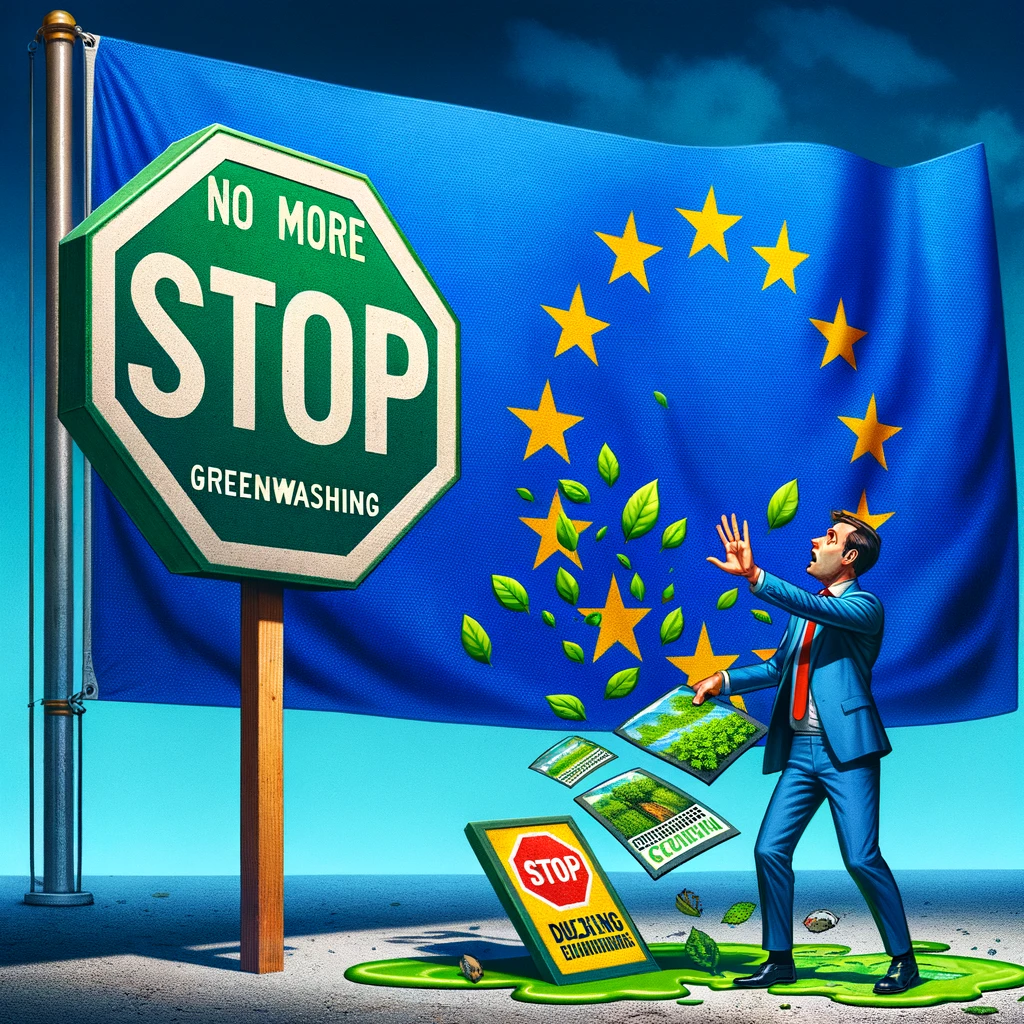
    Is the Corporate Sustainability Reporting Directive Signaling the End of Greenwashing in Europe?

    In April 2021, the European Parliament introduced a new regulation called Corporate Sustainability Reporting Directive. This directive will require most of the biggest 50,000 companies in Europe to analyze and disclose their sustainability impact as part of their annual disclosure, starting from January 2025 and covering the fiscal year 2024. In addition to the extended scope of the CSRD, which goes beyond just carbon footprint calculation and includes social and ethics, maybe the biggest change is that this reporting now needs to be done in a standardized and comparable way across Europe meaning that companies now operate under the same set of hypothesis when it comes to developing their sustainability plan. This represents an important step toward making businesses understand their impact, but also in making sure their claims in terms of sustainability are better monitored.

    Who is concerned by the CSRD obligation?

    Reporting requirement: the EU’s ambition

    The Corporate Sustainability Reporting Directive (CSRD) ambition is to cover the largest part of the businesses in Europe, and its scope is going to increase over time, until 2028 when it will apply to any companies satisfying quite low criteria: being a listed company in EU, or being an EU non-listed company with over 40M€ in turnover, any outside company that hires more than 500 people or 150M€ in turnover. There are finer details for each of these rules, but they do represent a big change as today, companies with 40M€ turnover have close to no obligations in regards to sustainability, and the scale of the obligation will require profound changes and a lot of education.

    Large listed undertakings

    These include any companies listed on an EU-regulated market exchange—except for ‘micro undertakings’ that fail to meet two of the following three criteria on consecutive balance sheet dates:

    • at least EUR 350,000 (450,000$) in total assets.
    • at least EUR 700,000 (850,000$) in net turnover (revenue).
    • at least 10 employees (average) throughout the year.

    EU-based large undertakings, listed or not

    These include any listed or non-listed companies that meet two of the following three criteria on any two consecutive balance sheet dates:

    • at least EUR 20 (25$) million in total assets.
    • at least EUR 40 (50$) million in net turnover.
    • at least 250 employees (average) during the year.

    ‘Third-country’ undertakings

    These include non EU parent companies of EU subsidiaries, with annual EU revenues of at least EUR 150 million in the most recent two years, and also own:

    • a large EU-based undertaking, or
    • an EU-based subsidiary with securities listed on an EU-regulated market exchange, or
    • an EU branch office with at least EUR 40 million in net turnover.

    Thus, the CSRD casts a wide net to ensure that a significant number of companies, across different sectors and sizes, are making sustainability central to their business practices.

    The phasing of the CSRD reporting obligation

    A modest start for 2025

    While the EU’s ambition is to cover the majority of businesses by 2028, the approach is going to be progressive and only the largest companies will have to report on CSRD in the first year. Indeed, only companies that already have to comply with NFRD (Non-Financial Reporting Disclosure) will have to start reporting on CSRD, meaning that this is “only” a change in improved methodology and format for these companies. This represents about 11,000 companies and leaves a substantial segment of the market without the same level of scrutiny and accountability when it comes to sustainability.

    The EU plan to extend the CSRD reporting obligation

    The phasing of the CSRD obligation will be made progressively until 2028 when the full criteria listed above will be enforced. By 2026, the criteria are already so much lowered that it starts to be really significant, though again it only applies to listed companies! Overall, it should cover about 50,000 companies, which is only 0,2% of the 23M businesses in Europe that will have to report on CSRD. The obligation is leaving the vast majority of smaller businesses outside of its scope, surely, in an attempt to not make business impossible (or at least too difficult) to start.
    While there is no clear figure of how much the EU GDP this will cover, it should be a substantial proportion, as taking the example of France, only the CAC40 (top 40 French companies) represents already 51% of the French GDP. While conscious that this % cannot be used for all EU, it can give a positive outlook.

    Starting in financial year 2024 (and reporting in 2025): Compliance is mandated for organizations (or ‘entities’) already mandated to comply with the NFRD. This includes all organizations listed in an EU-regulated market with 500 or more employees.

    Starting in financial year 2025 (reporting in 2026): Compliance is mandated for large listed undertakings (see above) not already mandated to comply with the NFRD.

    Starting in financial year 2026 (reporting in 2027): Compliance is mandated for small and medium-sized undertakings (also called small and medium-sized entities, or SMEs)—companies listed on an EU-regulated market that meet at least two or three of the following criteria:

    • at least EUR 4 (5*) million in total assets.
    • at least EUR 8 (10*) million in net turnover.
    • at least 50 employees average throughout the year.

    Starting in the financial year 2028 (reporting 2029): Compliance is mandated for third-country undertakings.

    Corporate Sustainability reporting expectations :

    Deliverables

    The main deliverable is a comprehensive annual sustainability report. This report should detail the company’s environmental and social impacts, sustainability policies, goals, and the progress made towards achieving these goals. The report should also include proposals for mitigating any significant negative impacts and align with the obligation to reach carbon neutrality by 2050.

    The Corporate Sustainability Reporting Directive (CSRD) covers a wide array of sustainability impacts, going beyond just carbon emissions. Companies will need to provide information on their environmental, social, employee matters, respect for human rights, anti-corruption and bribery issues. This includes, but is not limited to, greenhouse gas emissions, water and energy use, and the impact on biodiversity. The CSRD aims to provide a comprehensive view of a company’s sustainability performance and assess its double-materiality (an important concept that recognizes the impact materiality of sustainability topics at the same level as the financial ones that have been the core of annual reports for decades now).

    This report needs to be clear, concise, and accessible to stakeholders and must adhere to the standardized reporting format to ensure comparability across different companies and sectors. This will allow the public, investors, and other stakeholders to assess and compare the sustainability performance of different companies.

    The European Commission is expected to deliver the first draft of the template for Corporate Sustainability Reporting (CSR) submissions by the end of 2022, but as far as I know, this was not yet done. The proposed approach is to base the reporting on 12 European Sustainability Reporting Standards (ESRS) , which detail disclosures and metrics across sustainability matters in four (4) categories:

    • Cross-cutting: General principles and general disclosures.
       
    • Environmental: Climate change, pollution, water and marine resources, biodiversity and ecosystems, resource use, and circular economy.
       
    • Social: Own workforce, workers in the value chain, affected communities, consumers and end-users.
       
    • Governance: Business conduct.

    Cross-cutting reporting is required of all organizations governed by the CSRD, while environmental, social and governance reporting is mandatory for those organizations that consider them material.

    Penalties for Non-Compliance

    Failure to comply with the Corporate Sustainability Reporting Directive (CSRD) can result in significant penalties. While the exact penalties can vary by country, they may include financial fines, reputational damage, and increased scrutiny from regulators.

    In addition to financial penalties, companies that fail to comply may also face legal consequences. These can range from lawsuits by shareholders, who may argue that the company’s lack of transparency constitutes a breach of fiduciary duty, to regulatory actions by government agencies.

    Furthermore, non-compliance can lead to reputational damage. In an era where consumers and investors are becoming increasingly conscious of the environmental and social impacts of businesses, companies that fail to disclose their sustainability impact may find themselves at a competitive disadvantage.

    Summary and Conclusion

    Pros

    • The Corporate Sustainability Reporting Directive (CSRD) promotes transparency among large companies in Europe.
    • It could lead to more sustainable business practices as companies analyze and disclose their environmental impact.
    • The directive will provide a standardized way of reporting across Europe, making comparisons and analyses easier.
    • It could stimulate competition among companies to be more sustainable.
    • The CSRD could potentially increase trust among consumers and stakeholders due to increased transparency.

    Cons

    • Compliance with the CSRD could impose additional administrative and financial burdens on companies.
    • Smaller companies or those just outside the top 50,000 may not be subjected to the same scrutiny, potentially creating an uneven playing field.
    • The standardized reporting may not accurately reflect the unique sustainability challenges and efforts of each company.
    • The effectiveness of the CSRD in promoting real change versus just “greenwashing” or superficial sustainability efforts is not guaranteed.
    • Companies may face reputational risks if their sustainability reports reveal negative impacts.

    In conclusion, the introduction of the Corporate Sustainability Reporting Directive (CSRD) by the European Parliament is indeed a significant first step towards making sustainability central to business practices. While it does impose new responsibilities and obligations on companies, it also provides an opportunity for businesses to become leaders in sustainability. Yes, the effort required for compliance is substantial. Companies will need to assess their environmental and social impacts, develop comprehensive sustainability policies, and consistently monitor their progress. However, this effort is not without its rewards. By driving transparency and encouraging sustainable practices, the CSRD promotes a level playing field where companies are rewarded for their commitment to sustainability. It’s a challenging yet crucial path forward, and the benefits far outweigh the costs. In the long run, businesses, stakeholders, and the environment stand to gain from this directive.

    We will cover each component of the reporting in more detail so stay tuned for more information on the topic!