
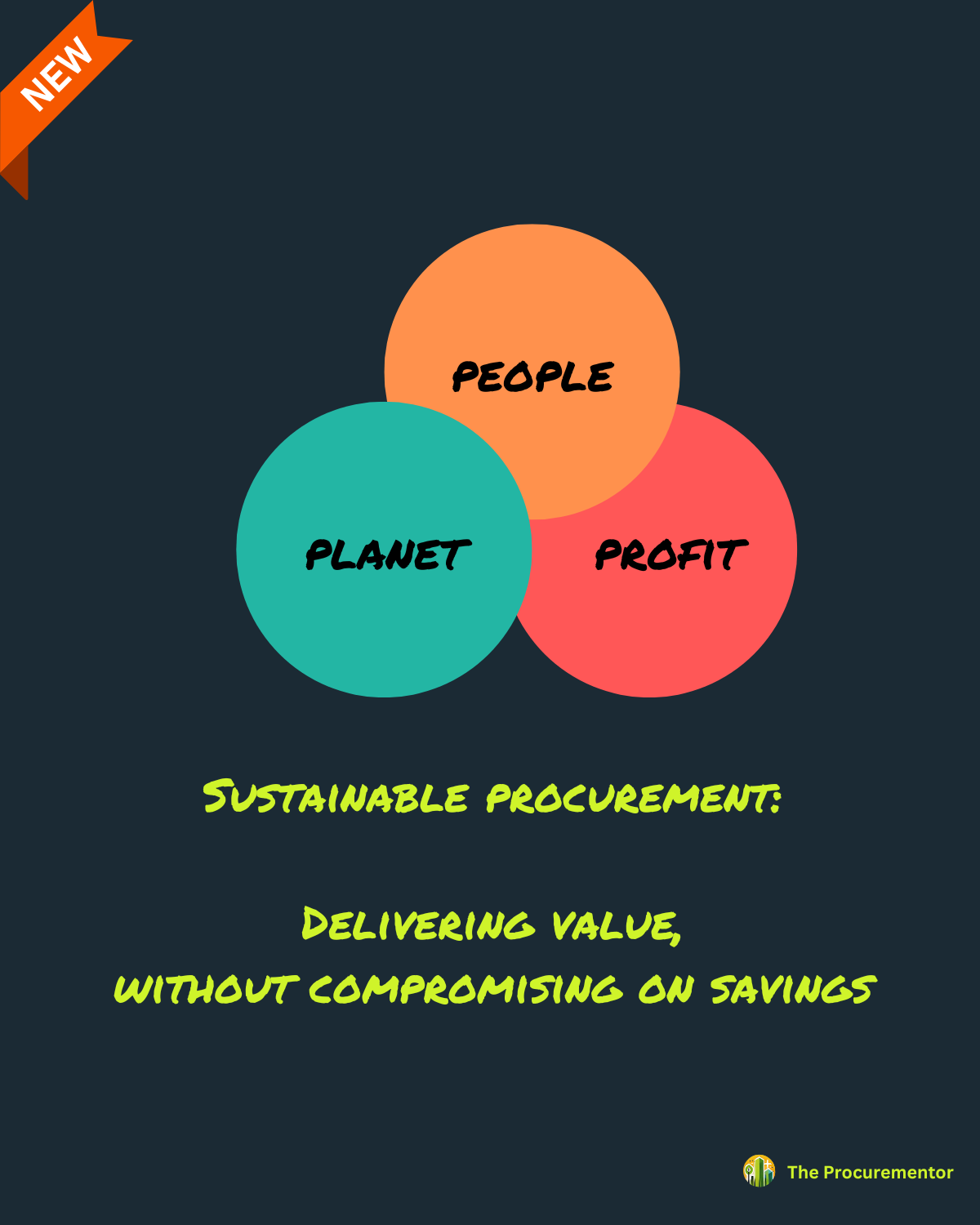
Sustainable procurement is getting noticed but is there still a stigma associated with it? Sustainable procurement is sometimes associated, like sustainable products, with higher costs, questionable quality and increased complexity.
Some believe that sustainable procurement translates to higher costs as it focuses on other things. The reality is that sustainability and profitability are not mutually exclusive. In fact, sustainable procurement can drive significantly higher performance, cost savings and create value across the supply chain—especially when organizations take the lead in implementing these initiatives themselves.
This article will explore how sustainable procurement can deliver cost savings, reduce waste, and improve long-term resilience, all while contributing to environmental and social objectives.
What is Sustainable Procurement?
Sustainable procurement, as defined by the UN is a process by which public authorities or private corporations seek to achieve the appropriate balance between financial, environmental and social considerations when procuring goods, services or works at all stages of the value-transformation cycle, while considering their costs through the entire life cycle. Such considerations pertain, for instance, to the respect of core labour and safety standards in the production process, and the energy efficiency performance and innovative characteristics of the purchased products.
Sustainable procurement looks at creating value across all dimensions : People, Planet and Profits in what’s called the triple bottom line.
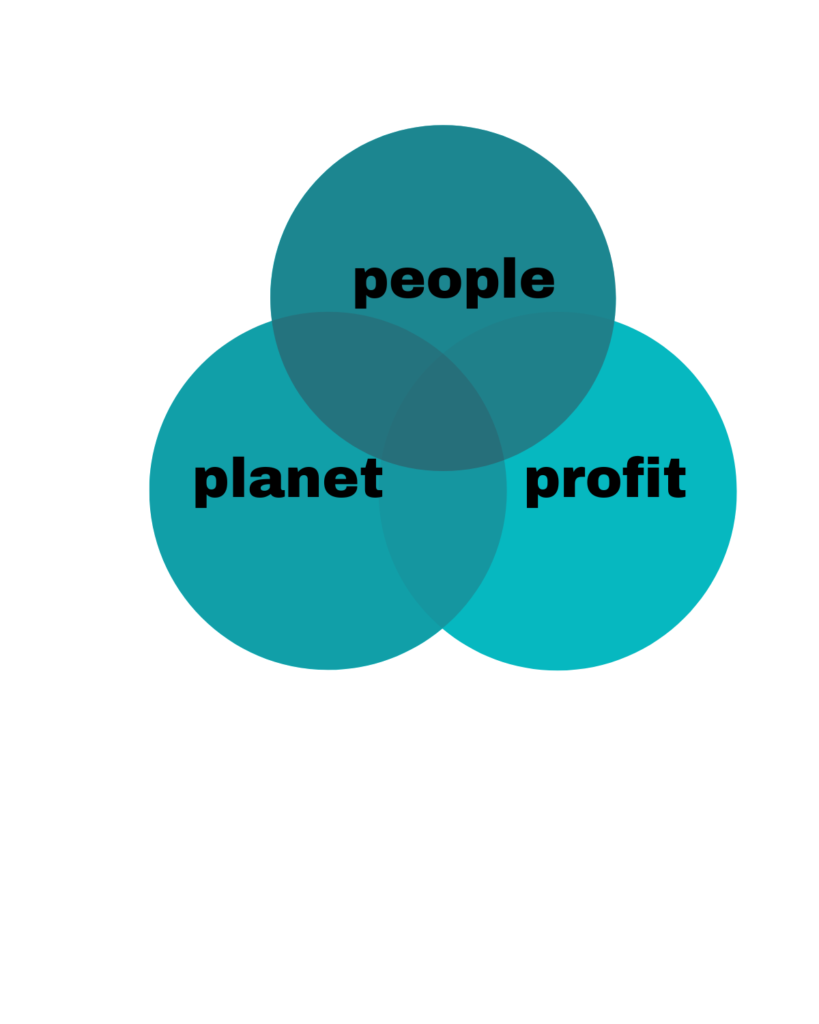
And sustainability is only achieved by companies when all three dimensions are met. If sustainable procurement does not meet the profit part of Sustainability, it is called bearable but it is not sustainability.
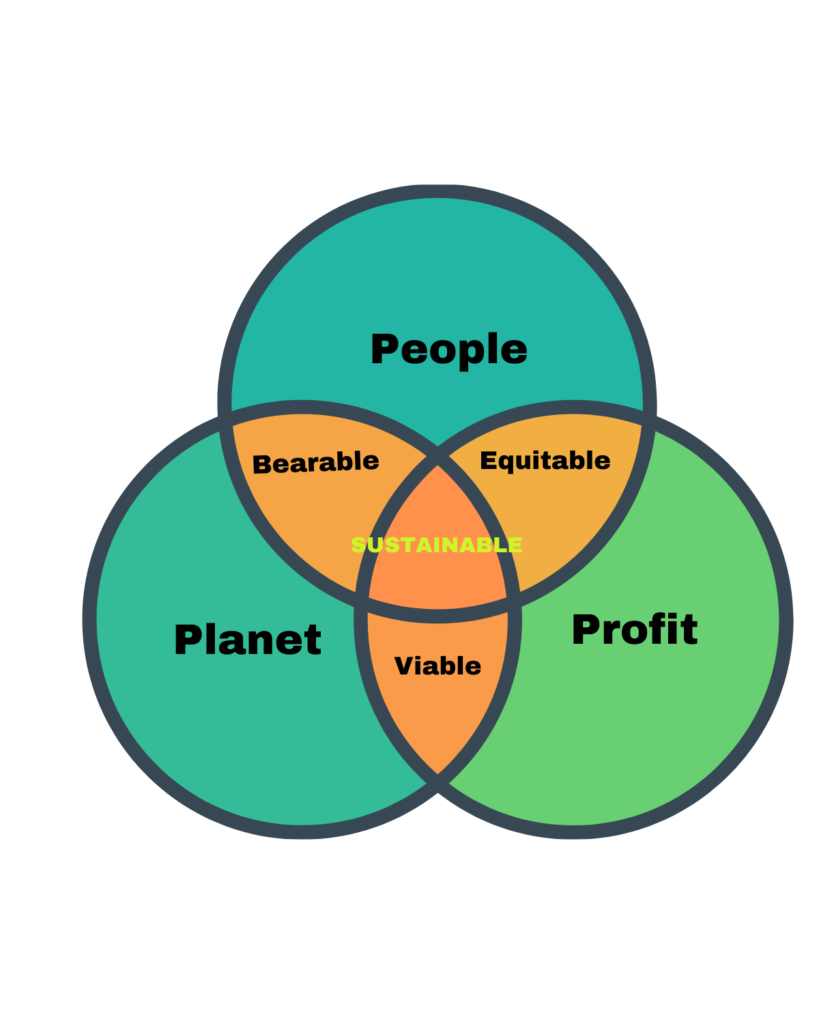
The goal of sustainable procurement teams :
Sourcing events made by sustainable procurement teams aren’t calling for higher prices. Instead, sustainable procurement is about :
- Decreasing total costs for their business, looking at the long-term total financial value, and reducing the total cost of ownership over the full lifecycle of the products or services.
- Contributing to aligning their company to the changing business environment: reducing supply chain risks, preventing PR backlash, aligning and preparing for regulations, and securing investors.
This extra dimension makes procurement even more strategic for the company’s success.
Sustainable procurement does not lead to higher costs:
Let’s look at the first aspect first and what levers does sustainable procurement have to reduce costs, while contributing to the planet and people.
Key Drivers for Cost Savings in Sustainable Procurement
The key change, evolution, of sustainable procurement versus traditional procurement is to look at the impact on the three P AND the lifecycle
1. Life Cycle Costing
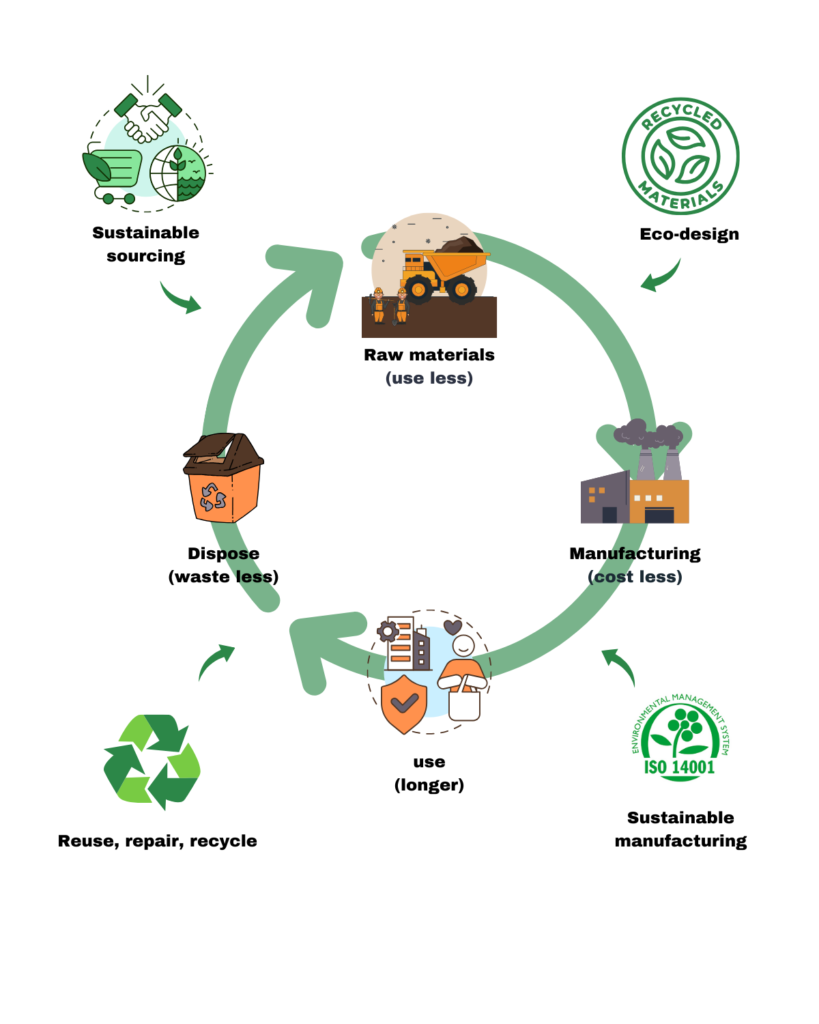
One of the key tool of procurement is the Total cost of ownership, that will look at the wider picture of the product lifecycle analysis (LCA): raw material extraction, manufacturing, product use, disposal and include extra economic elements like carbon emissions, social impacts etc. Once the wider picture is defined, Procurement can help the business to optimise each aspects : How to decrease the cost of raw materials ? Use less materials and cheaper, more recyclable materials. How to reduce manufacturing costs ? Use less energy or chemical intensive processes, relocate production, reduce over-production or bad-quality wastes… etc. The potential for performance is huge.
- Definition: A method that evaluates the total cost of ownership over the lifecycle, from acquisition through operation and maintenance to end-of-life disposal. This approach identifies hidden costs in maintenance, energy usage, and disposal.
- Example: Patagonia uses recycled materials that initially cost more but deliver longer-term savings due to lower material acquisition costs over time and higher customer loyalty, improving the overall lifecycle cost.
- But it can be much simpler: A local business can use durable, long-lasting office supplies (e.g., refillable ink cartridges or energy-efficient appliances) to reduce replacement and maintenance costs is already contributing a little !
2. Resource Efficiency
Resource efficiency is another key levers of sustainable procurement, because the most sustainable and profitable thing you can do is to buy, use less (avoidance). The second best thing is to replace material that are not renewable or harmful but materials that are more environmentally friendly (substitution).
- Definition: Optimizing the use of raw materials, energy, and water to minimize waste while maximizing output. This includes reducing excess resources used in production and procurement processes.
- Example: IKEA has successfully reduced costs by designing eco-friendly packaging. By optimizing packaging to reduce material usage, they can ship more products in fewer trips, reducing both resource consumption and logistics costs.
- But it can be much simpler: A small company can implement resource efficiency by adopting bulk purchasing of materials that reduce packaging waste or optimizing energy use in the office (e.g., turning off unnecessary lights and equipment).
3. Circular Economy
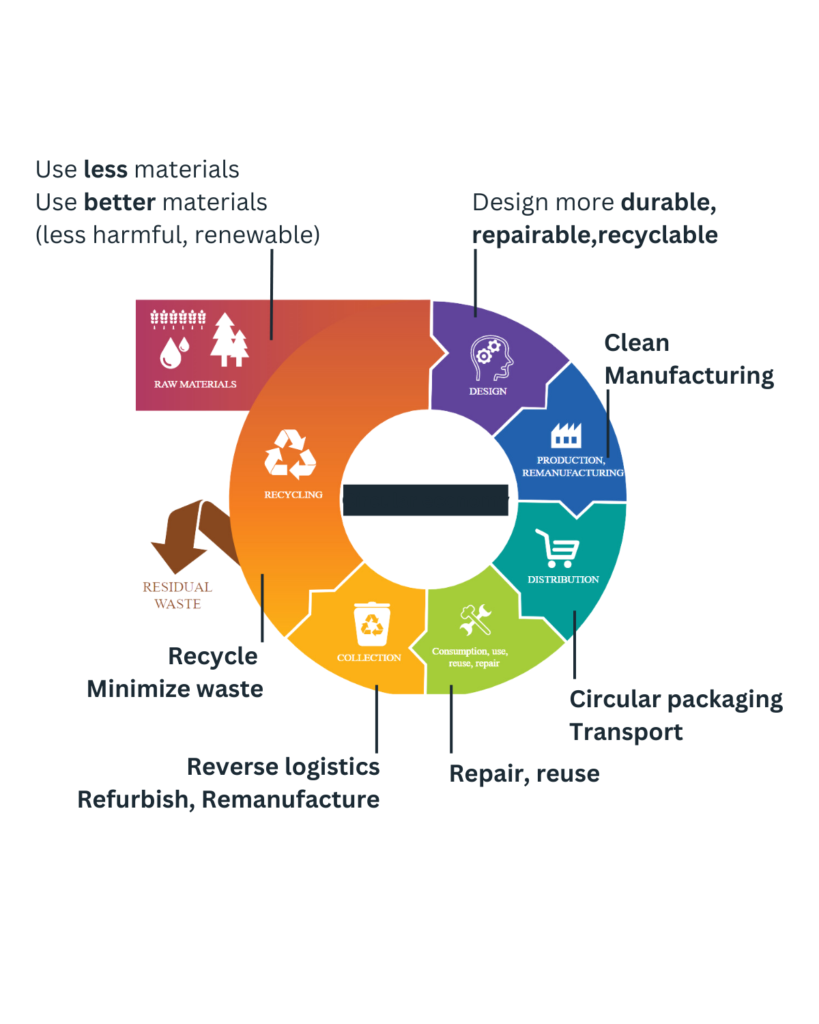
Sustainable procurement can also look into the circular economy when purchasing new goods or benchmarking existing categories. Once LCAs have been made, circular economies opportunities can emerge to close the loop. Closing the loop brings a wealth of benefits : less need for raw, virgin material ending up costing less, increase customer loyalty through product as a service etc…
- Definition: A production model that emphasizes reusing, repairing, and recycling products and materials to minimize waste and extend product lifecycles. It contrasts with the traditional “take-make-dispose” linear model.
- Example: General Motors saves millions by reusing scrap materials in their production processes, reducing the need for new raw materials.
- But it can be much simpler: : A local business can implement office supply reuse programs, such as recycling paper or repurposing old equipment, to reduce waste disposal and new material costs.
4. Waste Reduction
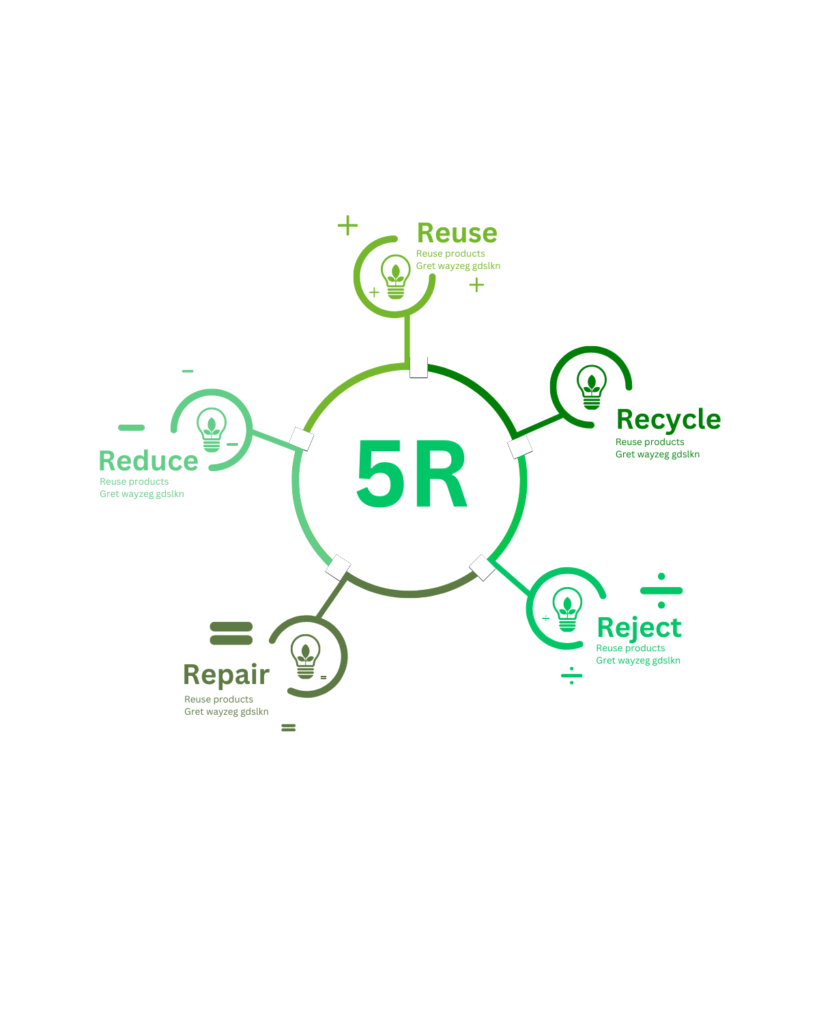
Waste is always paid one way or another: whether it is indirectly in the form of lost raw materials, products or time, or directly as a cost for waste management. So it makes financial and sustainable sens to minimise them. Here, procurement can apply the 5R framework from Waste management to handle this topic.
- Definition: Identifying opportunities to reduce or eliminate waste in procurement and production processes. This can involve reducing excess inventory, cutting down on packaging waste, or implementing zero-waste initiatives.
- Example: Unilever achieved millions in savings through zero-waste procurement strategies by cutting down on packaging waste and increasing the use of reusable materials.
- But it can be much simpler: A small company can implement recycling programs or encourage employees to bring reusable water bottles to reduce plastic waste.
5. Energy Savings
- Definition: Sourcing energy-efficient products and implementing renewable energy sources in the supply chain to reduce energy consumption and utility costs.
- Example (Business Outcome): Walmart invested heavily in energy-efficient lighting and renewable energy sources, saving millions in operational costs while reducing their carbon footprint.
- But it can be much simpler: A small business can install LED lighting and encourage energy-saving practices such as turning off lights and equipment when not in use.
4. Supplier Collaboration
- Definition: Working closely with suppliers to innovate and develop more sustainable products or processes, resulting in shared cost savings. This can include co-creating new sustainable materials or redesigning packaging to reduce waste.
- Example: Kingfisher PLC partnered with suppliers to innovate and reduce the environmental impact of its products, leading to lower raw material costs and improved product sustainability.
- But it can be much simpler: A small company can collaborate with its local suppliers to switch to eco-friendly packaging or reduce transportation costs by sourcing more locally-produced goods.
6. Digital Procurement Tools
- Definition: Utilizing AI, data analytics, and blockchain technology to optimize procurement, improve supply chain visibility, and reduce inefficiencies, ultimately cutting costs.
- Example: Siemens uses AI-driven procurement tools to analyze supplier data, identify cost-saving opportunities, and optimize sustainable sourcing decisions.
- But it can be much simpler: Even without advanced AI, small companies can adopt basic procurement software or cloud-based platforms to better track supplier performance and reduce procurement lead times.
7. Risk Mitigation
- Definition: Sustainable procurement helps reduce the risks of supply chain disruptions, non-compliance with regulations, and reputational damage due to unethical practices. This reduction of risk results in cost savings from avoided disruptions and fines.
- Example : Apple mitigates supply chain risks by carefully selecting suppliers that meet strict environmental and social criteria, reducing the risk of disruptions and non-compliance penalties.
- But it can be much simpler: A small company can vet suppliers for compliance with local regulations and ethical labor standards to avoid fines and ensure continuous operations.
8. Economies of Scale
- Definition: Sustainable procurement allows companies to negotiate long-term contracts with sustainable suppliers, gaining better pricing through economies of scale as more sustainable materials and practices are adopted.
- Example: Nestlé works with its suppliers to reduce the cost of sustainably sourced materials, creating long-term partnerships that benefit both parties economically.
- But it can be much simpler: A small business can establish long-term agreements with local suppliers for sustainable products, gaining better pricing and ensuring consistent supply.
Summary
| Lever | Definition | Leading example | Simple example |
|---|---|---|---|
| Resource Efficiency | Optimizing the use of resources like raw materials, energy, and water to reduce waste and costs. | IKEA reduces packaging materials, saving on logistics costs. | Bulk purchasing materials or turning off office equipment when not in use. |
| Life Cycle Costing | Evaluating the total cost of ownership from acquisition to end-of-life disposal. | Patagonia uses recycled materials for long-term cost savings. | Use durable office supplies like refillable ink cartridges. |
| Waste Reduction | Reducing or eliminating waste in production and procurement processes. | Unilever cuts packaging waste through zero-waste initiatives. | Recycling programs for office supplies and encouraging reusable products. |
| Energy Savings | Using energy-efficient products and renewable energy to cut utility costs. | Walmart reduces energy costs through energy-efficient lighting. | Installing LED lighting and promoting energy-saving practices. |
| Supplier Collaboration | Working closely with suppliers to innovate sustainable products and reduce costs. | Kingfisher reduced raw material costs by partnering with suppliers for sustainable innovation. | Collaborating with local suppliers to reduce packaging waste. |
| Digital Procurement Tools | Using AI and data analytics to optimize procurement and improve supply chain visibility. | Siemens uses AI tools to optimize sustainable sourcing. | Adopting basic procurement software to track performance. |
| Digital Procurement Tools | Using AI and data analytics to optimize procurement and improve supply chain visibility. | Siemens uses AI tools to optimize sustainable sourcing. | Adopting basic procurement software to track performance. |
| Digital Procurement Tools | Using AI and data analytics to optimize procurement and improve supply chain visibility. | Siemens uses AI tools to optimize sustainable sourcing. | Adopting basic procurement software to track performance. |
| Risk Mitigation | Reducing risks from non-compliance and supply chain disruptions. | Apple selects suppliers that meet strict social and environmental criteria to reduce disruptions. | Vet suppliers for compliance with local regulations to avoid fines. |
| Economies of Scale | Negotiating long-term contracts with sustainable suppliers for better pricing. | Nestlé partners with suppliers for lower-cost, sustainably sourced materials. | Establishing long-term agreements with local suppliers. |
Beyond Cost: How Sustainable Procurement Helps Companies Thrive
Sustainable procurement not only reduces costs but also improves a company’s overall efficiency and resilience, positioning it to thrive in an increasingly competitive and regulated landscape.
Let’s explore some of the ways sustainable procurement strengthens a company beyond immediate cost benefits.
1. Reducing Supply Chain Risks
One of the critical aspects of sustainable procurement is its ability to reduce risks within the supply chain. By fostering closer relationships with suppliers through sustainable contracts and digital monitoring, companies can ensure compliance with environmental and social standards, reducing the chances of supply disruptions, unethical practices, or regulatory breaches.
In addition to stricter, safer execution, sustainable procurement can help reduce risks by Re-shoring Activities.
Bringing production closer to home reduces the risks of global supply chain disruptions, such as those witnessed during the COVID-19 pandemic. This strategy shortens the supply chain, reducing transportation emissions and dependency on distant suppliers, while mitigating geopolitical and economic risks.
2. Preventing PR Backlash
Sustainable procurement can help avoid costly public relations disasters. By implementing supplier audits and ensuring ethical practices, companies are less likely to be caught in scandals related to labor conditions, environmental negligence, or unsustainable practices.
The Volkswagen diesel scandal (Dieselgate) is a well-known example of the repercussions of unsustainable practices. In 2015, Volkswagen admitted to installing software in diesel engines to cheat emissions tests. This resulted in significant fines, reputational damage, and a decline in customer trust. Avoiding such scandals through sustainable practices can protect businesses from similar backlashes.
And to the opposite even, promoting circular economy and sustainability are excellent driver for growth, customer engagement and loyalty. And procurement has an increasingly important role to play.
3. Aligning with and Preparing for Regulations
The regulatory landscape around sustainability is changing rapidly. Sustainable procurement helps companies stay ahead of these changes, ensuring compliance with current and future regulations. Companies that take a proactive approach to aligning with sustainability regulations are better positioned to avoid fines, litigation, and other legal consequences.
Some Key EU Regulations:
- Corporate Sustainability Reporting Directive (CSRD): Requires large companies to disclose information on how they operate and manage social and environmental challenges, and makes carbon reporting mandatory !
- Eco-design Sustainability Product Regulation (ESPR) : Sets strict requirements for product sustainability and circularity, requiring companies to incorporate eco-design reauirements within their products, publish digital passport products and obligations related to unsold goods destruction.
- Carbon Border Adjustment Mechanism (CBAM): Puts a price on the carbon content of imports into the EU, ensuring that non-EU producers meet the same climate standards as those within the EU.
- Green claim verification, CSDDD etc..!
The regulation aspect becomes increasingly complex and demanding. Procurement teams must be equipped to address these regulations and ensure that their supply chains are compliant, driving forward sustainable strategies that align with these frameworks.
4. Securing Investments and Access to Financing
Despite some recent skepticism about ESG investments, sustainable companies remain highly attractive to investors. Financial institutions and investors are increasingly focusing on businesses that integrate sustainability into their core operations, as these companies are seen as less risky and more future-proof. There are even green activist investors that enter company’s capital only to force them into sustainability !
- Statistics: According to a 2023 report by Morningstar, sustainable funds attracted €120 billion in net new investments, demonstrating the ongoing demand for ESG-focused businesses.
- Benefit for Businesses: By integrating sustainable procurement practices, companies can attract more investment, secure financing from green funds, and appeal to impact-driven investors, ensuring better long-term financial health.
By integrating sustainable procurement, companies not only drive cost efficiencies but also improve resilience, mitigate risks, and enhance their attractiveness to investors. Sustainable procurement is not just about compliance or ticking boxes—it’s about creating a thriving, future-ready business that is aligned with both profit and purpose.
Conclusion
Sustainable procurement is not only about meeting environmental and social goals, but it also delivers significant business advantages. Far from being a cost burden, sustainable procurement offers tangible benefits such as cost reduction through resource efficiency, waste minimization, lifecycle costing, and strategic supplier collaboration. Additionally, it increases resilience by reducing supply chain risks, mitigating the potential for PR disasters, ensuring compliance with complex regulations, and making businesses more attractive to investors by aligning with ESG goals. So a Win-win-win.
Contact me if you want to discuss how I help your business achieve their goals !