Author: alex

  • How to be successful in your first Procurement category manager role?

    How to be successful in your first Procurement category manager role?

    The procurement category management role has become a staple of the procurement organizations around the world. Moving away from local and siloed procurement approach, organizations have set up these centralized teams that aim at optimizing the spend on strategic segments.

    As I started to work in such an organization which was setting up a category manager team across Europe, I found myself a little confused about my role: I was supporting buys in a category where budgets were defined by Finance, and buying decisions were made by the business partners so where exactly would I fit in this? One day, while pondering these thoughts, I discussed with a very senior (soon retired) procurement manager who said: “It should be very straightforward, think of your category as your own business, and look at each part of your process and optimize it. These words resonated a lot with me, and throughout the next couple of years, I tried to think of my category as a business in itself, where I had to remove frictions to make the “machine” more efficient and create more value for my customers.

    Understanding your environment

    As a category manager, or a procurement entrepreneur, you first need to understand your environment. That is you need to make sure you have clarity on :

    • Your customers: Who are your key customers (stakeholders), what are they looking for, and what is their vision and objectives. Take time to map out these people and understand their motivations, goals and aspirations otherwise, it may be very difficult for you to propose solutions that actually fit their needs.
    • The spend data: Any entrepreneur should have clarity on what it buys, how much it spends, where does it spends it, etc. Getting this data can be challenging in some organizations but even if not perfect, any category manager should have a big picture of this to start with.
    • Your suppliers: Understand who are the players in your market, who are the incumbents, and why they were selected. Meeting incumbents and other key competitors is one of the key activities any new category manager should undertake in the first weeks of their role. If you don’t yet know the account manager in charge of your account, find them through Linkedin or through the supplier website.
    • Your buying process: Understand each part of the P2P process, how efficient is it? How much time does it take your requestors to place an order? Are suppliers acknowledging the order fast enough? Are their invoices processed easily and correctly?

    Identify the opportunities

    Your role is going to be to create value for the business, at that stage, you understand your business stakeholders’ vision and objectives, where the spend goes, who are the key players and what they offer. With these pieces of information ask yourself what would help my customers the most ? From there, you can start making plans to create value in many ways :

    • Renegotiation: If your analysis suggests that the opportunities lay in old, historical or no longer relevant contracts, you can aim at renegotiating existing spend. Old contracts are not always the sure way to big savings, but it’s often a good start. Whether through tender or direct negotiation, the goal is to obtain better terms so that the business could either reduce the budget or get more for the same amount.
    • Process improvement: Savings from process improvements are my favorites, as they can come from anywhere in your P2P process. Where are the inefficiencies in your buying process? You will be amazed by just how many opportunities there are to simplify the ordering process or improve your suppliers’ invoicing flow, and this include making processes to save your stakeholder’s previous time !
    • Risk management: If your procurement function is new, there are likely opportunities in managing risks. Is your business too reliant on one supplier? Do your suppliers have enough capacity to deliver you on time? Do you have contracts in place to provision for any dispute?
    • Innovation: At other times, the opportunity can come from innovation that has not yet been adopted by the business but can have a tremendous impact on costs and the way you are doing things. Your discussions with incumbents and other suppliers’ account managers should give you good indications on this.

    Capture the value :

    Now that you have identified the opportunities, you will need to convince your stakeholders and sell them on the vision. To do this, the best practice is often to define a category strategy document it so that you have a clear plan for unlocking these opportunities over the next couple of years. It should outline the following :

    • Where you are now: This is basically the summary of the first section’s questions.
    • Where you want to be: Design the desired state including the operational model (who does what when and through what process or tools?) and benefits to achieving this result (savings but also value created, time saved etc…)
    • How you plan to go there: Establish planning with timelines, resources needed and mapping of all stakeholders (RACI).

    With this document validated by your stakeholders, you will have set the right foundations for your category and its execution will guarantee you have found your place within the organization and will deliver value for the business, beyond the simple cost reduction.

    Conclusion

    In conclusion, effective procurement category management is essential for organizations looking to optimize spend and create value in strategic segments. By understanding the environment, identifying opportunities, and capturing value through techniques such as renegotiation, process improvement, risk management, and innovation, category managers can drive significant benefits for their organizations. It’s crucial for category managers to view their categories as individual businesses and continuously seek ways to improve efficiency and deliver value to stakeholders. Through clear strategic planning and stakeholder engagement, category managers can unlock opportunities for cost savings, process optimization, and innovation, ultimately contributing to the overall success of the organization’s procurement function.

  • Embracing Business Sustainability: Understanding and Applying the Triple Bottom Line with Insights from “Cradle to Cradle”

    Embracing Business Sustainability: Understanding and Applying the Triple Bottom Line with Insights from “Cradle to Cradle”

    In the ever-evolving landscape of business, sustainability has shifted from a peripheral concern to a central strategy for long-term success. Integral to this shift is the concept of the Triple Bottom Line (TBL) – a framework that expands the traditional reporting framework to include social and environmental, alongside financial performance. This article aims to elucidate the TBL concept and illustrate its application using a compelling example from the textile industry, as highlighted in the influential book Cradle to Cradle” by William McDonough and Michael Braungart.

    Understanding the Triple Bottom Line


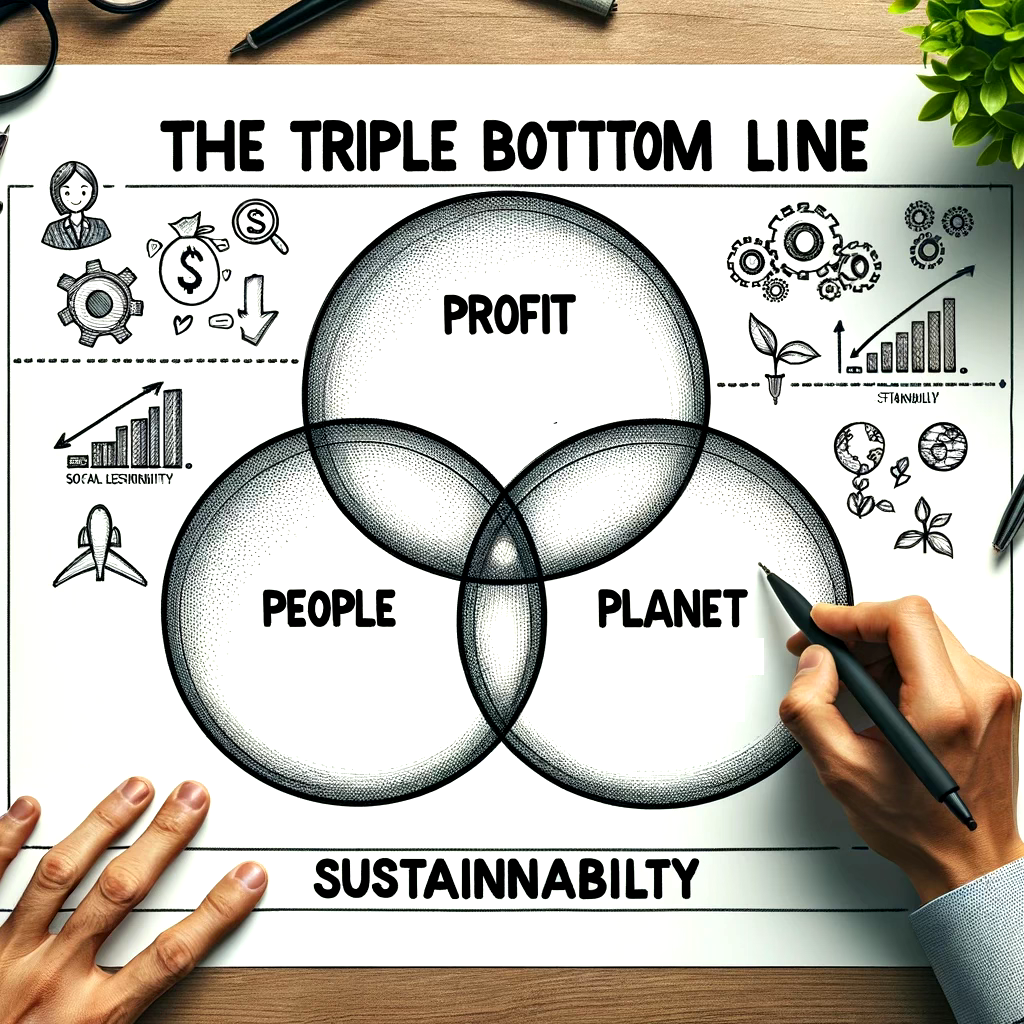
    The Triple Bottom Line, conceptualized by John Elkington in 1994, revolutionized how businesses measure success. Traditionally, the singular focus was on profit – the financial bottom line. However, TBL introduces two additional ‘bottom lines’: social (People) and environmental (Planet) performance.

    • Profit (Economic Sustainability): This dimension is about ensuring that a business is economically viable and profitable. But in the TBL framework, economic success goes beyond mere profit. It involves contributing to the economic health of the wider community, maintaining fair practices, and ensuring long-term financial stability.
    • People (Social Sustainability): This aspect focuses on the social implications of business operations. It encompasses labor practices, community engagement, and the overall impact on society. Businesses are expected to operate ethically, respect human rights, and contribute positively to the communities they affect.
    • Planet (Environmental Sustainability): This dimension involves the company’s environmental footprint. Sustainable practices, such as reducing waste, minimizing emissions, and using renewable resources, fall under this category. The goal is to minimize negative environmental impacts and contribute to the planet’s health.

    At the junction of these three areas, sustainability emerges as a holistic approach that balances profit with people and the planet. It’s a dynamic equilibrium where each aspect supports and reinforces the others, creating a model of business that can endure and prosper over the long term while contributing positively to the world.

    When the focus is only on two of the three components, the approach is not called sustainability but :

    • Bearable: When it intersects the environmental and social aspects of the TBL. Sustainability is considered bearable when it does not compromise the planet’s health or the well-being of the people living on it. In other words, it’s about ensuring that environmental practices are not only ecologically sound but also socially acceptable and beneficial. For example, a company might focus on reducing emissions (good for the environment) in a way that also improves community health (good for people).
    • Viable: When it intersects the economic and environmental pillars. A sustainable practice is viable when it is both environmentally friendly and economically feasible. This means finding solutions that not only reduce environmental impact but also make economic sense for the business. For instance, implementing energy-efficient technologies can reduce costs in the long run while also reducing the environmental footprint.
    • Equitable, when it intersects the social and economic aspects. A practice is equitable when it fairly distributes economic benefits without compromising social equity. It’s about ensuring that economic activities contribute to social welfare and that all members of society have fair access to these benefits. For example, a business practice is equitable when it provides fair wages and safe working conditions, contributing to the economic stability of workers and their communities.

    Sustainability is the intersection of the three pillars of the Triple Bottom Line (TBL) – economic viability, social responsibility, and environmental stewardship. Any approach that aims at less than that is therefore NOT sustainability. At its best, sustainability is a dynamic equilibrium where each aspect supports and reinforces the others, creating a model of business that can endure and prosper over the long term while contributing positively to the world.


    APPLYING THE TBL : The Textile Dye Example from “Cradle to Cradle”

    An excellent illustration of the TBL in action is found in “Cradle to Cradle,” specifically regarding the textile dyeing process. The traditional dyeing process in the textile industry is notorious for its environmental and social impacts. It often involves toxic chemicals that pollute water sources, harm aquatic life, and pose health risks to workers and nearby communities.

    The authors of “Cradle to Cradle,” however, present an innovative approach where they want to break from the linear model of Take, Make, Dispose for textiles. They describe a new dyeing technique that not only eliminates the use of harmful chemicals but also turns the whole process into a positive one, where the production of a sweater is not harming people or the planet and where you could even eat your sweater at the end of its lifecycle. This method uses safe, non-toxic dyes and a closed-loop system that recycles water and materials, significantly reducing environmental harm and many other benefits to all stakeholders.

    Applying TBL to the Textile Dye Example


    In this case, the TBL approach leads to a holistic transformation of the dyeing process, where the author tried to eliminate any chemical dye and ended up selected only a few organic and harmless products, with impressive results for each of the stakeholders :

    • Profit: Economically, the new dyeing method proves beneficial. It cuts costs on waste management and environmental compliance by an estimated 50%, while also reducing raw material usage. This efficiency leads to an approximate 20% reduction in overall production costs. Furthermore, market research indicates a growing consumer preference for sustainably produced textiles, opening new market opportunities.
    • People: The health and safety impact on workers is markedly improved, with a reduction in toxic exposure leading to a reported 40% decrease in health-related complaints and absenteeism. It even led to high employee retention as the work environment no longer felt like a lab, but a safe place to work in. In local communities, improved water quality has led to a 30% decrease in waterborne diseases, highlighting the method’s profound social impact.
    • Planet: Environmentally, the closed-loop water system and reduced chemical usage have led to a 70% decrease in water pollution and a 60% reduction in carbon emissions. These improvements showcase the method’s alignment with environmental sustainability goals.


    The textile dye example is a microcosm of the broader implications of the TBL. It demonstrates how innovative thinking and sustainability can create a harmonious balance between profitability, social responsibility, and environmental stewardship. Businesses adopting the TBL framework can lead to transformative changes, paving the way for a more sustainable future.

    Conclusion


    The Triple Bottom Line is more than a concept; it’s a roadmap for businesses to contribute positively to the world. By balancing economic viability with social and environmental responsibilities, companies can achieve long-term sustainability and set new standards in their industries. The textile dye example from “Cradle to Cradle” is a testament to the power of sustainable innovation, embodying the essence of TBL. As businesses continue to navigate the complexities of the 21st century, the TBL offers a guiding light towards a more sustainable and equitable world for all.

    In the next articles, we will deep-dive into the circular economy, which is really at the heart of this foundational book “cradle to cradle”

  • Is the Corporate Sustainability Reporting Directive Signaling the End of Greenwashing in Europe?

    Is the Corporate Sustainability Reporting Directive Signaling the End of Greenwashing in Europe?

    In April 2021, the European Parliament introduced a new regulation called Corporate Sustainability Reporting Directive. This directive will require most of the biggest 50,000 companies in Europe to analyze and disclose their sustainability impact as part of their annual disclosure, starting from January 2025 and covering the fiscal year 2024. In addition to the extended scope of the CSRD, which goes beyond just carbon footprint calculation and includes social and ethics, maybe the biggest change is that this reporting now needs to be done in a standardized and comparable way across Europe meaning that companies now operate under the same set of hypothesis when it comes to developing their sustainability plan. This represents an important step toward making businesses understand their impact, but also in making sure their claims in terms of sustainability are better monitored.

    Who is concerned by the CSRD obligation?

    Reporting requirement: the EU’s ambition

    The Corporate Sustainability Reporting Directive (CSRD) ambition is to cover the largest part of the businesses in Europe, and its scope is going to increase over time, until 2028 when it will apply to any companies satisfying quite low criteria: being a listed company in EU, or being an EU non-listed company with over 40M€ in turnover, any outside company that hires more than 500 people or 150M€ in turnover. There are finer details for each of these rules, but they do represent a big change as today, companies with 40M€ turnover have close to no obligations in regards to sustainability, and the scale of the obligation will require profound changes and a lot of education.

    Large listed undertakings

    These include any companies listed on an EU-regulated market exchange—except for ‘micro undertakings’ that fail to meet two of the following three criteria on consecutive balance sheet dates:

    • at least EUR 350,000 (450,000$) in total assets.
    • at least EUR 700,000 (850,000$) in net turnover (revenue).
    • at least 10 employees (average) throughout the year.

    EU-based large undertakings, listed or not

    These include any listed or non-listed companies that meet two of the following three criteria on any two consecutive balance sheet dates:

    • at least EUR 20 (25$) million in total assets.
    • at least EUR 40 (50$) million in net turnover.
    • at least 250 employees (average) during the year.

    ‘Third-country’ undertakings

    These include non EU parent companies of EU subsidiaries, with annual EU revenues of at least EUR 150 million in the most recent two years, and also own:

    • a large EU-based undertaking, or
    • an EU-based subsidiary with securities listed on an EU-regulated market exchange, or
    • an EU branch office with at least EUR 40 million in net turnover.

    Thus, the CSRD casts a wide net to ensure that a significant number of companies, across different sectors and sizes, are making sustainability central to their business practices.

    The phasing of the CSRD reporting obligation

    A modest start for 2025

    While the EU’s ambition is to cover the majority of businesses by 2028, the approach is going to be progressive and only the largest companies will have to report on CSRD in the first year. Indeed, only companies that already have to comply with NFRD (Non-Financial Reporting Disclosure) will have to start reporting on CSRD, meaning that this is “only” a change in improved methodology and format for these companies. This represents about 11,000 companies and leaves a substantial segment of the market without the same level of scrutiny and accountability when it comes to sustainability.

    The EU plan to extend the CSRD reporting obligation

    The phasing of the CSRD obligation will be made progressively until 2028 when the full criteria listed above will be enforced. By 2026, the criteria are already so much lowered that it starts to be really significant, though again it only applies to listed companies! Overall, it should cover about 50,000 companies, which is only 0,2% of the 23M businesses in Europe that will have to report on CSRD. The obligation is leaving the vast majority of smaller businesses outside of its scope, surely, in an attempt to not make business impossible (or at least too difficult) to start.
    While there is no clear figure of how much the EU GDP this will cover, it should be a substantial proportion, as taking the example of France, only the CAC40 (top 40 French companies) represents already 51% of the French GDP. While conscious that this % cannot be used for all EU, it can give a positive outlook.

    Starting in financial year 2024 (and reporting in 2025): Compliance is mandated for organizations (or ‘entities’) already mandated to comply with the NFRD. This includes all organizations listed in an EU-regulated market with 500 or more employees.

    Starting in financial year 2025 (reporting in 2026): Compliance is mandated for large listed undertakings (see above) not already mandated to comply with the NFRD.

    Starting in financial year 2026 (reporting in 2027): Compliance is mandated for small and medium-sized undertakings (also called small and medium-sized entities, or SMEs)—companies listed on an EU-regulated market that meet at least two or three of the following criteria:

    • at least EUR 4 (5*) million in total assets.
    • at least EUR 8 (10*) million in net turnover.
    • at least 50 employees average throughout the year.

    Starting in the financial year 2028 (reporting 2029): Compliance is mandated for third-country undertakings.

    Corporate Sustainability reporting expectations :

    Deliverables

    The main deliverable is a comprehensive annual sustainability report. This report should detail the company’s environmental and social impacts, sustainability policies, goals, and the progress made towards achieving these goals. The report should also include proposals for mitigating any significant negative impacts and align with the obligation to reach carbon neutrality by 2050.

    The Corporate Sustainability Reporting Directive (CSRD) covers a wide array of sustainability impacts, going beyond just carbon emissions. Companies will need to provide information on their environmental, social, employee matters, respect for human rights, anti-corruption and bribery issues. This includes, but is not limited to, greenhouse gas emissions, water and energy use, and the impact on biodiversity. The CSRD aims to provide a comprehensive view of a company’s sustainability performance and assess its double-materiality (an important concept that recognizes the impact materiality of sustainability topics at the same level as the financial ones that have been the core of annual reports for decades now).

    This report needs to be clear, concise, and accessible to stakeholders and must adhere to the standardized reporting format to ensure comparability across different companies and sectors. This will allow the public, investors, and other stakeholders to assess and compare the sustainability performance of different companies.

    The European Commission is expected to deliver the first draft of the template for Corporate Sustainability Reporting (CSR) submissions by the end of 2022, but as far as I know, this was not yet done. The proposed approach is to base the reporting on 12 European Sustainability Reporting Standards (ESRS) , which detail disclosures and metrics across sustainability matters in four (4) categories:

    • Cross-cutting: General principles and general disclosures.
       
    • Environmental: Climate change, pollution, water and marine resources, biodiversity and ecosystems, resource use, and circular economy.
       
    • Social: Own workforce, workers in the value chain, affected communities, consumers and end-users.
       
    • Governance: Business conduct.

    Cross-cutting reporting is required of all organizations governed by the CSRD, while environmental, social and governance reporting is mandatory for those organizations that consider them material.

    Penalties for Non-Compliance

    Failure to comply with the Corporate Sustainability Reporting Directive (CSRD) can result in significant penalties. While the exact penalties can vary by country, they may include financial fines, reputational damage, and increased scrutiny from regulators.

    In addition to financial penalties, companies that fail to comply may also face legal consequences. These can range from lawsuits by shareholders, who may argue that the company’s lack of transparency constitutes a breach of fiduciary duty, to regulatory actions by government agencies.

    Furthermore, non-compliance can lead to reputational damage. In an era where consumers and investors are becoming increasingly conscious of the environmental and social impacts of businesses, companies that fail to disclose their sustainability impact may find themselves at a competitive disadvantage.

    Summary and Conclusion

    Pros

    • The Corporate Sustainability Reporting Directive (CSRD) promotes transparency among large companies in Europe.
    • It could lead to more sustainable business practices as companies analyze and disclose their environmental impact.
    • The directive will provide a standardized way of reporting across Europe, making comparisons and analyses easier.
    • It could stimulate competition among companies to be more sustainable.
    • The CSRD could potentially increase trust among consumers and stakeholders due to increased transparency.

    Cons

    • Compliance with the CSRD could impose additional administrative and financial burdens on companies.
    • Smaller companies or those just outside the top 50,000 may not be subjected to the same scrutiny, potentially creating an uneven playing field.
    • The standardized reporting may not accurately reflect the unique sustainability challenges and efforts of each company.
    • The effectiveness of the CSRD in promoting real change versus just “greenwashing” or superficial sustainability efforts is not guaranteed.
    • Companies may face reputational risks if their sustainability reports reveal negative impacts.

    In conclusion, the introduction of the Corporate Sustainability Reporting Directive (CSRD) by the European Parliament is indeed a significant first step towards making sustainability central to business practices. While it does impose new responsibilities and obligations on companies, it also provides an opportunity for businesses to become leaders in sustainability. Yes, the effort required for compliance is substantial. Companies will need to assess their environmental and social impacts, develop comprehensive sustainability policies, and consistently monitor their progress. However, this effort is not without its rewards. By driving transparency and encouraging sustainable practices, the CSRD promotes a level playing field where companies are rewarded for their commitment to sustainability. It’s a challenging yet crucial path forward, and the benefits far outweigh the costs. In the long run, businesses, stakeholders, and the environment stand to gain from this directive.

    We will cover each component of the reporting in more detail so stay tuned for more information on the topic!

  • Embracing a Sustainable Future: The European Union’s Commitment to Environmental Action

    Embracing a Sustainable Future: The European Union’s Commitment to Environmental Action

    EU Sustainability Objectives

    On 2 May 2022, the 8th Environment Action Programme (EAP) entered into force, as the EU’s legally agreed common agenda for environment policy until 2030. This little publicized move is creating a number of noticeable changes throughout Europe and is perhaps marking the beginning of the revolution: less talking, more doing with more actions being felt at every level: businesses, governments, and individuals.

    The long-term priority objective is that, by 2050 at the latest, Europeans live well, within planetary boundaries, in a well-being economy where nothing is wasted. Growth will be regenerative, climate neutrality will be a reality, and inequalities will be significantly reduced.

    There are six priority objectives to 2030

    • achieving the 2030 greenhouse gas emission reduction target and climate neutrality by 2050
    • enhancing adaptive capacity, strengthening resilience, and reducing vulnerability to climate change
    • advancing towards a regenerative growth model, decoupling economic growth from resource use and environmental degradation, and accelerating the transition to a circular economy
    • pursuing a zero-pollution ambition, including for air, water, and soil and protecting the health and well-being of Europeans
    • protecting, preserving, and restoring biodiversity, and enhancing natural capital
    • reducing environmental and climate pressures related to production and consumption (particularly in the areas of energy, industry, buildings and infrastructure, mobility, tourism, international trade and the food system)

    These objectives are ambitious as they are all-encompassing and if realized, will make Europe a truly great place to live in, but how do they translate into the daily life of hundreds of millions of Europeans?

    How does that commitment translate to daily life?

    Business side

    Europe is already a constraining destination when it comes to doing business, or at least it is often said, because of all its regulations, and this is likely to get worse, but for the good cause. Businesses already have to comply with many obligations regarding the safety of the products (CEE for instance), and about child/forced labor, etc.. and have soon to comply with the Corporate Sustainability Reporting Directive (LINK article), but this is not the only change that impacts businesses.

    Here are a few of the latest or upcoming changes, note that this is not a comprehensive list, just a few items that I thought significant because they go beyond the education framework and translate into real impacts:

    • IPhone charging cable: Maybe the latest and most written about change, is when the EU forced Apple to get rid of their charging cable and sell iPhones that use the same USB-C cable as all other phones to limit electronic waste.
    • Reparability index in France for instance, manufacturers are required to indicate the level of repairability of their products, this is the latest in a move that is designed to give consumers more transparency onto what consumers are buying and eventually drive changes. France is now taking this even further, with the creation of a subsidy for people to repair electronic goods instead of throwing them away. This is a great move as this creates both a new habit for consummers, and an industry for repairing electronics.
    • Corporate Sustainability Due Diligence Directive: the next level of CSRD. When CSRD only sets up the framework for reporting the sustainability impact of a company, this directive would oblige these companies to develop a plan that’s in line with the objective of carbon neutrality and Paris Climate Change.
    • Ban of single-use plastic items: From 3 July 2021, single-use plastic plates, cutlery, straws, balloon sticks and cotton buds cannot be placed on the markets of the EU Member States

    Overall, the general increased sensibility to sustainable topics in Europe is a big driver for corporate behavioral change, as consumers are now considering these criteria more and more in their buying decisions.

    Government side

    Governments have long been talking about sustainability and how to implement measures to fight climate change. Over the years, many cities have taken initiatives to make living in it more sustainable: promoting greener transportation, increasing energy efficiency and limiting public lighting, or the maybe more controversial meat reductions in school canteens. Now, Europe is going one step further by giving cities a more pregnant role with real, measurable objectives that they have to commit by.
    I’ll take the example of France, which set up the Climate-Air-Energy Territorial Plans (Plans Climat-Air-Énergie Territoriaux, PCAET), which are individual to each city and lay out the different initiatives to take along with clearly defined KPI. This approach is bounded to be replicated across EU (and cities like Copenhagen haven’t waited !)

    France’s PCAET: The Climate-Air-Energy Territorial Plans in France exemplify this shift. Mandatory for inter-municipalities with over 20,000 inhabitants, PCAETs encompass a range of sustainability metrics that they will have to hit :

    Here is a table outlining various sustainability topics along with two examples for each:

    Sustainability TopicKPI 1KPI 2
    Greenhouse Gas Emissions ReductionReduce emissions by 40% from baseline by 2030Achieve carbon neutrality by 2050
    Renewable Energy AdoptionSource 50% of the city’s energy from renewablesInstall solar panels on public buildings
    Energy EfficiencyReduce energy consumption in buildings by 30%Implement energy efficiency retrofits in homes
    Sustainable TransportationIncrease public transportation usageAdd miles of protected bike lanes
    Waste Reduction and RecyclingAchieve a 60% recycling rateImplement city-wide composting programs
    Water Conservation and QualityReduce potable water useImprove water bodies to exceed environmental standards
    Urban Greening and BiodiversityIncrease green space per capitaPlant a specific number of trees
    Air Quality ImprovementReduce levels of air pollutants like PM2.5 or NOxImplement low-emission zones
    Climate Resilience and AdaptationDevelop strategies against climate risks like floodingEnhance resilience in vulnerable neighborhoods
    Community Engagement and EducationInvolve a percentage of the community in sustainability initiativesEstablish partnerships with local businesses for sustainability
    This table provides a structured view of the various initiatives and goals that cities might set to promote sustainability and combat climate change. Each topic is accompanied by specific, actionable examples that illustrate how these goals can be translated into practical measures.

    Copenhagen’s Climate Plan: Copenhagen, Denmark, is at the forefront of urban sustainability with its ambitious Climate Plan aimed at becoming the world’s first carbon-neutral capital by 2025. Key initiatives include:

    • Extensive cycling infrastructure, promoting a bike-friendly city where more than 60% of residents cycle to work or school.
    • Large-scale investment in renewable energy sources, particularly wind power, contributing significantly to the city’s energy mix.
    • Innovative green building practices and energy-efficient housing developments.
    • Implementation of integrated waste management systems focusing on recycling and reduction of landfill waste.
    • Progressive urban planning incorporating extensive green spaces and water management systems to combat the effects of climate change and enhance the city’s resilience.
    cophengen sustainability bike

    The European Union’s determined approach, as embodied in the 8th EAP and reflected in initiatives like France’s PCAET, marks a significant transition from dialogue to decisive action in environmental sustainability. These comprehensive strategies, spanning from business regulations to urban planning, demonstrate a commitment to reshaping Europe into a sustainable, resilient, and equitable society. This evolution from planning to implementation signifies a crucial step towards meeting the global challenges of climate change and environmental degradation, setting a commendable example for regions worldwide.

    And you, what recent change do you think is the most important ?

  • The Environmental Upside of the iPhone’s Shift to USB-C charger

    The Environmental Upside of the iPhone’s Shift to USB-C charger

    In a move that resonates with environmental and practical implications, a landmark decision by Apple to transition its iPhones to USB-C ports is making waves. This shift, beyond aligning with European Union regulations, actually shows how a seemingly small decision can have a huge impact.

    A Universal Charging Solution: Beyond User Convenience

    Apple’s decision to switch its iPhone lineup to USB-C ports represents a pivotal moment in sustainable tech, as it shows that even the biggest business listened to the EU and represents some hope with a “small change” that can have such a big impact. This transition offers the practical benefit of unifying charging solutions across a range of devices, but more importantly, it heralds a substantial reduction in electronic waste. With this change, the need for different cables for different devices is significantly reduced, minimizing the number of accessories produced and eventually discarded.

    The switch to USB-C in iPhones is not just a response to regulatory changes; it’s a step towards a sustainable technological future. This move aligns with the growing need for a circular economy in the tech world, where products are designed for longer lifespans, reusability, and efficient recycling.

    Why was the decision taken to move to USB-C chargers and why Apply did resist that change initially?

    To start, it is important to note that USB-C chargers offer several technical advantages over Apple’s Lightning chargers for iPhones:

    • Widespread compatibility: thus reducing the need for different cables and generating less waste.
    • Faster Data Transfer: USB-C enables quicker data synchronization with higher transfer rates, beneficial for managing large files efficiently.
    • Higher Power Delivery: It supports more powerful charging capabilities, allowing faster charging of devices, including power-intensive smartphones.

    Despite these benefits, Apple was initially reluctant to adopt USB-C for iPhones for a few reasons:

    • Proprietary Control: The Lightning connector allows Apple to maintain control over its product ecosystem, ensuring accessory compatibility and quality.
    • Revenue Stream: Through the Made for iPhone program, Apple gains revenue from third-party manufacturers using the Lightning connector.
    • Brand Differentiation: Keeping the Lightning connector helps differentiate Apple’s products in a market dominated by USB-C and micro-USB devices.

    As we know, iPhone did lose this fight and since iPhone 15, the phone comes with USB-C charging instead of the lightning cable. So let’s dwelve on the impact this can have.

    Quantifying the Environmental Impact

    Estimating the precise carbon reduction and avoided waste material from Apple’s switch to USB-C chargers for iPhones involves several assumptions and calculations based on available data. Here’s a simplified approach to estimate these impacts:

    1. Estimating the Global Active iPhone User Base:
      • As of 2021, estimates suggest there are over 1 billion active iPhone users worldwide.
    2. Replacement Cable Purchase Rate:
      • Assume a conservative estimate that 20% of these users purchase a replacement charger each year. This means 200 million replacement chargers annually (20% of 1 billion).
    3. Chargers Included with New iPhone Sales:
      • Apple reported selling approximately 217 million iPhones in 2020. If we assume that around 50% of these new iPhones are sold with chargers (considering Apple’s policy of not including chargers with every new phone), this results in an additional 108.5 million chargers (50% of 217 million).
    4. Total Chargers Annually (Replacement + New Sales with Chargers):
      • Total chargers annually = Replacement chargers + New sales with chargers = 200 million + 108.5 million = 308.5 million chargers.
    5. Carbon Footprint of Charger Production:
      • Using the assumed carbon footprint of 1.5 kg CO2e per charger, the total carbon footprint = 308.5 million x 1.5 kg CO2e = 462.75 million kg CO2e annually.
    6. Reduction in Production with USB-C Adoption:
      • Assuming a 30% reduction in charger production due to USB-C adoption, the reduction = 308.5 million x 30% = 93 million chargers not produced.
      • Corresponding CO2 reduction = 92.55 million x 1.5 kg CO2e = 138,825 tons of CO2e saved annually (the equivalent of 40,000 cars driving annually)
    7. Material Waste Reduction:
      • Average charger weight: 75 grams.
      • Material waste avoided = 92.55 million x 75 grams = 6,941.25 million grams or approximately 6,941 tonnes of avoided electronic waste per year.

    Conclusion

    Apple’s decision to adopt USB-C for its iPhones could set a new sustainability standard in the tech industry. While the exact environmental benefits in terms of material savings and CO2 emission reductions require precise calculations, the potential impact is clear and far-reaching. Yet, let’s not celebrate this too much, as eventually charging cables are only a tiny piece of Apple’s carbon footprint and real sustainable value will be delivered by producing longer-lasting phones, that can be more easily repaired and recycled. With 65kg of CO2e per iPhone (down 30% against baseline), making an iPhone’s life going from 3 to 4 years means a 20kg CO2e saved per iPhone, so much more than that 1,5kg that a charger represents; maybe this is the real question here ?


  • How to identify and get rid of your procurement productivity killers

    How to identify and get rid of your procurement productivity killers

    Procurement activities vary greatly from one organization to another, depending on “how mature the organization” is. The more mature it is, the more strategic their actions are and the least they operate admin tasks. The journey to procurement maturity doesn’t happen just because the team grow “older” – it is the result of a culture of value creation, a culture where everyone is critical of their own- work and ask themselves: Am I adding the most value while performing this? How can I do better?

    When I first started to work as a procurement practitioner, I was amazed to see that the team was still operating plenty of admin tasks: cutting the PO, sending them out to each supplier, chasing delivery issues and eventually solving invoice on-hold issues. The amount of time spent by me and the team was considerable, and eventually, we had to fall short on the projects that mattered and added real value. Our stakeholders were not convinced by our procurement value (sometimes referring to us as the “pen buyers”) when they had all those “important purchases” they had to make themselves.

    Fortunately, our manager at the time understood this challenge very well and had us started on a hunt for low-value add, repetitive tasks**. She first asked us to identify these tasks and quantify the time it was taking.** With the groundwork analysis done, it was then easier to find solutions to the most time-consuming processes and build the business case to make the changes happen. And surely enough, we identified massive time wasters, such as creating and sending the daily POs manually, supporting low-value and non-recurring buys, and resolving invoicing issues. We then had for objective to either Eliminate, streamline or outsource them.

    Find a way to eliminate these three processes alone, would let us save nearly one headcount (20% of the team at that time!) that could then be reallocated to more strategic actions such as tenders, risk management, improving the user experience etc… and gain the business trust!

    To do this, we went through the three ways that a process adding little value can be dealt with :

    • Eliminate : Sometimes, organisations are doing things because of historical reasons and no longer have any true use. Think of that report that nobody’s reading anymore but still takes you hours to come up with. A good way to eliminate processes is by completely automating them, learning RPA or just Excel VBA can be a wonderful asset for procurement to automate (eliminate) tasks.
    • Streamline: If a process is important and cannot be eliminated, then the next best solution is to streamline it by removing unnecessary steps or part. Think of your process to buy tail spend (low value, non-recurring), can that process be simplified in terms of need identification, supplier identification and setup, PR to PO process? The best course of action here is to map out the current processes and work with your stakeholders to identify the best alternative. For instance, by working with my legal POC, I was able to streamline my contract approval process from 14 to 1 day by aligning expectations between legal, the business and my suppliers through a standard addendum. The gain in efficiency was massive.
    • Outsource: Last but not least, ask yourself if you or your team is the best positioned to perform the task and if not, try to find a way to outsource it :
      • Internally: In the case of invoicing issues, it is fairly clear that this task should be handle by account payable who has the tools and access to resolve this easily but often, procurement remains owner of the resolution. More generally, there are often tasks that should be reallocated to their legitimate owner to make them more efficient; find them and work with the business to transfer ownership. Document and work collaboratively, as these teams may well oppose this newly found ownership !
      • Externally: Sometimes, the best solution is to outsource the task to a third party: whether a digital solution provider or consultancy that will handle it for you, or an incumbent suppliers that will go the extra mile to adapt their process to yours. These third parties can be a great source of value for you as they may have the tools and experience to deal with these tasks more efficiently than you. However, make sure that you don’t outsource a mess! Understanding and streamlining the process before is key to ensure the outsourcing will be successful. If you don’t know what and how you want it, there are little chances a third party will do it well for you.

    After having eliminated, streamlined and outsourced our low-value tasks, the team was now able to focus on more strategic activities with more time and focus. The team went on to support their first European tenders and gain recognition from the business stakeholders who actually enjoyed working with to make their process more efficient!

    And you, where are you in your procurement efficiency journey? Have you identified your top time waster or are you already moving on to streamlining them?

  • How A Good Hypercare Phase Will Make Your Digital Project Take Off

    How A Good Hypercare Phase Will Make Your Digital Project Take Off

    Deploying technology successfully is a hard task, and the pilot phase is a critical step to assess whether the solution will be adopted and bring the expected benefits. Running a pilot and flying a plane are quite similar: the first (take-off) and last (landing) moments are the most critical and the ones that require the most attention. In between, the crew can usually relax a little bit more and rely on autopilot.

    After sharing the 5 steps for running effective technology pilots last week, I will now deep-dive into the take-off, or the hyper care phase and what to do in the immediate weeks after the pilot go-live to ensure that your project does get off the ground and reach cruise speed.

    Why is Hypercare important?

    In the ideal world, we wouldn’t need Hypercare – and perhaps that is why a lot of organizations are just launching their digital solution, and waiting until the end of the agreed period to see if there has been adoption and results. In the ideal world, the solution has been connected perfectly, all data flows correctly, and the users can do exactly what they want/need without any training and experience errors.

    The reality? There ALWAYS are some errors, things that weren’t considered and those will lead to dissatisfaction or issues. And think how important the first experience is: if there are problems, or issues that aren’t addressed immediately, your project will die down by lack of adoption. Think about this marketing saying that one dissatisfied user will tell 6 people. Any bad experience with the tool will snowball and may give the solution you are trying to get adopted a bad reputation.

    To avoid these critical early mistakes, or at least minimize their impact on adoption, best-in-class organizations set up an Hypercare phase. The Hypercare is a phase in the pilot, typically the first few weeks after the GO-live, where the project team will function with an elevated level of support and resources. During this phase, every aspect of the solution will be scrutinized, issues identified, tracked, and resolved to ensure a successful first contact with the tool.

    Running an hypercare phase will therefore aim at having a complete view of the functional and technical performance of the solution, from end to end (including actual user feedback). It should also be used to start iterating on the KPIs, weekly flashes, and other information you are going to produce and use to evaluate the solution. You may realize that some important evaluation points were missed while others may actually be less relevant than you imagined. Either way, it is important to remain open-minded and flexible during this period: be ready to try, change, and experiment with a lot of things during that limited time.

    A big part of the success of your digitalization project will rely on these few weeks of hypercare, make it count!

    How to run Hypercare

    The hypercare should start the very day the solution is pushed to the end-users and should run for a defined period of time: ideally up until the first pilot review.

    The goal of an hypercare phase is to make sure that there are no blind spots. the project team’s attention will be focused on the pilot metrics all the way down to the most operational aspects, all the way to the number of clicks users are taking if that’s relevant! Each transaction should be looked at and understood from end to end. – there probably won’t be that many, the big bang deployment doesn’t exist in digital transformation.

    Set up an agile team and experiment

    The project team – with the suppliers! – will have to dedicate time and resources to produce and analyze the data, track user feedback, and ensure speedy resolution of any issue arising. The hypercare should be led by the project manager and the core project team, but it is also desirable to have other functions stepping up in the process. Good practice in some cases is to ask suppliers to assign a dedicated Customer Service (CS) person, preferably one of the best in the CS organization, who could then act as the focal point, track and resolve any issue that was arising. This really is important as in most cases, the customer service will be done through a general alias/phone number and the information gets lost, the dots aren’t connected. Make sure you understand how your supplier CS is organized; if there are different levels of supports and what are the main workflows, etc… When engaged correctly, the supplier’s CS can truly turn into a key enabler for success.

    During this time, the entire goal is to understand what is happening and PILOTING it. Understanding and tracking the KPI isn’t enough, the goal of a hypercare phase is also to try as many things as possible. These piloting activities can be technical (changing a setup), communicational (sending more, or different documentation…) or a change in scope (Extending or restricting the scope, experimenting with additional functionalities that were deemed less relevant, etc…). When making these decisions, make sure you are tracking the effects week on week so you can roll back quickly anything that wouldn’t make sense. Organizations that launch tech pilots and wait until the end of the pilot period to see if it works are very likely to face disappointment. Instead, the successful ones will experiment with all sorts of things and be bold, after all, this limited scope of users means the risks are very low, and trying anything later will become more complex and risky!

    Eventually, those tasks require a level of attention that is not sustainable and that’s why it should only last for a few weeks. If you need to maintain a high level of control and follow up after, this probably means that you have a deeper problem: either the solution does not work or it doesn’t answer the needs of your stakeholders.

    And put the user at the center of it all

    A successful hypercare will look at the technicals (is the solution working as expected), measure benefits (is the solution delivering what it is expected to) but most importantly, will focus on the users and their experience.

    The first goal and one that needs that need to be achieved as soon as possible is to train the pilot users to use the solution. The training should cover two parts: how to use the solution (where to click) and when to use it (what are the use cases where the solution is relevant). There are many ways to deliver training: live training and office hours are my favorites, but online classes, quizzes, and other learning tools can be effective as well. What is important is to give these training resources to the user, and make them available at any time through offline versions. These offline documents are often overlooked and consist of a few PDF uploaded on a drive somewhere. This is not right, these documents are what will help your users use the solution you want them to use, so they have to be well thought out: it can be very disheartening for a user who takes the time to seek information and only find uncoherent, half-complete documentation.

    The second goal will be to establish a 2-way communication channel with the users and collect feedback. The project team should have several KPIs from the pilot to judge performance but qualitative feedback is at least as important and collecting it requires a different set of mechanisms. Setting up a system of ticketing, or a dedicated email address to send feedback onto can be a good way to collect feedback passively. The main issue with these methods is the bias they incur as people are more likely to give feedback when something went wrong rather than take time to give positive ones. Focus groups with 10 – 20 pilot users can help overcome this bias, they are a powerful tool to understand user perception and experience with the solution (or lack of as you should also invite people who didn’t use it!). These sessions will give you insights that hard data never will, positive or negative.

    In summary, if you want to make sure your pilots do take off and don’t become one of these zombie projects, those that are moving but with such little vitality that it’s as good as dead. The first weeks are crucial to get your project take-off so don’t miss out your window. Running a structured hypercare does take time and resources, but it is worth it as it is the only way to really test and deploy new tech.

  • Improve your Internal Communication with Office Hours

    Improve your Internal Communication with Office Hours

    Internal communication and stakeholder engagement is key for any successful project, everyone can agree with that. Between the weekly, monthly meetings, the project updates, and steerco, the amount of time spent in various communication mechanisms can be huge -think 5 hours a week- with results often mitigated. When was the last time you ran a project and everyone felt consulted and considered enough? The last time someone shared a last minute feedback and you wished they expressed it earlier in the project?

    One tool that I have found particularly interesting in the project communication toolbox is the office hours. The office hours are basically a time, usually an hour, set on a regular basis where you make yourself available on an open conference ID (or a actual room!) and let people come at their convenience during the hour to answer 1 to 1 questions.

    I find office hours particularly interesting in business, for projects where reaching to everyone individually would be too difficult or time consuming because:

    • It helps creating an atmosphere of transparency and openness: people know where to find you, and know that you will be open to discuss during this time.
    • It saves time and removes friction as people can come, ask rapid questions, and get an answer without going through the trouble of sending emails, finding calendar slots etc.
    • It helps you increase the number of 121 interactions, which may lead to hearing new perspectives on an issue you may be facing and increase stakeholder buy-in.

    Best practices:

    • Frame the office hours to get people to come and have specific topics to discuss with you. Make sure you have given them updates on where the project is, what are the lowlights, highlights etc. Office hours on their own aren’t enough.
    • Make sure the time and location are known. It is nice to use the quiet time of an office hours to do some emails etc, but it shouldn’t be the point. Make sure you are advertising this time enough, send calendar invite and mention this designated time as often as possible.
    • Educate your stakeholders. Instead of replying through emails to any question, tell them to come to your office hours to talk. This will improve your productivity and favorise face-to-face interactions.

    Use this when training people to new tools or processes as well! In addition to the classic instructor-led training and user guides, setting up some office hours in the immediate weeks of such projects can help drive adoption as people may not be available for the planned training, and face-to-face interactions remain more effective than user guides.

    Are you using office hours yourself ? Any other benefits or best practice to share ? Please do so in the comments below!

  • How to run an effective pilot and advance on your digitalization journey!

    How to run an effective pilot and advance on your digitalization journey!

    Deploying technology solutions successfully has become the biggest stake of businesses around the world. With over 70% of technology transformation failing, organization really have to reflect on how to launch technology solutions effectively. What drives that high level of failure? In nearly all cases, the reason for the failure isn’t technological (the technology does work as intended) but rather a problem of adoption of the solution.

    For me, one key reason for low adoption and failed digitalization is a poor approach to project management and especially in the piloting phase.

    Some organizations may skip piloting altogether because they expect people to adopt the new tech immediately and launching globally may seem like a good idea, but it never is. When pilots are run, the vast majority of organizations will underestimate the need for structure in their pilot and it will fail. In most cases, the transformation will fail because of piloting resulting in poor adoption and not the technology! A good pilot will serve the purpose of i) verifying the technology works as intended, ii) making sure that your organization will adopt this solution and iii) verifying that the expected benefits are delivered, with a limited investment in time and money.

    So how can we run better pilots and make sure that adoption is high enough to make informed decision?

    I. Define the scope:

    Defining the perimeter of the project is the first important step in running a successful pilot. It is important to define a scope that is big enough to get representative data but small enough to keep some control over it. To define a scope, you will need to identify “who” and “what”.

    Defining the people who are going to be part of the pilot is perhaps the most important consideration. The idea is to identify a pilot population that will be representative of the global population and avoid falling into the trap of piloting your solution with a cohort of your best performers. This will skew the results positively during the pilot and may translate into a failed rollout.

    It’s also important to avoid two traps when defining your pilot population:

    • Include detractors as well as supporters in the project. As Machiavelli wrote, “keep your friend close and your enemies closer”. Including the detractors in the projects is a great way to sway them over, or at least make sure that their arguments are well-founded rather than opposed in principles.
    • Don’t create divisions between pilot users and non-pilot users. Try to keep your scope of users coherent with your business. It can create tensions when you designate pilot users and non-pilot users within a same office or division, especially if the tool does provide great value.

    Finally, don’t neglect the other stakeholders, even if not directly using the solution, like the various finance controllers, operation leaders. Keep them at least informed with the periodic reviews (see last point).

    The what, in procurement, would be to define clearly the categories of spend, or amounts from which the solution should or should not be used. A common failure at this stage is to launch a solution and expect that the users will figure out when or for what purchases they should use the solution. It should really work the other way around: you need to tell the users when they should be using it, otherwise they will just not use the solution.

    II. Define the timeline:

    Defining the timelines for the pilot is also an important step for success. That means that all steps, including before and after the pilot must be planned, but also that the pilot itself must have a clear start date and end date. How long is that pilot going to be? There is no clear and universal length to this, as the duration of the pilot should be dictated by how long do we need to get enough data to make an informed decision. This means that duration also depends on how many people you included in the pilot, the more people the shorter and vice versa.

    A too-short pilot means you may not have enough data, or will be missing the peak of the adoption curve. All pilots (and technology changes) have a certain inertia, caused by the learning curve and change of habits so if you are cutting the project to early, you may miss that momentum and make wrong decision.

    A too-long pilot means that you are either using resources for a project that should have been abandoned as not probing, or that you are delaying the benefits of the roll-out.

    Once the ideal duration has been identified, it is important to schedule the Go/No Go call where the decision to roll out or abandon the pilot must be taken (see more on this in the section below).

    A basic good practice to remind here is to have a project tracker with all milestones and ETA, and that is updated weekly by the project team and shared in the flash ( See periodic reviews section).

    III. Set goals and KPIs:

    Setting the goals and KPI of the project is also critical to do from the onset. The idea is to set a number of goals for the solutions: between 3 and 5 and use KPI to validate them. By identifying clearly what success looks like, you are facilitating the follow-up of the project (are we on the right track ?) and perhaps more importantly, the Go/ No Go decision (do we go to roll out?).h

    I have seen a lot of organizations forget to set up these goals and KPI and arrive at the end of the pilote only to scramble to find some data supporting what they think is the right decision. This is just poor project management.

    Another problem when timelines and goals haven’t be clearly defined is to get stuck into the “never-ending” pilot stage.

    That’s why from the onset, you should define a Go/ No Go checklist, (included in you project plan!) so that you summarise all goals, KPIs, who is responsible for getting the underlying data etc.. and can update this list as the pilot goes.

    When defining your goals, I recommend defining your methodology for savings calculation – that may save you some painful discussion later on.

    Example : The solution must provide an improved experience compared with existing ways of buying.

    • Improved time from order to delivery in days
    • Time spend per order in minutes
    • Reduction in errors and exception handling in %
    • Ease of use (As per survey and focus group)

    To add some Time-bound element to these SMART goals, you can set these goals to be attained at the end of the pilot, but can also add intermediary steps to make sure you are on track during your periodic reviews.

    Also, while you should use quantitive KPI to suport your decision, don’t underestimate qualitative ones: run focus group, survey your users about adoption, satisfactions etc. . As adoption is the key factor, make sure that you are listening to your users in those sessions. A very common pitfall is for procurement to recommend what they think is best, but if it is not what users think is best, your solution won’t be adopted and the roll-out will fail.

    Users’ quotes taken from focus groups are a powerful way to support a Go/ No Go decision. Don’t underestimate them, after all, success stories is why you are deploying the solution in the first place.

    IV. Define the project team:

    The core project team is in my opinion the most important important thing to get right to be successful. A successful pilot needs great alignment between your internal stakeholders, but also with your supplier.

    Internal team :

    Assigning a project manager is a key step in organizing your pilot, and most organizations are now understanding that project management is a job by itself and should not be someone’s second hat. Your employees aren’t batman and cannot have two identities…

    On top of the project manager, who is going to focus on the project deliverables, the most successful organizations I have seen also had a dedicated change manager (or communication manager). Successful deployment have a ‘social’ strategy, where communication will be planned strategically, with a deep understanding of the key influencers, and possible organizational blockers. A mistake most companies make is to neglect this, and suffer the consequences.

    Also, if relevant, constitute a network of “power users” with whom you will be communicating more intensely than with other classic users. These people should be a mix of advocates but also detractors so that you collect more objective feedback and get a population of hyper-engaged people to spread your word internally.

    Define an executive sponsor:

    The decision to start a pilot should be top-down, but the decision to roll out must be bottom-up. Follow this rule and you increase your chances of success significantly.

    The common mistake that many organizations make is to use leadership incorrectly, or not at all. it is so prevalent that I am actually using a separate section for this. Any project should have a senior leader sponsoring the project assigned from the very first day. This means that their name will be associated with the project, and its outcome: the Go/ No Go decision for roll-out. Sponsors should have the power to escalate and enforce policies when required, i.e. if resistance to change is too high, processes aren’t followed etc.

    Equally important, make sure you have identified (and preferably met with) your account manager’s manager. This person should be the mirror of your executive sponsor and be present in the key milestones of the project like the intermediary and Go/ No Go meeting (see below part 5)

    External:

    Don’t underestimate or forget to clarify what you expect from the supplier in terms of data, reporting, and other resources. you should also have defined the contractual framework for your collaboration during and post-pilot. It is acceptable to leave certain points open to start a pilot, but the resolution of these points should be tracked and added to the “Go/ No Go checklist”, but ideally, try to align the success (i.e. the adoption) of the pilot with the remuneration.

    Also, procurement tends to underestimate the role of the supplier’ account manager: Don’t. Great account managers are invaluable, they will be proactive in solving issues and proposing improvements, data and save a lot of time and issues. If you are worried about the performance of your supplier’ team, make sure to escalate and obtain the right resource.

    V. Review periodically:

    Set up reviews and communicate updates internally throughout the pilot phase, balancing weekly update, intermediary reviews and the final decision. Most organizations are launching new solutions and waiting until the end of the pilot to see whether it has been successful or not – the best organizations review progress weekly and establish corrective actions to make sure they are on track. Make sure you identified and planned all of these steps from the start of the pilot, this creates a certain accountability toward your stakeholders and establishes a real two-way dialogue.

    Weekly:

    “Weekly Flash” are a wonderful way to communicate on your project regularly, set them up and see how everything will change. By sending flashes that summarise the vital few of your project and the key updates of your project since the last update, you are creating a channel for engagement that is amazing for both the people in the pilot and the senior stakeholders:

    • For the people in the pilot, they will want good news to be shared and are made even more accountable for meeting timelines.
    • It is also an easy way for the project to get visibility during the months of the pilot and make sure it remains on the radar. If your leadership hasn’t heard of your project in the last 2 or 3 months, you have made your job of getting the roll out approved much harder.

    I also recommend to use these weekly flash to invite people to give feedback by advertising the survey and other feedback mechanisms (like ticketing system or mailbox) available to them.

    Intermediary review and Go/No Go:

    The intermediary reviews and the final Go/No Go call are key steps to take, and should be planned ahead. These meetings should contain the project team including executive sponsors from both sides so that these meetings really are top to top meetings. These meetings require a lot of preparation as you will need to produce all KPIs and provide a comprehensive view of where we are and agree on next steps.

    Don’t underestimate the power of the mid-review too. With mid-reviews, you are giving a chance for the leaders, who ultimately approve the project, to weight in, give their recommandations and be aware of how your pilot is going. Waiting until the final meeting to update your leadership is one surest way to delay your roll out sign off.

  • How to be successful in your first category manager role ?

    How to be successful in your first category manager role ?

    The procurement category management role has become a staple of procurement organizations around the world. Moving away from the local and siloed procurement approach, organizations have set up these centralized teams that aim at optimizing their spend on strategic segments.

    As I started to work in such organizations, which was setting up a category manager team across Europe, I found myself a little confused about my role: I was supporting buys in a category where budgets were defined by Finance, and buying decisions were made by the business partners so where exactly would I fit in this? One day, while pondering these thoughts, I discussed with a very senior (soon retired) procurement manager who said: “It should be very straightforward, think of your category as your own business, and look at each part of your process and optimize it. These words resonated a lot with me, and throughout the next couple of years, I tried to think of my category as a business in itself, where I had to remove friction to make the “machine” more efficient and create more value for my customers.

    Understanding your environment

    As a category manager or a procurement entrepreneur, you first need to understand your environment. That is you need to make sure you have clarity on :

    • Your customers: Who are your key customers (stakeholders), what are they looking for, and what are their vision and objectives? Take time to map out these people and understand their motivations, goals, and aspirations otherwise, it may be very difficult for you to propose solutions that actually fit their needs.
    • The spend: Any entrepreneur should have clarity on what it buys, how much it spends, where does it spends it, etc. Getting this data can be challenging in some organizations but even if not perfect, any category manager should have a big picture of this to start with.
    • Your suppliers: Understand who are the players in your market, who are the incumbents, and why they were selected. Meeting incumbents and other key competitors is one of the key activities any new category manager should undertake in the first weeks of their role. If you don’t yet know the account manager in charge of your account, find them through Linkedin or through the supplier website.
    • Your buying process: understand each part of the P2P process, how efficient is it? How much time does it take your requestors to place an order? Are suppliers acknowledging the order fast enough? Are their invoices processed easily and correctly?

    Identify the opportunities

    Your role is going to be to create value for the business, at that stage, you understand your business stakeholders’ vision and objectives, where the spend goes, who are the key players and what they offer. With these piece of information ask yourself what would help my customers the most? From there, you can start making plans to create value in many ways :

    • Renegotiation: If your analysis suggests that the opportunities lie in old, historical, or no longer relevant contracts, you can aim at renegotiating existing spend. Old contracts are not always the sure way to big savings, but it’s often a good start. Whether through tender or direct negotiation, the goal is to obtain better terms so that the business can either reduce the budget or get more for the same amount.
    • Process improvement: Savings from process improvements are my favorites, as they can come from anywhere in your P2P process (LINK). Where are the inefficiencies in your buying process? You will be amazed by just how many opportunities there are to simplify the ordering process or improve the invoicing flow of your suppliers.
    • Risk management: if your procurement function is new, there are likely opportunities in managing risks. Is your business too reliant on one supplier? Do your suppliers have enough capacity to deliver to you on time? Do you have contracts in place to provision for any dispute?
    • Innovation: At other times, the opportunity can come from innovation that has not yet been adopted by the business but can have a tremendous impact on costs and the way you are doing things. Your discussions with incumbents and other suppliers’ account managers should give you good indications on this.

    Capture the value

    Now that you have identified the opportunities, you will need to convince your stakeholders and sell them on the vision. To do this, the best practice is often to define a category strategy and document it so that you have a clear plan for unlocking these opportunities over the next couple of years. It should outline the following :

    • Where you are now: This is basically the summary of the first section’s questions.
    • Where you want to be: Design the desired state including the operational model (who does what when and through what process or tools?) and benefits to achieving this result (savings but also value created, time saved, etc…)
    • How you plan to go there: Establish planning with timelines, resources needed and mapping of all stakeholders (RACI).

    With this document validated by your stakeholders, you will have set the right foundations for your category and its execution will guarantee you have found your place within the organization and will deliver value for the business, beyond the simple cost reduction. Don’t forget to remain agile and flexible to adapt to external and internal changes.