Author: alex

  • Sustainable Sourcing: 7 Powerful Ways to Turn Your Next Tender into a Sustainability Win

    Sustainable Sourcing: 7 Powerful Ways to Turn Your Next Tender into a Sustainability Win

    Beyond the Usual Priorities in Tenders

    Sustainable sourcing is no longer optional—it’s a strategic advantage. When companies launch sourcing projects, they typically focus on cost, risk, delivery timelines, and supplier reliability. But today’s business environment demands more. Every tender is now an opportunity to drive sustainability—both environmental and social.

    With growing pressure from consumers, investors, and regulators, sourcing isn’t just about savings. It’s a lever for long-term value, resilience, and positive impact.

    Here’s how to embed sustainability into every step of the sourcing process.

    1. Defining the Needs: Set the Right Foundation

    Sustainable sourcing starts by asking the right questions:
    • What environmental or social impacts does this purchase have?
    • Can we reduce quantities or opt for recycled or low-carbon alternatives?
    • Are there opportunities to align this tender with our sustainability goals (e.g., circular economy, carbon neutrality)?

    Tips for Success:

    • Involve departments like sustainability, operations, and product development from the start.
    • Clearly define how this sourcing activity supports company-wide goals.
    • Share early drafts with suppliers to understand feasibility and spark input.

    Example: For packaging, require recycled content, recyclability, and local sourcing.

    2. Market Research: Find the Right Partners

    Go beyond price when exploring the supplier market. Look for those who can deliver both performance and sustainability.

    What to Look For:

    • Certifications (e.g., ISO 14001, B Corp, Fair Trade)
    • Repairable, recyclable, or low-impact product design
    • Evidence of carbon reduction, water stewardship, or waste minimization

    Tip: Ask suppliers for innovation ideas or examples of recent sustainability improvements.

    Example: For electronics, seek repairable designs and track record in reducing e-waste.

    3. Drafting the RFP: Make Sustainability Core

    Your Request for Proposal should reflect your sustainability ambition.

    What to Include:

    • Specific requirements (e.g., recycled content, energy use, labor standards)
    • Requests for sustainability performance data (e.g., carbon footprint, lifecycle analysis)
    • Scoring criteria that give sustainability real weight—not just a footnote

    Encourage Innovation: Include a section for “alternative sustainable proposals”—allowing suppliers to suggest better or greener options.

    Example Clauses:

    1. Minimum % of sustainable materials
    2. Carbon reduction commitments
    3. Waste reduction and take-back programs

    4. Evaluation and Selection: Think Long-Term

    Choose suppliers based on total value—not just price.

    Evaluate Based On:

    • Lifecycle costs, including energy use and end-of-life disposal
    • Compliance with EU regulations (e.g., CSRD, Taxonomy)
    • Carbon footprint, water use, and overall environmental metrics

    Example: For transport, prioritize providers with low-emission fleets or alternative fuels.

    5. Negotiating Contracts: Lock In Accountability

    Once selected, the contract should reflect your sustainability expectations.

    Clauses to Include:

    • Periodic reporting on sustainability KPIs
    • Penalties for non-compliance or bonuses for overperformance
    • Continuous improvement targets across contract duration

    6. Monitoring and Collaboration: Keep It Going

    Sustainability doesn’t end when the contract is signed. It requires consistent review and dialogue.

    Key Actions:

    • Schedule performance check-ins with sustainability metrics
    • Conduct site visits or audits
    • Partner on joint initiatives (e.g., waste reduction, product redesign)

    Example: For packaging, track % of recycled content used year over year.

    7. Ask Your Suppliers — It Pays Off

    Leaving space in your tender for alternative proposals can lead to unexpected sustainability wins.

    Why?

    • Suppliers bring deep market and technical knowledge
    • Co-creation increases commitment and performance
    • You might discover lower-impact or more cost-effective solutions

    Real Examples:

    • Unilever adopted post-consumer recycled plastic after a supplier proposed it
    • IKEA improved textile dyeing practices based on supplier innovation

    Turn Every Tender Into a Sustainability Win

    Sourcing is no longer just a function of cost control—it’s an opportunity to drive systemic change.

    Start small. Add one sustainability clause. Invite one supplier suggestion. Score one RFP with emissions in mind.

    Because what you source is how your business shows up in the world.

    Let each tender bring you closer to your sustainability goals—while building more resilient, future-ready supply chains.

    Ready to Act?

    Sustainable sourcing doesn’t require a total overhaul—just the willingness to start. Whether you’re updating your next tender or reviewing supplier performance, small changes can drive big impact.

    📌 Need support embedding sustainability into your sourcing strategy?
    📩 Reach out or explore more resources on The Procurementor to start making every tender a sustainability win.

  • A Step Backwards? France’s Delay on CSRD and CSDDD

    A Step Backwards? France’s Delay on CSRD and CSDDD

    On April 14, 2025, the Council of the European Union gave its final approval to the “Stop-the-Clock” mechanism, effectively postponing the implementation of the Corporate Sustainability Reporting Directive (CSRD) and the Corporate Sustainability Due Diligence Directive (CSDDD).

    This decision aligns with France’s earlier calls for delay. It is part of the broader Business in Europe: Framework for Strategic Autonomy (BEFSA) strategy, which aims to boost EU competitiveness by reducing administrative burdens on businesses.

    While the intention is to enhance competitiveness, this move sends a concerning signal across Europe. It’s not merely about postponing reports; it’s about delaying the transformation of how we conduct business in Europe.

    The CSRD and CSDDD are more than just reporting obligations. They are about shaping the future of Europe by:

    • Creating markets accessible only to responsible players who prioritise sustainability.
    • Fostering innovation and promoting a circular economy, driving Europe towards a regenerative future.
    • Ensuring Europe’s autonomy in technology, manufacturing, and energy, reducing reliance on external powers.

    This is about defining Europe’s role in the 21st century. Sustainability isn’t just another policy; it’s an existential necessity. Europe can either lead in building a resilient, future-proof economy or risk becoming irrelevant in a rapidly changing world.

    Why This Matters More Than Ever

    1. Economic Sovereignty: Europe’s reliance on external markets for energy, technology, and manufacturing makes it vulnerable. By building self-sustaining ecosystems, Europe can reduce dependence and increase resilience.
    2. Competitive Advantage: In a world where consumers demand transparency and sustainability, Europe has a chance to lead by setting global standards for responsible business practices.
    3. A Just Transition: The CSRD and CSDDD are designed to protect human rights, ensure fair labor practices, and promote environmental stewardship. Delaying them has now become official policy — but that doesn’t make it the right direction.

    Europe’s Existential Choice

    This isn’t just about regulatory compliance; it’s about writing Europe’s history. We have a choice:

    🌱 Embrace sustainability as a driving force for economic growth, social justice, and environmental stewardship, or

    🍂 Delay and dilute our commitments, risking the opportunity to shape the global narrative on sustainability.

    What Can We Do?

    This isn’t just a policy debate—it’s about the future of Europe. Even with the delay confirmed:

    • We must keep pressure and expectations high, so that when these laws return, they come back stronger..
    • Engage with policymakers, industry leaders, and civil society to build a united front for sustainability.
    • Demand transparency and accountability in the decision-making process.

    Europe didn’t cancel its sustainability commitments — it just bought itself time. What we do with that time is up to us.

    💬 Are we risking Europe’s future by delaying these crucial regulations? Let’s discuss in the comments.

  • The EU Right to Repair: A Turning Point for Businesses and Consumers

    The EU Right to Repair: A Turning Point for Businesses and Consumers

    Why the Right to Repair Matters Today

    The European Union has taken a decisive step toward sustainability and consumer empowerment with the Right to Repair Directive (Directive (EU) 2024/1799). With millions of tons of electronic waste piling up each year and repair costs often exceeding replacement, the EU is pushing manufacturers to make repairs easier, more affordable, and more accessible.

    For businesses, this represents both a regulatory challenge and an opportunity. Companies must adapt their business models to comply with the new repair obligations, but in doing so, they can tap into a growing market for repair services, build stronger customer relationships, and align with sustainability goals.

    This article explores the evolution of the Right to Repair in the EU and key policy milestones, the new business obligations and their compliance requirements, and the benefits for consumers, including cost savings, sustainability, and product longevity. It also examines the economic and environmental impact of the directive and how businesses can adapt and turn repairability into a competitive advantage.

    The EU Right to Repair: How We Got Here

    The push for repair-friendly legislation in the EU has been evolving for over a decade. In 2015, the EU launched its Circular Economy Action Plan, which emphasized sustainable production and waste reduction. Four years later, in 2019, the EU adopted Ecodesign Regulations, requiring manufacturers to provide spare parts for certain home appliances. France took the lead in 2020 by introducing the Repairability Index, a rating system that scores products from 1 to 10 based on their ease of repair.

    In March 2023, the European Commission proposed a new Right to Repair Directive, which expanded repair obligations to a wider range of products. The European Parliament formally adopted the directive on April 23, 2024, marking a significant milestone in consumer rights and sustainability policy. Following this decision, the directive was published on July 10, 2024, setting a deadline for EU member states to integrate it into national law by July 31, 2026.

    This timeline reflects the EU’s gradual but firm commitment to shifting away from a throwaway culture and fostering a repair-first economy.

    What Businesses Need to Know: New Obligations and Compliance Deadlines

    The Right to Repair Directive places new requirements on manufacturers, retailers, and distributors across multiple industries. The directive applies to consumer goods that are already subject to repairability requirements, including household appliances such as washing machines, tumble dryers, dishwashers, and refrigerators. Electronic displays, including televisions and monitors, are also covered, along with vacuum cleaners, mobile phones, tablets, and IT equipment such as servers. Additionally, batteries for e-bikes and e-scooters fall under the new rules.

    While the directive currently focuses on these categories, future revisions may extend its reach to include a broader range of consumer electronics, home appliances, and industrial products.

    The deadline for compliance is set for July 31, 2026, when EU member states must fully incorporate the directive into their national legislation. Between 2027 and 2030, the implementation of expanded repairability requirements for additional product categories is expected.

    Businesses will be required to provide spare parts and repair manuals for up to ten years after a product’s release. They must also offer repair options beyond the legal warranty period at a reasonable cost, ensuring that consumers are not pressured into replacing products prematurely. Transparency in repair services is another critical requirement, with companies expected to clearly communicate pricing, repair times, and spare part availability. Furthermore, manufacturers will need to work with independent repair providers rather than limiting repairs to authorized service centers.

    Failing to meet these requirements could result in fines, sales restrictions, or reputational damage for manufacturers that do not comply with repairability standards.

    How Consumers Benefit from the Right to Repair

    The directive offers significant advantages for consumers by providing greater choice, reducing costs, and promoting sustainability. Repairing products is set to become more affordable as manufacturers will be required to offer repair services at a reasonable price instead of pushing consumers toward replacements. This is expected to extend the lifespan of electronics and household appliances, reducing the frequency of planned obsolescence.

    Consumers will also have improved access to spare parts, with manufacturers mandated to keep them available for up to a decade. This guarantees long-term usability for many products, ensuring that repairs remain an option well after the initial purchase.

    Beyond financial savings, the directive is designed to reduce environmental waste. The EU currently generates approximately 12 million tons of e-waste annually, with only 40 percent properly recycled. By shifting the focus toward repairability, the directive aims to decrease the volume of discarded electronics and appliances, ultimately lowering the carbon footprint associated with manufacturing new products.

    The introduction of repairability scoring systems, such as France’s Repairability Index, further strengthens consumer choice. This system rates products based on their ease of repair, providing buyers with valuable information before making a purchase. Similar labeling initiatives may soon become standard across the EU, helping consumers make informed, sustainability-driven decisions.

    Economic and Environmental Impact of Repairability

    The directive is expected to have a profound economic impact, particularly in the repair sector. According to EU estimates, over 700,000 new jobs could be created in repair services by 2030 (source link). Local businesses, including independent repair shops, are likely to experience significant growth as demand for repairability increases. This shift will not only generate employment opportunities but also contribute to the development of a stronger, more localized service economy.

    From an environmental perspective, the directive supports a circular economy by reducing landfill waste and minimizing resource extraction. Repairing and refurbishing products reduces the demand for raw materials, cutting down on mining and manufacturing emissions. As more businesses invest in repair-friendly models, the shift toward sustainability is expected to accelerate across various industries.

    How Businesses Can Adapt and Profit from the Right to Repair

    To stay ahead of regulatory changes and benefit from the shift toward repairability, companies should explore new business strategies. One approach is to integrate repair services as a revenue stream. Offering subscription-based repair plans or extended service warranties can create steady income while reinforcing customer loyalty.

    Transparency in product design and repairability can also serve as a competitive advantage. Companies that clearly label repair-friendly products may attract eco-conscious consumers who prioritize sustainability in their purchasing decisions.

    Building partnerships with independent repair providers can help manufacturers expand their service networks, improving customer satisfaction while ensuring compliance with the directive. Businesses can also take inspiration from brands like Fairphone, which has successfully positioned itself as a leader in repairable smartphones. By marketing repairability as a core feature, companies can strengthen their market presence and differentiate themselves from competitors.

    The Future of Repairability in the EU

    The Right to Repair Directive marks a turning point for businesses and consumers alike. Companies that take early action to comply with the directive will gain a competitive edge, while consumers will benefit from lower costs, longer-lasting products, and more sustainable choices. The repair sector is set to grow significantly, creating new economic opportunities while reducing environmental waste.

    As the EU moves toward a circular economy, repairability is no longer an option but a necessity. Businesses that embrace these changes will meet regulatory requirements and align with shifting consumer expectations and global sustainability goals.

    How is your business preparing for the Right to Repair?
    Share your thoughts in the comment section below.

    Subscribe to Circularity in Motion for insights on sustainable procurement.

  • Understanding Carbon Reduction: Net-Zero Emissions vs. Carbon Neutrality

    Understanding Carbon Reduction: Net-Zero Emissions vs. Carbon Neutrality

    In the realm of business sustainability, two key objectives that stand out are achieving net-zero emissions and carbon neutrality. Both are integral to the broader goal of carbon equivalent reduction, which focuses on minimizing the carbon footprint of a business. Understanding these objectives and their distinct characteristics is crucial for businesses aiming to make impactful environmental contributions. Let’s delve into these concepts, highlighting their definitions, key performance indicators (KPIs), and the differences between them.

    Net-Zero Emissions

    Definition and Objective: Net-zero emissions refer to achieving a balance between the amount of greenhouse gases (GHGs) emitted into the atmosphere and the amount removed from it. The ultimate goal is to create a scenario where a company’s activities do not add to the atmospheric concentration of GHGs.

    Key Performance Indicators (KPIs):

    1. GHG Emissions Reduction: Measured in metric tons of CO2 equivalent (CO2e), this KPI tracks the reduction in emissions due to changes in operations, energy use, and other factors.
    2. Renewable Energy Usage: The percentage of energy consumption that comes from renewable sources.
    3. Carbon Sequestration Efforts: Quantifies the amount of CO2e removed from the atmosphere through initiatives like reforestation or carbon capture technologies.
    4. Energy Efficiency Improvements: Measured in terms of reduced energy consumption relative to output, this reflects the efficiency of operations.
    5. Supply Chain Emissions: Emissions attributed to the supply chain, also measured in CO2e.

    Carbon Neutrality

    Definition and Objective: Carbon neutrality focuses on offsetting the amount of CO2 emissions produced by a business with an equivalent amount of CO2 reduction or removal elsewhere. Unlike net-zero, it does not necessarily require a reduction in emissions but rather balances them through various offset mechanisms.

    Key Performance Indicators (KPIs):

    1. Total Carbon Emissions: The total amount of carbon emissions produced, measured in CO2e.
    2. Offset Projects: The scale and impact of projects invested in to offset emissions, such as renewable energy projects or reforestation.
    3. Carbon Credits Purchased: The number of carbon credits bought to offset emissions, usually measured in metric tons of CO2e.
    4. Emission Intensity: The ratio of emissions to company output, providing insight into how emissions relate to business activities.

    Differences Between Net-Zero and Carbon Neutrality

    While both net-zero and carbon neutrality are centered on the idea of reducing the carbon footprint, they differ in approach and scope:

    1. Approach: Net-zero is about actively reducing the emissions a business generates, while carbon neutrality often involves counterbalancing emissions through offsets.
    2. Scope: Net-zero considers all greenhouse gases and requires a comprehensive strategy that may include changes in operations, energy sourcing, and product design. Carbon neutrality is often more focused on carbon dioxide emissions and can be achieved through offsetting measures without extensive operational changes.
    3. Long-term Impact: Achieving net-zero is typically seen as more sustainable in the long term, as it implies a fundamental shift towards lower emissions, whereas carbon neutrality can rely heavily on offsetting existing emissions.

    In the journey towards a more sustainable future, understanding and choosing between net-zero emissions and carbon neutrality is crucial for businesses. While net-zero requires a deep transformation towards reducing GHG emissions, carbon neutrality offers a balance through offsetting. This decision reflects a company’s commitment to environmental stewardship and its role in fostering a sustainable, economically resilient future. Embracing these strategies is more than compliance; it’s a step towards positive change in our global ecological narrative.

  • WWF report 2024: Is the Environment about to burn out?

    WWF report 2024: Is the Environment about to burn out?

    Can the concept of burnout—often associated with accumulated stress until one reaches a breaking point— be applied to our environment?

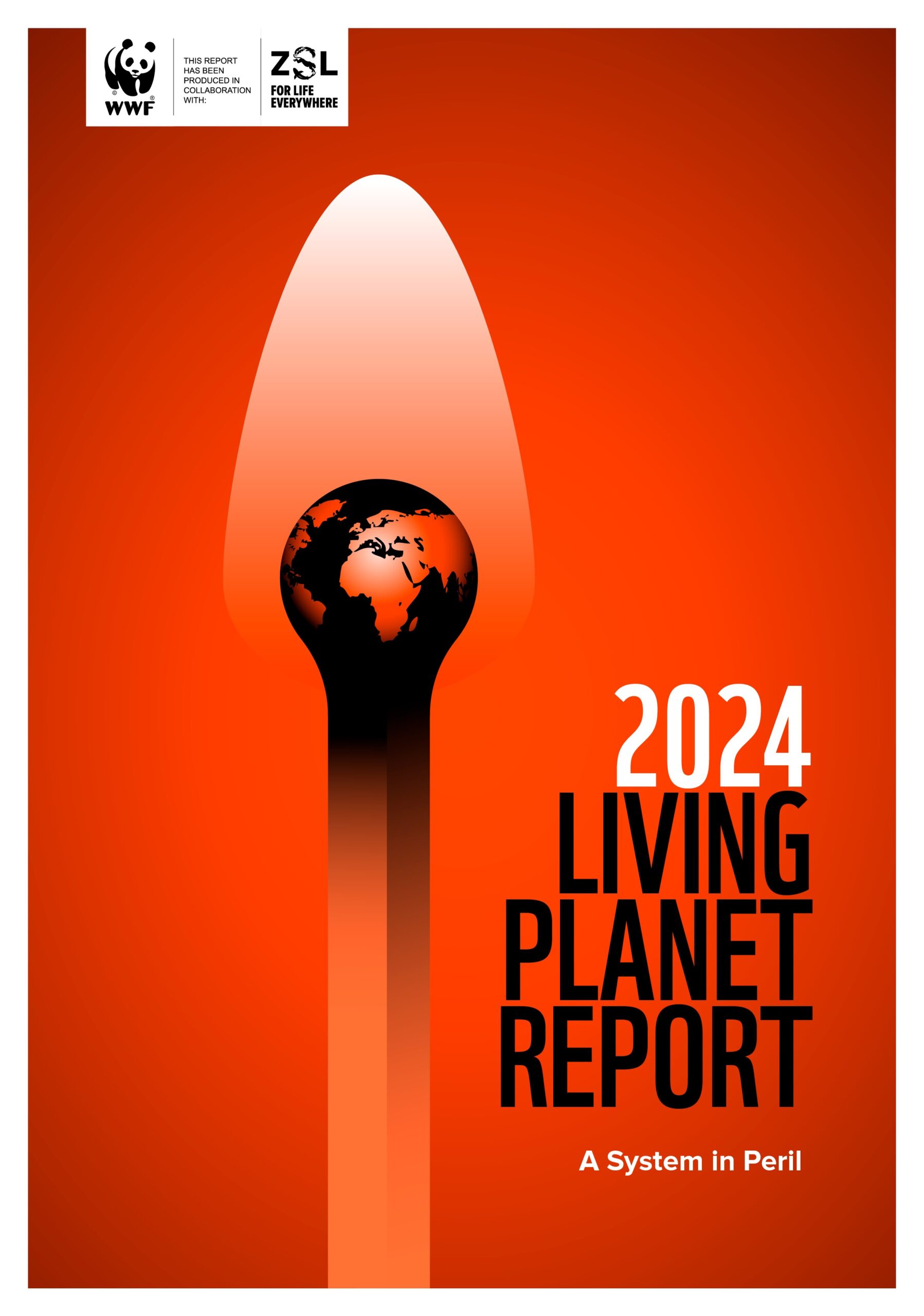
    Ready for more bad, but interesting news ? After the call for action from the UN, and the alarming Circularity Gap report, the WWF publish its updated bi-annual report: Living Planet.

    The 2024 WWF Living Planet Report reveals a dramatic 73% decline in wildlife populations over the last 50 years, emphasizing the idea of accumulated environmental stress, where each stressor—deforestation, climate change, and overexploitation—adds pressure to ecosystems. The concept of “tipping points” aligns closely with how these stressors lead to irreversible environmental collapse. Much like human burnout, the planet has been absorbing the impact of human activity for decades, but now several ecosystems are nearing their limits. And the systems shows cracks, we have had the hottest year to date and the most powerful storm ever is moving towards the United States….

    The Accumulation of Environmental Stress

    Over the past few decades, the Earth’s natural systems have faced increasing levels of stress from human activities. Habitat destruction, unsustainable resource use, pollution, and climate change have been building up, each contributing to a broader systemic strain. The consequences of these combined stressors are now visible in the rapid loss of biodiversity and the degradation of critical ecosystems. The WWF report highlights several key regions, such as Latin America, where wildlife populations have decreased by up to 94%, a clear signal of environmental systems struggling to cope.

    Key Tipping Points in the Natural World

    These accumulated stressors have pushed ecosystems to what scientists call tipping points—moments when the system can no longer absorb the pressure and begins to collapse, often irreversibly. The WWF report outlines several crucial tipping points, where the continuation of current trends will lead to significant, and potentially irreversible, changes:

    1. Amazon Rainforest Deforestation: Known as the “lungs of the Earth,” the Amazon is a critical carbon sink. However, ongoing deforestation for agriculture and resource extraction is driving the rainforest towards a tipping point. If deforestation continues, the Amazon could transform into a dry savannah, drastically reducing its capacity to store carbon and increasing global carbon emissions.
    2. Polar Ice Melt: The rapid melting of the polar ice caps is contributing to rising sea levels, disrupting marine ecosystems, and accelerating global warming by reducing the Earth’s reflective surface (albedo effect). Once this ice reaches a certain threshold, the loss will be self-perpetuating, driving further climate change.
    3. Coral Reef Bleaching: Coral reefs, which support vast marine biodiversity, are particularly sensitive to ocean temperature increases. The continued warming of the oceans has led to widespread coral bleaching, where reefs lose the algae that sustain them, causing mass die-offs. Once lost, coral reefs take decades to recover, if they recover at all.
    4. Freshwater Depletion: Freshwater ecosystems are under severe pressure from overuse and pollution. Many rivers, lakes, and wetlands are drying up or becoming heavily polluted. Once freshwater ecosystems collapse, they impact not only biodiversity but also human water security and agriculture.
    5. Permafrost Thawing: As global temperatures rise, permafrost in the Arctic is beginning to thaw, releasing vast amounts of stored carbon and methane. This contributes to further warming in a feedback loop that accelerates climate change.

    The Urgency of Addressing Accumulated Stress

    Each of these tipping points represents a system that has absorbed environmental stress for decades, but that is now showing signs of collapse. Much like a person who ignores the symptoms of burnout until it becomes unmanageable, these ecosystems have absorbed damage until they are on the brink of irreversible change. The idea of planetary boundaries helps frame this urgency. Planetary boundaries define the safe operating space for humanity, and crossing these thresholds leads to system collapse. The WWF report warns that we have already crossed several boundaries, particularly those related to biodiversity and climate change.

    Addressing the Crisis: Reducing Environmental Stressors

    To prevent further tipping points from being crossed, we need to significantly reduce the stress we place on natural systems. The WWF report stresses the need for immediate action to address the key drivers of biodiversity loss and environmental degradation. These actions include:

    1. Habitat Protection and Restoration: Ensuring that natural habitats are protected from further destruction is essential to preventing biodiversity loss. Reforestation and habitat restoration projects can also help ecosystems recover and increase resilience to future threats.
    2. Climate Action: Mitigating climate change by reducing greenhouse gas emissions, transitioning to renewable energy, and implementing adaptation strategies are crucial steps in reducing the pressure on ecosystems, particularly those most vulnerable to climate change.
    3. Sustainable Resource Use: Shifting towards sustainable consumption and production patterns can reduce the overexploitation of natural resources. This includes implementing circular economy principles that minimize waste and promote the reuse of materials.
    4. Global Cooperation: Solving the biodiversity crisis requires a coordinated global effort. Governments, businesses, and communities must work together to protect ecosystems, promote sustainable practices, and implement effective environmental policies.

    Hope for Recovery

    The environmental tipping points highlighted by the WWF report represent a dire warning, but they also provide an opportunity for action. Nature has a remarkable ability to regenerate when given the chance, and proactive conservation efforts can still reverse some of the damage. Projects like rewilding and the creation of protected areas have shown that ecosystems can recover, and wildlife populations can rebound if stressors are reduced.

    However, time is of the essence. Every delay in addressing these tipping points increases the risk of irreversible environmental collapse. Much like a person in burnout requires rest and recovery, our planet needs immediate relief from the pressures that have built up over decades of unsustainable practices.

    WWF report 2024 - an ad from wwf

    Let’s act before it’s too late

    The Earth is reaching a tipping point. The accumulated stress from deforestation, climate change, and overexploitation is pushing ecosystems beyond their limits, threatening biodiversity and the services that sustain human life. The WWF’s 2024 report is a stark reminder that we are at a critical juncture. If we do not take immediate action to reduce environmental stressors, we risk crossing irreversible tipping points, leading to catastrophic consequences for both nature and humanity.

    By addressing the root causes of biodiversity loss, implementing sustainable practices, and restoring damaged ecosystems, we can still prevent further tipping points from being crossed and give the planet—and ourselves—a chance to recover.

  • Key EU Sustainability Regulations 2024: their impacts on Procurement will be profound, are you ready ?

    Key EU Sustainability Regulations 2024: their impacts on Procurement will be profound, are you ready ?

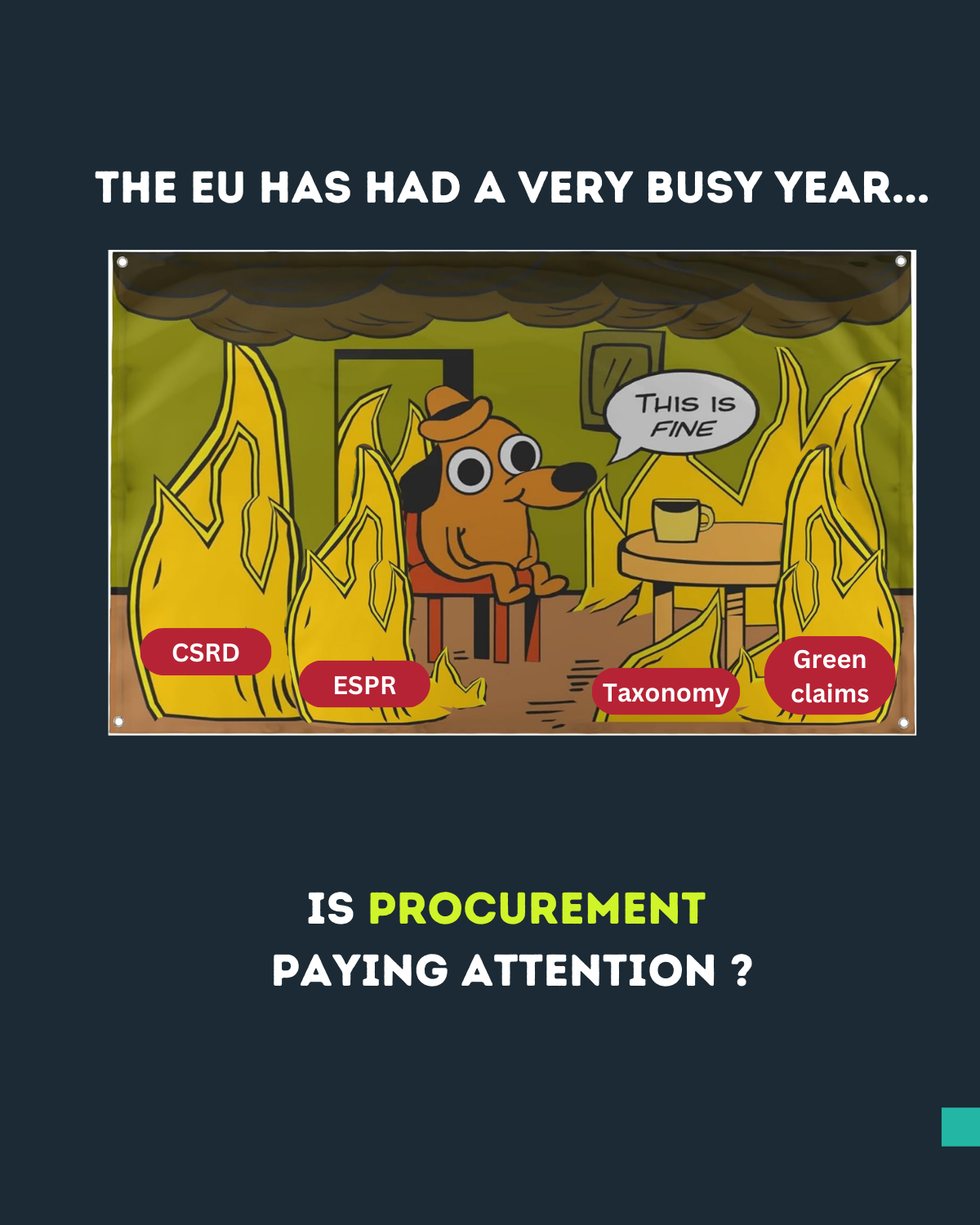
    The EU has had a busy year launching sustainability regulations. It has been advancing its goal to become the first climate-neutral continent by 2050, introducing multiple new regulations designed to increase corporate accountability, sustainability, and transparency.

    From stricter corporate reporting rules to mandatory due diligence in supply chains, and from eco-design standards to tighter controls on green claims, the EU’s focus has been clear: transparency, accountability, and sustainability. The summer’s developments are particularly significant, as they not only build upon existing frameworks but also introduce new measures that are set to redefine how businesses operate within and outside the EU.

    These regulations come at a critical time when environmental degradation and human rights issues are increasingly in the spotlight, and consumers are demanding more responsible behavior from businesses. With major legislation like the Corporate Sustainability Reporting Directive (CSRD) and the Corporate Sustainability Due Diligence Directive (CSDDD) now in full swing, companies will face new compliance pressures—but also opportunities to lead the way in ethical and sustainable business practices.

    Procurement teams are going to play a central role in ensuring these regulations are implemented effectively across supply chains. With fines as high as 5% of global revenue, compliance is essential and Businesses are going to rely heavily on procurement (and sustainability) teams to address these challenges.

    So let’s have a look at the key changes and how they are going to reshape procurement.


    1. Corporate Sustainability Reporting Directive (CSRD) 📝

    Summary:

    The Corporate Sustainability Reporting Directive (CSRD) expands the requirements for corporate sustainability reporting, building on the previous Non-Financial Reporting Directive (NFRD). It mandates companies to report detailed information on their environmental, social, and governance (ESG) performance, with a strong focus on double materiality: how sustainability affects the company and how the company impacts society and the environment.

    Procurement Impact:

    • Procurement teams will need to gather ESG data from suppliers to ensure the company meets its reporting obligations.
    • Align supplier practices with the company’s sustainability reporting requirements, requiring transparency and traceability in sourcing materials and services.
    • Procurement departments may be tasked with verifying the accuracy of supplier sustainability claims, ensuring they meet reporting standards under the European Sustainability Reporting Standards (ESRS).

    2. Corporate Sustainability Due Diligence Directive (CSDDD) 🔍

    Summary:

    The Corporate Sustainability Due Diligence Directive (CSDDD) obliges companies to identify, mitigate, and prevent adverse impacts on human rights and the environment throughout their supply chains. Companies will face legal consequences, including civil liability, if they fail to manage these risks.

    Procurement Impact:

    • Procurement teams will be responsible for assessing risks in the supply chain, particularly with high-risk suppliers operating in sectors like textiles, mining, or agriculture.
    • Supplier contracts and agreements will need to be reviewed or renegotiated to incorporate due diligence requirements, ensuring compliance with the directive.
    • Procurement professionals will need to establish stronger screening processes to identify and mitigate risks related to human rights abuses or environmental degradation in their supply chains.

    3. Eco-Design for Sustainable Products Regulation (ESPR) ♻️

    Summary:

    The Eco-Design for Sustainable Products Regulation (ESPR) mandates that products sold in the EU must be designed to be durable, repairable, and recyclable. This supports the EU’s transition to a circular economy by reducing waste and promoting product longevity.

    Procurement Impact:

    • Procurement must source products that meet eco-design criteria, ensuring suppliers provide goods that adhere to these new standards.
    • Collaboration with suppliers will be essential to promote circular economy practices, such as incorporating recycled materials and designing products for a longer lifecycle.
    • Procurement teams will need to actively seek out suppliers who can provide sustainable materials and demonstrate their products’ compliance with Digital Product Passports, which track a product’s lifecycle and sustainability credentials.

    4. Green Claims Verification 🏷️

    Summary:

    The Green Claims Verification regulation is designed to tackle greenwashing, ensuring that any environmental claims made by companies, such as “eco-friendly” or “carbon neutral,” are verified and substantiated by third-party auditors.

    Procurement Impact:

    • Procurement will be required to verify the environmental claims made by suppliers, ensuring they are backed by robust data to avoid reputational risks and legal penalties.
    • Stricter screening processes will need to be implemented when onboarding new suppliers, particularly those that market themselves as sustainable.
    • Procurement teams will play a key role in ensuring that the company’s entire supply chain adheres to validated environmental claims, reducing the risk of greenwashing.

    5. EU Sustainability Taxonomy 📊

    Summary:

    The EU Sustainability Taxonomy is a classification system that defines which economic activities are considered sustainable. It aims to direct investment toward projects that align with the EU’s environmental goals and prevent greenwashing.

    Procurement Impact:

    • Procurement teams will need to ensure that the company’s purchasing decisions align with the EU Taxonomyguidelines, particularly when selecting suppliers for projects that must qualify as sustainable.
    • Collaboration with suppliers will be necessary to ensure that procurement aligns with the Taxonomy’s criteriaon sectors like manufacturing, agriculture, and energy.
    • Procurement teams will also need to ensure suppliers’ compliance with sustainability standards, as these will increasingly influence financing and investment decisions.

    Conclusion: Procurement’s Central Role in Sustainability Compliance

    As the EU continues to enhance its sustainability regulations, procurement teams are at the forefront of ensuring compliance across supply chains. With regulations like CSRDCSDDDESPR, and Green Claims Verification, the responsibility of sourcing sustainable and compliant products and services falls largely on procurement. The ability to collect, verify, and report ESG data, manage due diligence processes, and engage in circular economy practices will be essential in meeting these regulatory requirements and avoiding significant fines.

    Reach out to me if you need support in this transition, either as support or training !

  • CSDDD :Understanding the EU Corporate Sustainability Due Diligence Directive and Its Impacts On Global Supply Chains 2024

    CSDDD :Understanding the EU Corporate Sustainability Due Diligence Directive and Its Impacts On Global Supply Chains 2024

    The EU’s Next Step Towards Sustainable Supply Chains

    As part of its broader goal to build a sustainable economy and fight climate change, the EU has taken an important step with the Corporate Sustainability Due Diligence Directive (CSDDD or CS3D). This legislation goes beyond encouraging voluntary practices by mandating that large companies across Europe and globally integrate human rights and environmental considerations into their supply chains. By doing so, the EU aims to make supply chains greener, more ethical, and more resilient in the face of climate change.

    And with penalties that can reach up to 5% of the global revenue, this is not something to be ignored !

    In this article, we will look at what the CSDDD is, what the obligations on business are going to be and how to navigate this with local law.

    You can access the text from the EU here   


    1. What is the CSDDD?

    The Corporate Sustainability Due Diligence Directive (CSDDD) is a legislative proposal introduced by the European Commission in February 2022. Its primary aim is to promote responsible business practices by requiring companies to identify, mitigate, and prevent human rights violations and environmental damage across their supply chains. The directive addresses the entire value chain, including suppliers and business partners both within and outside the EU.

    In addition to this, the Directive introduces a climate change mitigation plan, mandating that companies align their business models with the Paris Agreement’s goal of limiting global warming to 1.5°C and achieving climate neutrality by 2050.


    2. Who is Concerned?

    The CSDDD targets large corporations operating in the EU and globally, divided into two main categories:

    • Large EU Companies: Companies with more than 500 employees and a turnover exceeding €150 million.
    • High-Risk Sectors: Companies in sectors such as textilesagriculture, and mining with over 250 employeesand turnover exceeding €40 million.
    • Non-EU Companies: Non-EU companies with significant business operations in the EU and meeting the same thresholds as EU companies.

    These companies are expected to integrate sustainability due diligence into their operations and supply chains, ensuring compliance with the directive’s requirements.

    Despite covering around 6,000 EU companies and 900 non-EU companies, the directive indirectly affects a larger number of small and medium-sized enterprises (SMEs) through the supply chains of these large companies. This significantly extends the impact of the directive across the global economy.

    For context, while the role of SME is key in EU, the 42000 largest businesses account for 52% of the added value and 37% of the carbon emissions. Tackling this, while having repercussions over the remaining businesses is likely to have massive impacts.


    3. What is Expected from Businesses?

    Companies under the scope of the CSDDD are required to adhere to due diligence duties that ensure sustainability is embedded throughout their operations. These key requirements include

    1. Integrate Due Diligence into Policies and Risk Management Systems (Article 5):
      • Implement a policy to ensure risk-based human rights and environmental due diligence.
      • Integrate due diligence policies and processes across the company and within risk management systems.
    2. Identify and Assess Actual or Potential Adverse Impacts, and Prioritize Based on Severity (Article 6):
      • Map the company’s own operations and those of its upstream and downstream supply chain.
      • Conduct periodic in-depth assessments using relevant internal and external information sources.
      • Prioritize impacts based on severity and likelihood.
    3. Prevent and Mitigate Potential Adverse Impacts, and Bring Actual Impacts to an End or Minimize Their Extent (Articles 7 & 8):
      • Take appropriate measures to prevent and mitigate impacts and bring actual impacts to an end or minimize their extent.
      • Develop corrective action plans and seek contractual assurances from business partners.
      • Engage in multi-stakeholder initiatives, providing support to SMEs where applicable.
      • Conduct effective stakeholder engagement during the due diligence process.
    4. Establish and Maintain a Notification Mechanism and Complaints Procedure (Article 9):
      • Set up a company-level notification mechanism accessible to affected stakeholders and representatives.
      • Institute procedures to address complaints raised through the notification mechanism in a fair, transparent, and accessible manner.
      • Provide adequate information on the notification mechanism to employees and stakeholders.
    5. Monitor the Effectiveness of Due Diligence Policies and Measures (Article 10):
      • Carry out periodic assessments of the effectiveness of due diligence policies and the measures implemented to address potential and actual adverse impacts.
    6. Publicly Communicate on Due Diligence (Article 11):
      • For companies subject to the Corporate Sustainability Reporting Directive (CSRD), report due diligence through CSRD-compliant disclosures.
      • Other companies must issue an annual statement describing their due diligence efforts.
    7. Combatting Climate Change (Article 15):
      • Adopt and implement a climate transition plan in line with the Paris Agreement, with time-bound targets supported by decarbonization levers and resourcing strategies.

    4. Transition Plans for Climate Change Mitigation

    A critical requirement of the CSDDD is the development of climate change mitigation transition plans that align with the Paris Agreement. Companies must:

    • Set time-bound targets for 2030 and 2050 for reducing carbon emissions.
    • Detail the decarbonization levers they will employ, including specific actions and investments.
    • Provide an outline of the role of management in achieving these targets and quantify investments and funding dedicated to implementing the transition plan.

    Companies already complying with the EU Corporate Sustainability Reporting Directive (CSRD) will be considered compliant with this requirement under the CSDDD.

    Corporate Sustainability Due Diligence Directive CSDDD and CSRD

    5. How Does the CSDDD Interact with Other Laws?

    The CSDDD complements and interacts with several other EU and national laws, such as:

    • Germany’s Supply Chain Act (LkSG), which has similar due diligence requirements.
    • France’s “Loi de Vigilance”, which requires companies to implement vigilance plans to prevent human rights abuses and environmental damage in their global supply chains.
    • Other EU laws include the Conflict Minerals RegulationBatteries Regulation, and the forthcoming Forced Labor Regulation.

    The CSDDD ensures minimum harmonization across the EU, meaning that Member States can impose stricter requirements but cannot lower the level of protection. Companies must meet the highest standard when different regulations overlap.


    6. Why Does CSDDD Matter?

    The directive introduces legal accountability for businesses. Non-compliance can result in significant penalties, and companies may face civil liability if they cause or fail to prevent human rights violations or environmental harm.

    Beyond legal implications, adhering to the CSDDD also enhances brand reputation and investor confidence, as businesses can demonstrate their commitment to sustainability.

    Additionally, the CSDDD aligns with global trends. Countries such as Canada and South Korea are considering similar legislation, and the UN is negotiating a binding instrument on business and human rights. Thus, the directive not only prepares EU companies for future international regulations but positions them to be leaders in sustainable business practices.


    5. Why Was There a Need for the CSDDD?

    Previous voluntary frameworks, such as the UN Guiding Principles on Business and Human Rights and the OECD Guidelines for Multinational Enterprises, were insufficient in ensuring that companies comprehensively integrate sustainability across their supply chains. Research revealed that companies often focused only on their first-tier suppliers, leaving significant risks further down the value chain unaddressed.

    Moreover, inconsistencies in national laws created a fragmented legal landscape across the EU, which increased the administrative burden on companies and caused legal uncertainty. The CSDDD seeks to harmonize due diligenceacross the EU, making it easier for businesses to navigate the legal landscape and take meaningful actions to mitigate risks.


    6. When Will the Rules Start Applying?

    The CSDDD was published in the Official Journal of the European Union in July 2024, with full enforcement starting in 2027:

    • 2027: Applies to EU companies with over 5,000 employees and €1.5 billion turnover, and non-EU companies with similar EU operations.
    • 2028: Covers companies with 3,000 employees and €900 million turnover.
    • 2029: All other companies falling within the scope of the directive will be subject to the requirements.

    Companies that fail to comply with their obligations under the CSDDD are subject to:

    • A fine of up to 5% of their global turnover;
    • Compensation to victims for damages caused by non-compliance with due diligence obligations;
    • Public disclosure of the names of companies penalized and the sanctions imposed.

    7. How Does the CSDDD Affect SMEs?

    While SMEs (small and medium enterprises) are not directly under the scope of the CSDDD, they may still be indirectly affected. Larger companies may require their smaller business partners to align with due diligence requirements as part of their supply chain obligations. To protect SMEs, the directive includes provisions to support these businesses, ensuring they receive the necessary financial and non-financial assistance from larger companies. The directive also mandates the reporting company to inquire at the most likely level of abuse, ensuring the due diligence requirements aren’t just massively sent out.


    8. What Are the Key Human Rights and Environmental Impacts Covered?

    The CSDDD is based on internationally recognized human rights standards, as outlined in conventions referenced by the UN Guiding Principles. The environmental aspects cover a range of impacts, including pollution preventionbiodiversity preservation, and climate change mitigation, all derived from multilateral environmental agreements.


    Conclusion

    The CSDDD represents a pivotal moment in the EU’s push towards a sustainable economy. By ensuring that companies are held accountable for the human rights and environmental impacts across their entire supply chains, the directive aims to create a fairer and greener global economy. Companies complying with the CSDDD will not only mitigate legal risks but also position themselves as leaders in the sustainability transition, enhancing their resilience and competitiveness in a rapidly evolving global marketplace.

  • The EU Taxonomy: Classifying Sustainable Activities in Europe to Accelerate the Funding of the Transition to Net-Zero (2024)

    The EU Taxonomy: Classifying Sustainable Activities in Europe to Accelerate the Funding of the Transition to Net-Zero (2024)

    After the EU announced its ambitious €1 trillion investment as part of the European Green Deal, the challenge was determining which activities would drive the most sustainable outcomes. How to define where the money should go ?

    That’s when and why the Eu taxonomy came about. It may not be the most thrilling document to read, but it is a cornerstone in defining what counts as a truly sustainable economic activity. Its importance lies in offering clarity on where funds should go to effectively support the green transition. The Taxonomy provides a structured framework for this, ensuring that the enormous funding aligns with activities that genuinely contribute to climate and environmental goals, preventing greenwashing and encouraging responsible investments.

    The Eu taxonomy is one of the foundations of the EU approach to sustainability, and understanding the principles it lays out is key to u understand every subsequent regulations : CSRD, ESPR, EU green bonds etc…

    So in this article, I explain what makes, for the EU, a sustainable activity, and then look at some of the impacts it has had to date.

    Link to EU text here.

    1. What is the EU Taxonomy?

    Dates and Context

    The EU Taxonomy Regulation, introduced in July 2020, is part of the EU’s broader strategy to achieve climate neutrality by 2050 and meet the objectives of the European Green Deal. It is designed to steer investments towards projects that align with the EU’s sustainability goals, making it a key instrument in addressing climate change and promoting environmental resilience.

    Objective

    The EU Taxonomy’s main objective is to provide a standardized classification system that clearly defines which economic activities can be considered environmentally sustainable. This helps investorscompanies, and policymakers support projects that contribute significantly to environmental objectives, thus ensuring that capital flows toward the activities most critical for achieving a sustainable future.

    EU taxonomy, what it is and what it is not

    The Four Overarching Principles

    To qualify as environmentally sustainable under the EU Taxonomy, an economic activity must meet four overarching principles:

    1. Substantial Contribution to at least one Environmental Objectives
      • The activity must contribute substantially to at least one of the six environmental objectives. This means that the activity should play a significant role in advancing a specific sustainability goal, such as reducing emissions or promoting the circular economy. For example, a company installing energy-efficient technology in manufacturing can substantially contribute to climate change mitigation.
    2. Do No Significant Harm (DNSH) on any of the other five environmental objective
      • While contributing to one environmental goal, the activity must not significantly harm any of the other five environmental objectives. This principle ensures that progress in one area (e.g., reducing emissions) does not come at the expense of other areas (e.g., biodiversity or pollution control). For instance, while renewable energy projects may reduce carbon emissions, they could harm biodiversity if not planned responsibly as they require many rare earths.
    3. Compliance with Minimum Social Safeguards
      • The activity must comply with minimum social safeguards, such as adhering to international labor standards, human rights, and governance principles. This ensures that businesses pursuing environmental sustainability also respect human dignity, fair labor practices, and the rule of law, maintaining a balance between social and environmental impacts.
    4. Meeting Technical Screening Criteria (TSC)
      • Finally, the activity must meet the Technical Screening Criteria set by the Commission, which are specific benchmarks for each environmental objective. These criteria define what qualifies as a substantial contribution, ensuring that only the most impactful activities are recognized as sustainable.
    EU taxonomy - 4 principles
    The EU Taxonomy 4 overarching conditions

    In addition to environmentally sustainable activities, the EU Taxonomy also recognizes “transition” and “enabler”activities.

    • Transition activities are found in carbon-intensive sectors such as steelcement, and aviation. These industries are essential for the economy but must transition to greener technologies, reducing their emissions while continuing their operations.
    • Enabler activities refer to industries that support other sectors in decarbonizing. These include businesses providing renewable energy technologiesenergy storage solutions, and smart grid technologies, which facilitate the shift towards a low-carbon economy across sectors​

    The Six Environmental Objectives

    The EU Taxonomy focuses on six key environmental objectives. Each objective represents an area where economic activities must contribute to achieving sustainability:

    EU taxonomy - 6 objectives
    The EU Taxonomy Objectives
    1. Climate Change Mitigation
      • Activities that reduce or prevent greenhouse gas emissions fall under this objective. Examples include transitioning to renewable energy, improving energy efficiency, or enhancing carbon capture and storage technologies. This is essential for achieving the EU’s climate neutrality target by 2050.
    2. Climate Change Adaptation
      • This objective focuses on activities that improve resilience to the impacts of climate change, such as rising sea levels, extreme weather, or temperature fluctuations. Examples include upgrading infrastructure to withstand floods or implementing heat-resistant crops in agriculture. These activities help mitigate the risks posed by an increasingly volatile climate.
    3. Sustainable Use and Protection of Water and Marine Resources
      • Activities under this objective focus on responsible water management and the protection of marine ecosystems. This could include reducing water waste in industrial processes, preventing water pollution, or protecting marine biodiversity. Clean and sustainable water use is vital for both human health and ecosystem survival.
    4. Transition to a Circular Economy
      • This objective aims to shift away from the “take, make, waste” model and promote resource efficiency, waste reduction, and recycling. Activities that foster the reuse of materials, increase product lifespan, or improve waste management (such as recycling programs) contribute to the circular economy. The goal is to keep resources in circulation for as long as possible, minimizing waste and reducing the need for new materials.
    5. Pollution Prevention and Control
      • This objective addresses activities aimed at reducing or eliminating pollution, whether in the air, water, or soil. For example, introducing technologies that reduce industrial emissions or implementing more stringent waste treatment processes would fall under this category. The goal is to minimize harmful pollutants that can affect human health and natural ecosystems.
    6. Protection and Restoration of Biodiversity and Ecosystems
      • This objective focuses on preserving and restoring biodiversity, natural habitats, and ecosystems. Activities may include reforestation projects, wildlife conservation, and efforts to rehabilitate degraded ecosystems. The preservation of biodiversity is critical for maintaining the balance of life on Earth and ensuring that ecosystems continue to provide essential services like pollination, water purification, and carbon sequestration.

    The 4 delegated acts :

    The EU Taxonomy is built on four key Delegated Acts, which set the foundation for assessing the sustainability of economic activities. These acts are evaluated through Technical Screening Criteria (TSC), which determine what qualifies as environmentally sustainable:

    1. Climate Delegated Act (2021)

    • Scope: This Delegated Act focuses on climate change mitigation and climate change adaptation objectives. It defines the criteria for economic activities that contribute to reducing greenhouse gas emissions and those that help adapt to the impacts of climate change.
    • Key Sectors Covered: Renewable energy, energy efficiency, low-carbon transport, and climate-resilient infrastructure.
    • Status: The Act entered into force in January 2022, and companies began using these criteria for reporting as of 2023().

    2. Complementary Climate Delegated Act (2022)

    • Scope: This Act extends the Climate Delegated Act by including criteria for nuclear energy and natural gas as transitional activities under certain strict conditions. These energy sources are recognized as contributing to climate change mitigation by helping transition away from more harmful fossil fuels.
    • Key Sectors Covered: Nuclear energy, natural gas production, and energy distribution.
    • Status: Entered into force in January 2023.

    3. Environmental Delegated Act (2024)

    • Scope: This Delegated Act covers the remaining four environmental objectives:
      1. Sustainable use and protection of water and marine resources.
      2. Transition to a circular economy.
      3. Pollution prevention and control.
      4. Protection and restoration of biodiversity and ecosystems.
    • Key Sectors Covered: Water supply, waste management, construction, biodiversity conservation, and sustainable manufacturing processes.
    • Status: Finalized and published in November 2023, with implementation starting from January 2024

    4. Amendments to the Climate Delegated Act (2023)

    • Scope: This act amends the existing Climate Delegated Act to include additional economic activities and update the TSC for climate change mitigation and adaptation.
    • Key sectors: The amendments apply to sectors such as transport (including aviation and shipping)manufacturingwater supply, and disaster risk management.
    • Objective: The changes include more ambitious TSC for sustainable aviation fuels (SAFs), fleet renewal, and promoting more sustainable practices in the aviation and shipping industries. It also updates activities related to manufacturing and infrastructure to reflect advances in low-carbon technology

    Technical Screening Criteria (TSC)

    The Technical Screening Criteria (TSC) are essential components of the EU Taxonomy that define the standards and thresholds an economic activity must meet to qualify as environmentally sustainable. These criteria ensure that only activities that make a real, measurable contribution to environmental objectives are considered.

    The TSC are detailed and vary by sector, providing specific metrics for each of the six environmental objectives. For instance, in climate change mitigation, a power generation activity must emit less than 100g of CO2e per kilowatt-hour (kWh) to qualify. This threshold will become stricter over time, encouraging industries to adopt cleaner technologies.

    For circular economy activities, the TSC might specify a minimum percentage of recycled content in products or require that products are designed for repairability and recyclability. These criteria help promote the shift towards sustainable consumption and production.

    The TSC serve as a technical benchmark, ensuring that all qualifying activities are contributing to the EU’s sustainability goals in a meaningful way. This creates consistency and credibility in how sustainability is measured across different sectors.

    Reporting and Disclosure

    To ensure transparency, the EU Taxonomy requires businesses and financial institutions to report how their activities align with the taxonomy. This includes detailing which percentage of their operations and investments are environmentally sustainable according to the Taxonomy criteria.

    • Tools like the Taxonomy Compass and Taxonomy Calculator are available to help companies assess and measure their alignment with the EU Taxonomy framework. https://ec.europa.eu/sustainable-finance-taxonomy/home
    • However, implementation is currently limited to large companies and financial institutions, meaning smaller companies are not yet subject to the same stringent requirements. As the directive expands, more businesses will be expected to comply.

    2. For what impact and what’s Next for the EU Taxonomy?

    Concrete Improvements Enabled by the Taxonomy

    The EU Taxonomy has already started driving significant changes across various industries by setting clear standards for sustainability. Here are a few concrete examples of improvements made possible by the Taxonomy:

    • Increased Investment in Renewable Energy: Thanks to the climate change mitigation criteria, projects in renewable energy—such as wind, solar, and hydropower—are receiving increased investments. Investors now have a clear framework for identifying which energy projects will have the most significant positive impact on reducing emissions, leading to a surge in capital directed toward renewable energy infrastructure.
    • Shifting Industrial Practices in Heavy Manufacturing: Heavy industries, like steel and cement production, are notoriously difficult to decarbonize. The EU Taxonomy provides detailed guidelines for these sectors to adopt more sustainable production processes, such as using low-carbon technologies and carbon capture methods. This clarity has encouraged innovation and has begun to shift industrial practices toward more sustainable models.
    • Advancing the Circular Economy in Consumer Goods: The Taxonomy’s circular economy criteria are pushing manufacturers of consumer goods—particularly in electronics and textiles—to rethink product design. Companies are now investing in more durable, repairable, and recyclable products. For example, smartphone manufacturers are developing models with modular designs to extend product lifecycles and reduce electronic waste, directly responding to Taxonomy standards.
    • Preserving Water Resources in Agriculture: In agriculture, the Taxonomy’s emphasis on sustainable water use has led to innovations in irrigation and water management systems. Farmers are adopting technologies that reduce water waste and protect water quality, contributing to the preservation of critical water resources while ensuring long-term agricultural sustainability.

    A Global Impact

    The influence of the EU Taxonomy is not confined to Europe. As one of the most detailed frameworks for sustainable finance, it is setting the bar for global standards. Countries outside the EU are looking to the Taxonomy as a model for their own sustainability frameworks, particularly in regions like North America and Asia. This means that businesses operating globally will increasingly need to align with Taxonomy principles to maintain competitiveness in international markets.

    The EU Taxonomy is also playing a key role in the development of international sustainable finance frameworks, such as the work being done by the International Platform on Sustainable Finance (IPSF). This global collaboration seeks to harmonize sustainable finance standards, and the EU’s leadership through the Taxonomy is helping shape a more unified approach to sustainability reporting and investment worldwide.

    Driving Broader Regulatory Developments

    The EU Taxonomy doesn’t stand alone—it serves as the foundation for a growing suite of sustainability-related regulations in the EU and beyond. Its comprehensive classification system is increasingly being used to guide other major regulatory frameworks aimed at environmental and social sustainability. By defining what is considered environmentally sustainable, the Taxonomy provides a blueprint for many other legislative initiatives.

    Concrete examples of regulations influenced by the Taxonomy include:

    • Corporate Sustainability Reporting Directive (CSRD): The CSRD, which requires companies to disclose more detailed information on their sustainability efforts, directly references the EU Taxonomy. It compels businesses to report how their economic activities align with the six environmental objectives. Thanks to the Taxonomy’s clear classification, companies can now provide more transparent and comparable sustainability disclosures.
    • Ecodesign Sustainable Product regulation (ESPR): The ESPR will require companies to make products that are eco-designed, facilitate the circularity of products and make public procurement greener. All of this is done by aligning with the Eu taxonomy.
    • Sustainable Finance Disclosure Regulation (SFDR): The SFDR mandates financial market participants to disclose how they integrate sustainability risks in their decision-making processes. The EU Taxonomy is crucial in this, as it helps define which investments can be considered sustainable, giving investors the tools they need to make responsible choices.
    • Green Bond Standard: The upcoming EU Green Bond Standard relies heavily on the EU Taxonomy to define what qualifies as green projects. By using the Taxonomy’s criteria, issuers of green bonds can ensure that the proceeds are allocated to activities that contribute to the EU’s environmental objectives, thus enhancing the credibility of green finance.

    Phased Implementation and Expanding Scope

    The EU Taxonomy is being rolled out in stages to ensure comprehensive and effective integration across all sectors. The first set of criteria, covering climate change mitigation and climate change adaptation, is already in force. The criteria for the remaining four environmental objectives—water and marine resource management, circular economy, pollution prevention, and biodiversity protection—are being set up for the first time this year.

    But this is only the beginning. As new sectors and technologies emerge, the Taxonomy will be updated to include more activities, ensuring it remains relevant and future-proof. This dynamic nature makes the EU Taxonomy a living framework that evolves with global sustainability challenges and innovations.


    Conclusion

    The EU Taxonomy is a critical tool for directing capital towards projects that are genuinely sustainable. By providing a clear, standardized framework, it ensures that investments are aligned with the EU’s climate and environmental objectives. For businesses, aligning with the Taxonomy not only helps meet regulatory requirements but also attracts sustainable investment. For investors, it offers transparency and confidence that their capital is supporting a greener future.

    As the world moves toward sustainability, understanding and integrating the EU Taxonomy into business and investment strategies will be essential for creating a thriving, resilient, and sustainable economy.

  • Corporate Sustainability Reporting Directive (CSRD) : Everything you need to know about the EU framework for sustainability reporting.

    Corporate Sustainability Reporting Directive (CSRD) : Everything you need to know about the EU framework for sustainability reporting.

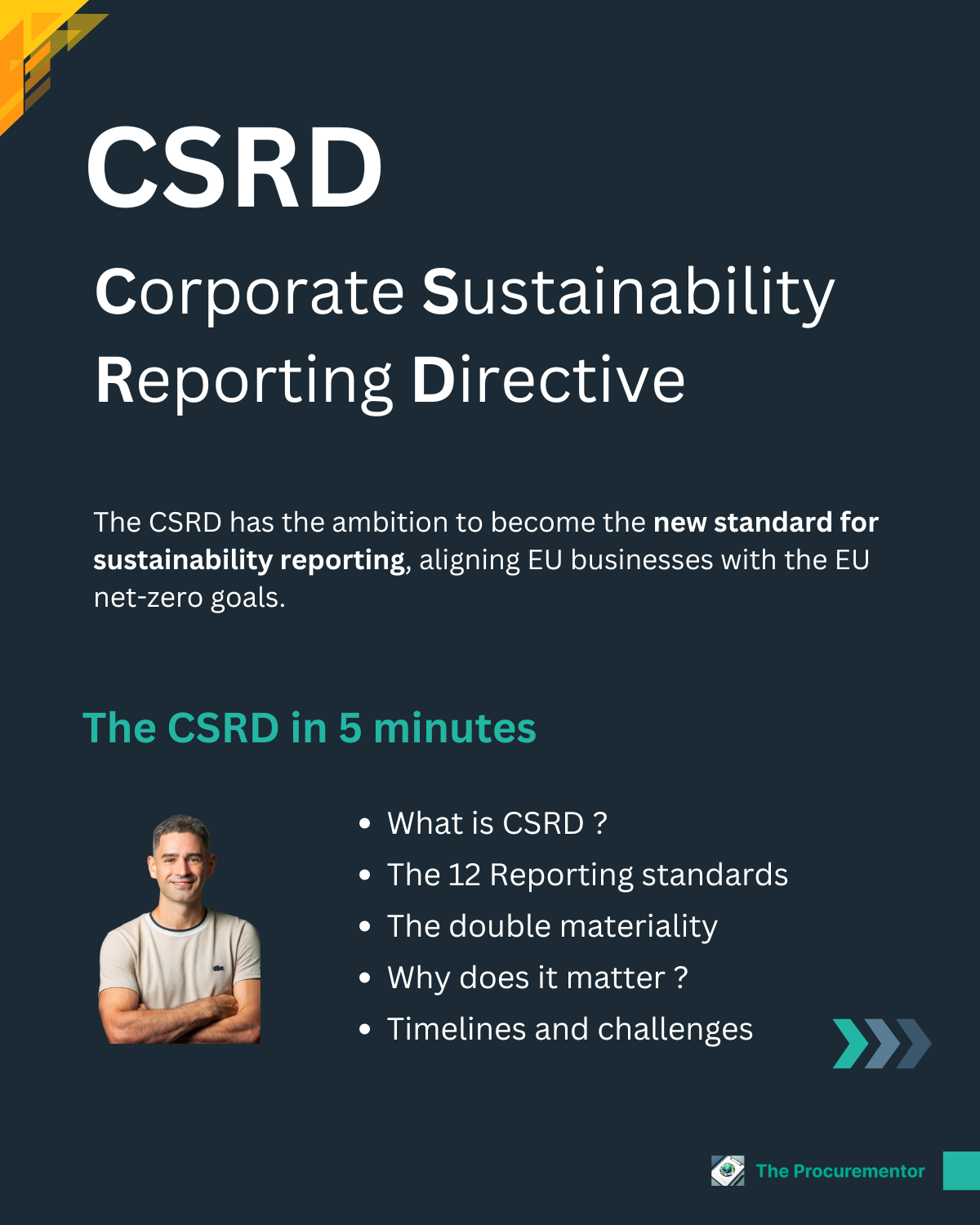
    The CSRD has the ambition to become the new standard for sustainability reporting, aligning EU businesses with the EU net-zero goals.

    CSRD: A Comprehensive Guide for Businesses

    The Corporate Sustainability Reporting Directive (CSRD) is a major new European Union (EU) regulation that significantly expands the scope and depth of sustainability reporting for companies operating within the EU. Implemented as part of the broader European Green Deal and climate-neutrality goals, the CSRD is designed to improve corporate transparency on environmental, social, and governance (ESG) issues. As sustainability becomes a top priority for investors, governments, and consumers, understanding the CSRD and how to comply is crucial for businesses.

    This article explores what the CSRD is, why it was created, how companies can comply, and its connections with other regulations. It also provides a dedicated section on the concept of double materiality—a core principle of the directive.

    Find the PDF summary here.
    Access the EU page related to CSRD here.


    What is the CSRD?

    The Corporate Sustainability Reporting Directive (CSRD), adopted in April 2021 by the European Commission, is designed to replace and enhance the existing Non-Financial Reporting Directive (NFRD). The CSRD mandates that companies report detailed information on how they manage social and environmental challenges. This directive covers a much broader range of companies than the NFRD, expanding both the scope and depth of required disclosures.

    Key Features of CSRD:

    • Broader Scope: The CSRD applies to all large companies (with over 250 employees, €40 million in turnover, or €20 million in assets) and listed SMEs (small and medium-sized enterprises) in the EU, increasing the number of companies required to report on sustainability.
    • Standardized Reporting: The directive introduces detailed sustainability reporting standards developed by the European Financial Reporting Advisory Group (EFRAG), ensuring consistency and comparability.
    • Third-Party Assurance: Companies will need to have their sustainability information independently verified by an accredited auditor, which adds credibility to their reports.
    • Digitalization: CSRD mandates that companies make sustainability data available in digital format, aligning with the EU’s goal of enhancing data transparency.

    Why Was the CSRD Introduced?

    The CSRD was introduced to address several gaps in sustainability reporting:

    • Lack of Consistency: Under the NFRD, companies had significant discretion in how they reported sustainability data, making it difficult for stakeholders to compare companies. The CSRD solves this by requiring standardized reporting.
    • Increasing ESG Concerns: Stakeholders, especially investors, are increasingly concerned with ESG factors and want detailed, reliable information. The CSRD was created to meet these growing demands for transparency.
    • Green Transition: The CSRD is a critical part of the European Green Deal, which aims to make the EU climate-neutral by 2050. By requiring companies to disclose their environmental impacts, the CSRD ensures that businesses contribute to the EU’s sustainability goals.

    Specific Aims of CSRD:

    • Strengthen Transparency: Enhance corporate transparency on ESG issues.
    • Improve Decision-Making: Help investors, consumers, and other stakeholders make informed decisions based on reliable ESG data.
    • Support the Green Transition: Align corporate strategies with the EU’s environmental objectives and global sustainability goals, such as the Paris Agreement.

    How to Comply with CSRD?

    Complying with the CSRD involves several steps, from understanding the reporting requirements to implementing internal processes and securing external audits. Here’s a guide to help companies comply with the CSRD:

    1. Determine Applicability:

    • Companies must first determine whether they fall under the CSRD’s scope. If your company has more than 250 employees, €40 million in turnover, or €20 million in assets, or is a listed SME, you are required to report from the first year. Otherwise :

    2. Understand the Reporting Requirements:

    • Familiarize yourself with the reporting standards that are set by EFRAG. These standards cover a broad range of sustainability topics, including environmental impacts, social issues, and governance practices.
    • The reporting is based on 12 ESRS :

    3. Establish a Reporting Process:

    • Companies must develop internal processes to collect and verify sustainability data. This involves collaboration across departments (e.g., finance, operations, human resources) to gather the required data.

    4. Perform a Double Materiality Assessment:

    • Double materiality is a key principle of the CSRD (explained in detail below). Businesses must assess their impact on the environment and society, as well as the financial risks they face from sustainability issues.

    5. Ensure Third-Party Assurance:

    • The CSRD requires that sustainability reports be audited by a third party. Companies must engage with accredited auditors to verify the accuracy of their sustainability data.

    6. Digital Reporting:

    • Prepare to submit your sustainability reports in a digital format as required by the European Single Electronic Format (ESEF). This aligns with the EU’s push for greater accessibility and transparency in sustainability data.

    Double Materiality: A Core Principle of CSRD

    One of the most significant changes introduced by the CSRD is the concept of double materiality. Unlike traditional financial reporting, which focuses solely on how external factors impact a company’s financial performance, double materiality requires companies to report on:

    1. Financial Materiality: How sustainability issues affect the company’s financial performance and long-term resilience. For example, how climate change might affect a company’s operations, or how environmental regulations might impact profitability.
    2. Impact Materiality: How the company’s activities impact the environment and society. This includes emissions, resource usage, and social practices like labor conditions.

    Why Double Materiality Matters:

    • Holistic Reporting: Double materiality provides a more comprehensive view of a company’s sustainability performance, helping stakeholders understand both financial risks and the company’s broader environmental and social impacts.
    • Forward-Thinking: By considering both financial and impact materiality, companies can anticipate future regulatory changes and align their strategies with long-term sustainability goals.

    Example of Double Materiality in Action:

    Example: Industrial Manufacturer (Steel & Semiconductor Chips)

    Impact Materiality:
    The company’s activities contribute to high carbon emissions from steel production and raise ethical concerns due to the environmental impact of mining rare earth metals for semiconductors. Waste generated from industrial processes can also harm local ecosystems.

    Financial Materiality:
    Rising costs from stricter emissions regulations on steel production could increase raw material expenses. Semiconductor shortages, driven by resource scarcity or supply chain disruptions, could delay production and raise prices. Both factors could hurt profitability. Additionally, not adopting sustainable practices may lead to fines or reduced investor confidence.


    Ties to Other Regulations

    The CSRD is closely linked with various EU and global regulations, ensuring that companies adopt a coherent approach to sustainability reporting. Key regulations that interact with the CSRD include:

    1. EU Taxonomy Regulation:

    • The EU Taxonomy provides a classification system that defines which economic activities can be considered environmentally sustainable. Companies reporting under the CSRD must disclose how their activities align with the EU Taxonomy.

    2. Sustainable Finance Disclosure Regulation (SFDR):

    • The SFDR requires asset managers and financial advisers to disclose how they integrate ESG factors into their investment strategies. The CSRD provides the necessary data for investors to comply with the SFDR.

    3. Carbon Border Adjustment Mechanism (CBAM):

    • The CBAM puts a price on carbon emissions associated with imported goods. Companies reporting under the CSRD must ensure that their supply chains are aligned with the EU’s carbon pricing mechanisms.

    4. Corporate sustainability due diligence CSDD:

    • The Corporate Sustainability Due Diligence Directive is a directive in European Union law to require due diligence for companies to prevent adverse human rights and environmental impacts in the company’s own operations and across their value chains and so intersect with the CSRD

    5. Paris Agreement – EU green deal:

    • The CSRD supports the EU’s commitment to the Paris Agreement by ensuring that businesses align with carbon reduction targets and other climate-related goals.

    6. Global Comparability:

    • Outside the EU, the CSRD aligns with global sustainability reporting standards such as those set by the Global Reporting Initiative (GRI) and the Sustainability Accounting Standards Board (SASB). This global harmonization allows multinational companies to streamline their reporting across different jurisdictions.

    Benefits of the CSRD

    The CSRD offers several advantages for businesses that comply, particularly in building long-term resilience and competitiveness. Key benefits include:

    • Enhanced Transparency: With standardized reporting, companies can provide clearer and more reliable sustainability data to stakeholders.
    • Investor Confidence: ESG investors rely on accurate sustainability data to make informed decisions. Compliance with the CSRD ensures that companies are more attractive to investors seeking sustainable opportunities.
    • Reputation and Brand Value: Companies that lead in sustainability reporting can strengthen their brand reputation, attracting customers and partners who prioritize sustainability.
    • Regulatory Compliance: As sustainability regulations tighten across the globe, the CSRD ensures that companies stay ahead of regulatory demands, avoiding penalties and legal risks.

    Challenges of Complying with CSRD

    Despite its benefits, the CSRD also presents challenges for businesses, particularly those that are new to sustainability reporting.

    • Complexity of Reporting: The CSRD requires detailed and extensive disclosures, which may require significant time and resources to gather.
    • Need for Cross-Department Collaboration: Compliance requires input from various departments, including finance, HR, operations, and sustainability teams.
    • Third-Party Assurance Costs: Engaging an external auditor to verify sustainability data can be costly, especially for SMEs.

    Conclusion

    The CSRD represents a fundamental shift in corporate reporting, demanding that companies integrate sustainability at the core of their business operations. While the directive poses challenges, it also provides an opportunity for companies to build resilience, secure investments, and align with the global shift toward sustainability. Understanding the principles of double materiality and preparing for compliance will help businesses navigate this new regulatory landscape successfully.

    By embracing sustainable procurement and reporting practices, companies can contribute to a greener, more equitable future while ensuring their own long-term profitability and compliance.

  • Sustainable Procurement does not mean less effective procurement ! 

    Sustainable Procurement does not mean less effective procurement ! 

    Sustainable procurement is getting noticed but is there still a stigma associated with it? Sustainable procurement is sometimes associated, like sustainable products, with higher costs, questionable quality and increased complexity.

    Some believe that sustainable procurement translates to higher costs as it focuses on other things. The reality is that sustainability and profitability are not mutually exclusive. In fact, sustainable procurement can drive significantly higher performance, cost savings and create value across the supply chain—especially when organizations take the lead in implementing these initiatives themselves.

    This article will explore how sustainable procurement can deliver cost savings, reduce waste, and improve long-term resilience, all while contributing to environmental and social objectives.

    What is Sustainable Procurement?

    Sustainable procurement, as defined by the UN is a process by which public authorities or private corporations seek to achieve the appropriate balance between financial, environmental and social considerations when procuring goods, services or works at all stages of the value-transformation cycle, while considering their costs through the entire life cycle. Such considerations pertain, for instance, to the respect of core labour and safety standards in the production process, and the energy efficiency performance and innovative characteristics of the purchased products.

    Sustainable procurement looks at creating value across all dimensions : People, Planet and Profits in what’s called the triple bottom line.

    The 3P

    And sustainability is only achieved by companies when all three dimensions are met. If sustainable procurement does not meet the profit part of Sustainability, it is called bearable but it is not sustainability.

    The sustainability intersections

    The goal of sustainable procurement teams :

    Sourcing events made by sustainable procurement teams aren’t calling for higher prices. Instead, sustainable procurement is about :

    • Decreasing total costs for their business, looking at the long-term total financial value, and reducing the total cost of ownership over the full lifecycle of the products or services.
    • Contributing to aligning their company to the changing business environment: reducing supply chain risks, preventing PR backlash, aligning and preparing for regulations, and securing investors.

    This extra dimension makes procurement even more strategic for the company’s success.

    Sustainable procurement does not lead to higher costs:

    Let’s look at the first aspect first and what levers does sustainable procurement have to reduce costs, while contributing to the planet and people.

    Key Drivers for Cost Savings in Sustainable Procurement

    The key change, evolution, of sustainable procurement versus traditional procurement is to look at the impact on the three P AND the lifecycle


    1. Life Cycle Costing

    One of the key tool of procurement is the Total cost of ownership, that will look at the wider picture of the product lifecycle analysis (LCA): raw material extraction, manufacturing, product use, disposal and include extra economic elements like carbon emissions, social impacts etc. Once the wider picture is defined, Procurement can help the business to optimise each aspects : How to decrease the cost of raw materials ? Use less materials and cheaper, more recyclable materials. How to reduce manufacturing costs ? Use less energy or chemical intensive processes, relocate production, reduce over-production or bad-quality wastes… etc. The potential for performance is huge.

    • Definition: A method that evaluates the total cost of ownership over the lifecycle, from acquisition through operation and maintenance to end-of-life disposal. This approach identifies hidden costs in maintenance, energy usage, and disposal.
    • Example: Patagonia uses recycled materials that initially cost more but deliver longer-term savings due to lower material acquisition costs over time and higher customer loyalty, improving the overall lifecycle cost.
    • But it can be much simpler: A local business can use durable, long-lasting office supplies (e.g., refillable ink cartridges or energy-efficient appliances) to reduce replacement and maintenance costs is already contributing a little !
    Circular economy & sustainable sourcing
    The opportunities of the circular economy

    2. Resource Efficiency

    Resource efficiency is another key levers of sustainable procurement, because the most sustainable and profitable thing you can do is to buy, use less (avoidance). The second best thing is to replace material that are not renewable or harmful but materials that are more environmentally friendly (substitution).

    • Definition: Optimizing the use of raw materials, energy, and water to minimize waste while maximizing output. This includes reducing excess resources used in production and procurement processes.
    • ExampleIKEA has successfully reduced costs by designing eco-friendly packaging. By optimizing packaging to reduce material usage, they can ship more products in fewer trips, reducing both resource consumption and logistics costs.
    • But it can be much simpler: A small company can implement resource efficiency by adopting bulk purchasing of materials that reduce packaging waste or optimizing energy use in the office (e.g., turning off unnecessary lights and equipment).

    3. Circular Economy

    Sustainable procurement can also look into the circular economy when purchasing new goods or benchmarking existing categories. Once LCAs have been made, circular economies opportunities can emerge to close the loop. Closing the loop brings a wealth of benefits : less need for raw, virgin material ending up costing less, increase customer loyalty through product as a service etc…

    • Definition: A production model that emphasizes reusing, repairing, and recycling products and materials to minimize waste and extend product lifecycles. It contrasts with the traditional “take-make-dispose” linear model.
    • ExampleGeneral Motors saves millions by reusing scrap materials in their production processes, reducing the need for new raw materials.
    • But it can be much simpler: : A local business can implement office supply reuse programs, such as recycling paper or repurposing old equipment, to reduce waste disposal and new material costs.

    4. Waste Reduction

    Waste is always paid one way or another: whether it is indirectly in the form of lost raw materials, products or time, or directly as a cost for waste management. So it makes financial and sustainable sens to minimise them. Here, procurement can apply the 5R framework from Waste management to handle this topic.

    • Definition: Identifying opportunities to reduce or eliminate waste in procurement and production processes. This can involve reducing excess inventory, cutting down on packaging waste, or implementing zero-waste initiatives.
    • ExampleUnilever achieved millions in savings through zero-waste procurement strategies by cutting down on packaging waste and increasing the use of reusable materials.
    • But it can be much simpler: A small company can implement recycling programs or encourage employees to bring reusable water bottles to reduce plastic waste.

    5. Energy Savings

    • Definition: Sourcing energy-efficient products and implementing renewable energy sources in the supply chain to reduce energy consumption and utility costs.
    • Example (Business Outcome)Walmart invested heavily in energy-efficient lighting and renewable energy sources, saving millions in operational costs while reducing their carbon footprint.
    • But it can be much simpler: A small business can install LED lighting and encourage energy-saving practices such as turning off lights and equipment when not in use.

    4. Supplier Collaboration

    • Definition: Working closely with suppliers to innovate and develop more sustainable products or processes, resulting in shared cost savings. This can include co-creating new sustainable materials or redesigning packaging to reduce waste.
    • ExampleKingfisher PLC partnered with suppliers to innovate and reduce the environmental impact of its products, leading to lower raw material costs and improved product sustainability.
    • But it can be much simpler: A small company can collaborate with its local suppliers to switch to eco-friendly packaging or reduce transportation costs by sourcing more locally-produced goods.

    6. Digital Procurement Tools

    • Definition: Utilizing AI, data analytics, and blockchain technology to optimize procurement, improve supply chain visibility, and reduce inefficiencies, ultimately cutting costs.
    • ExampleSiemens uses AI-driven procurement tools to analyze supplier data, identify cost-saving opportunities, and optimize sustainable sourcing decisions.
    • But it can be much simpler: Even without advanced AI, small companies can adopt basic procurement software or cloud-based platforms to better track supplier performance and reduce procurement lead times.

    7. Risk Mitigation

    • Definition: Sustainable procurement helps reduce the risks of supply chain disruptions, non-compliance with regulations, and reputational damage due to unethical practices. This reduction of risk results in cost savings from avoided disruptions and fines.
    • Example : Apple mitigates supply chain risks by carefully selecting suppliers that meet strict environmental and social criteria, reducing the risk of disruptions and non-compliance penalties.
    • But it can be much simpler: A small company can vet suppliers for compliance with local regulations and ethical labor standards to avoid fines and ensure continuous operations.

    8. Economies of Scale

    • Definition: Sustainable procurement allows companies to negotiate long-term contracts with sustainable suppliers, gaining better pricing through economies of scale as more sustainable materials and practices are adopted.
    • ExampleNestlé works with its suppliers to reduce the cost of sustainably sourced materials, creating long-term partnerships that benefit both parties economically.
    • But it can be much simpler: A small business can establish long-term agreements with local suppliers for sustainable products, gaining better pricing and ensuring consistent supply.

    Summary

    LeverDefinitionLeading exampleSimple example
    Resource EfficiencyOptimizing the use of resources like raw materials, energy, and water to reduce waste and costs.IKEA reduces packaging materials, saving on logistics costs.Bulk purchasing materials or turning off office equipment when not in use.
    Life Cycle CostingEvaluating the total cost of ownership from acquisition to end-of-life disposal.Patagonia uses recycled materials for long-term cost savings.Use durable office supplies like refillable ink cartridges.
    Waste ReductionReducing or eliminating waste in production and procurement processes.Unilever cuts packaging waste through zero-waste initiatives.Recycling programs for office supplies and encouraging reusable products.
    Energy SavingsUsing energy-efficient products and renewable energy to cut utility costs.Walmart reduces energy costs through energy-efficient lighting.Installing LED lighting and promoting energy-saving practices.
    Supplier CollaborationWorking closely with suppliers to innovate sustainable products and reduce costs.Kingfisher reduced raw material costs by partnering with suppliers for sustainable innovation.Collaborating with local suppliers to reduce packaging waste.
    Digital Procurement ToolsUsing AI and data analytics to optimize procurement and improve supply chain visibility.Siemens uses AI tools to optimize sustainable sourcing.Adopting basic procurement software to track performance.
    Digital Procurement ToolsUsing AI and data analytics to optimize procurement and improve supply chain visibility.Siemens uses AI tools to optimize sustainable sourcing.Adopting basic procurement software to track performance.
    Digital Procurement ToolsUsing AI and data analytics to optimize procurement and improve supply chain visibility.Siemens uses AI tools to optimize sustainable sourcing.Adopting basic procurement software to track performance.
    Risk MitigationReducing risks from non-compliance and supply chain disruptions.Apple selects suppliers that meet strict social and environmental criteria to reduce disruptions.Vet suppliers for compliance with local regulations to avoid fines.
    Economies of ScaleNegotiating long-term contracts with sustainable suppliers for better pricing.Nestlé partners with suppliers for lower-cost, sustainably sourced materials.Establishing long-term agreements with local suppliers.

    Beyond Cost: How Sustainable Procurement Helps Companies Thrive

    Sustainable procurement not only reduces costs but also improves a company’s overall efficiency and resilience, positioning it to thrive in an increasingly competitive and regulated landscape.

    Let’s explore some of the ways sustainable procurement strengthens a company beyond immediate cost benefits.


    1. Reducing Supply Chain Risks

    One of the critical aspects of sustainable procurement is its ability to reduce risks within the supply chain. By fostering closer relationships with suppliers through sustainable contracts and digital monitoring, companies can ensure compliance with environmental and social standards, reducing the chances of supply disruptions, unethical practices, or regulatory breaches.

    In addition to stricter, safer execution, sustainable procurement can help reduce risks by Re-shoring Activities.

    Bringing production closer to home reduces the risks of global supply chain disruptions, such as those witnessed during the COVID-19 pandemic. This strategy shortens the supply chain, reducing transportation emissions and dependency on distant suppliers, while mitigating geopolitical and economic risks.


    2. Preventing PR Backlash

    Sustainable procurement can help avoid costly public relations disasters. By implementing supplier audits and ensuring ethical practices, companies are less likely to be caught in scandals related to labor conditions, environmental negligence, or unsustainable practices.

    The Volkswagen diesel scandal (Dieselgate) is a well-known example of the repercussions of unsustainable practices. In 2015, Volkswagen admitted to installing software in diesel engines to cheat emissions tests. This resulted in significant fines, reputational damage, and a decline in customer trust. Avoiding such scandals through sustainable practices can protect businesses from similar backlashes.

    And to the opposite even, promoting circular economy and sustainability are excellent driver for growth, customer engagement and loyalty. And procurement has an increasingly important role to play.


    3. Aligning with and Preparing for Regulations

    The regulatory landscape around sustainability is changing rapidly. Sustainable procurement helps companies stay ahead of these changes, ensuring compliance with current and future regulations. Companies that take a proactive approach to aligning with sustainability regulations are better positioned to avoid fines, litigation, and other legal consequences.

    Some Key EU Regulations:

    • Corporate Sustainability Reporting Directive (CSRD): Requires large companies to disclose information on how they operate and manage social and environmental challenges, and makes carbon reporting mandatory !
    • Eco-design Sustainability Product Regulation (ESPR) : Sets strict requirements for product sustainability and circularity, requiring companies to incorporate eco-design reauirements within their products, publish digital passport products and obligations related to unsold goods destruction.
    • Carbon Border Adjustment Mechanism (CBAM): Puts a price on the carbon content of imports into the EU, ensuring that non-EU producers meet the same climate standards as those within the EU.
    • Green claim verificationCSDDD etc..!

    The regulation aspect becomes increasingly complex and demanding. Procurement teams must be equipped to address these regulations and ensure that their supply chains are compliant, driving forward sustainable strategies that align with these frameworks.


    4. Securing Investments and Access to Financing

    Despite some recent skepticism about ESG investments, sustainable companies remain highly attractive to investors. Financial institutions and investors are increasingly focusing on businesses that integrate sustainability into their core operations, as these companies are seen as less risky and more future-proof. There are even green activist investors that enter company’s capital only to force them into sustainability !

    • Statistics: According to a 2023 report by Morningstar, sustainable funds attracted €120 billion in net new investments, demonstrating the ongoing demand for ESG-focused businesses.
    • Benefit for Businesses: By integrating sustainable procurement practices, companies can attract more investment, secure financing from green funds, and appeal to impact-driven investors, ensuring better long-term financial health.

    By integrating sustainable procurement, companies not only drive cost efficiencies but also improve resilience, mitigate risks, and enhance their attractiveness to investors. Sustainable procurement is not just about compliance or ticking boxes—it’s about creating a thriving, future-ready business that is aligned with both profit and purpose.

    Conclusion

    Sustainable procurement is not only about meeting environmental and social goals, but it also delivers significant business advantages. Far from being a cost burden, sustainable procurement offers tangible benefits such as cost reduction through resource efficiency, waste minimization, lifecycle costing, and strategic supplier collaboration. Additionally, it increases resilience by reducing supply chain risks, mitigating the potential for PR disasters, ensuring compliance with complex regulations, and making businesses more attractive to investors by aligning with ESG goals. So a Win-win-win.

    Contact me if you want to discuss how I help your business achieve their goals !