In the ever-evolving landscape of business, sustainability has shifted from a peripheral concern to a central strategy for long-term success. Integral to this shift is the concept of the Triple Bottom Line (TBL) – a framework that expands the traditional reporting framework to include social and environmental, alongside financial performance. This article aims to elucidate the TBL concept and illustrate its application using a compelling example from the textile industry, as highlighted in the influential book “Cradle to Cradle” by William McDonough and Michael Braungart.
Understanding the Triple Bottom Line
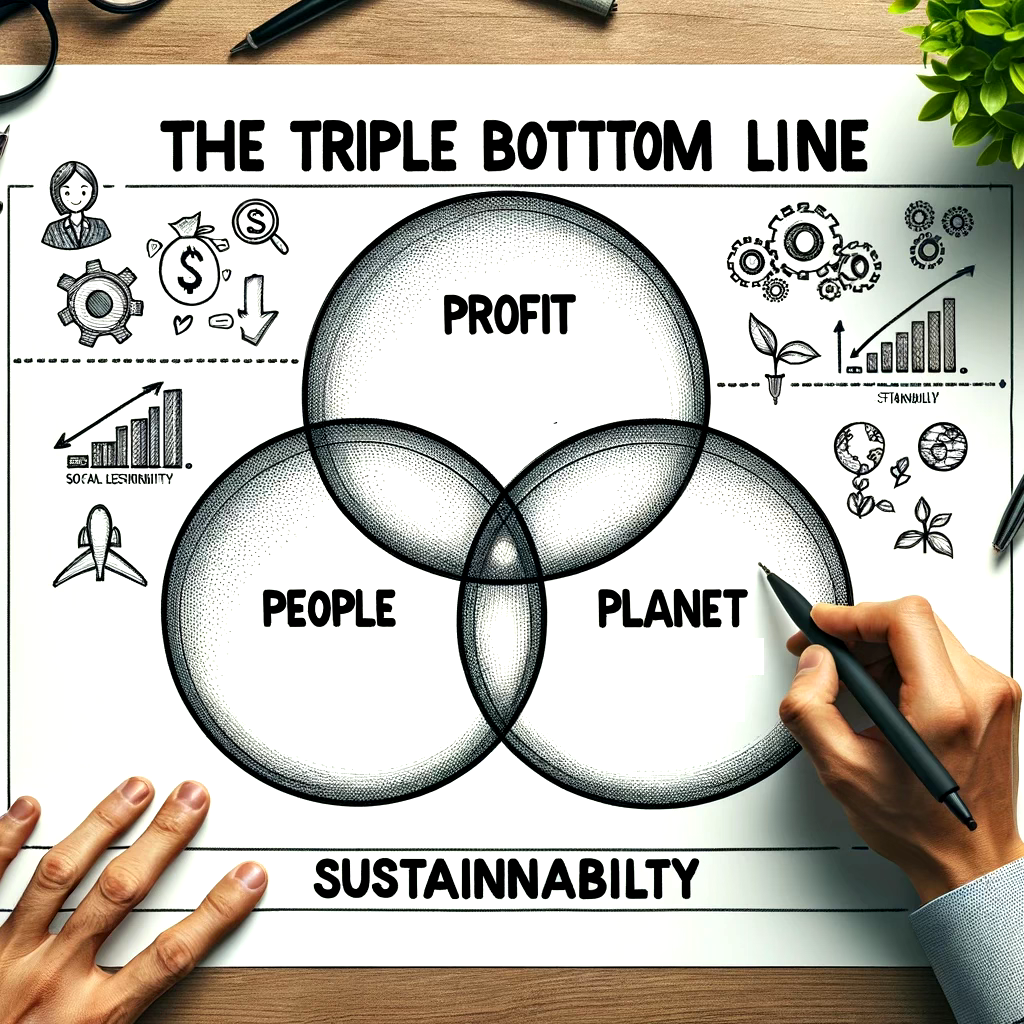
The Triple Bottom Line, conceptualized by John Elkington in 1994, revolutionized how businesses measure success. Traditionally, the singular focus was on profit – the financial bottom line. However, TBL introduces two additional ‘bottom lines’: social (People) and environmental (Planet) performance.
- Profit (Economic Sustainability): This dimension is about ensuring that a business is economically viable and profitable. But in the TBL framework, economic success goes beyond mere profit. It involves contributing to the economic health of the wider community, maintaining fair practices, and ensuring long-term financial stability.
- People (Social Sustainability): This aspect focuses on the social implications of business operations. It encompasses labor practices, community engagement, and the overall impact on society. Businesses are expected to operate ethically, respect human rights, and contribute positively to the communities they affect.
- Planet (Environmental Sustainability): This dimension involves the company’s environmental footprint. Sustainable practices, such as reducing waste, minimizing emissions, and using renewable resources, fall under this category. The goal is to minimize negative environmental impacts and contribute to the planet’s health.
At the junction of these three areas, sustainability emerges as a holistic approach that balances profit with people and the planet. It’s a dynamic equilibrium where each aspect supports and reinforces the others, creating a model of business that can endure and prosper over the long term while contributing positively to the world.
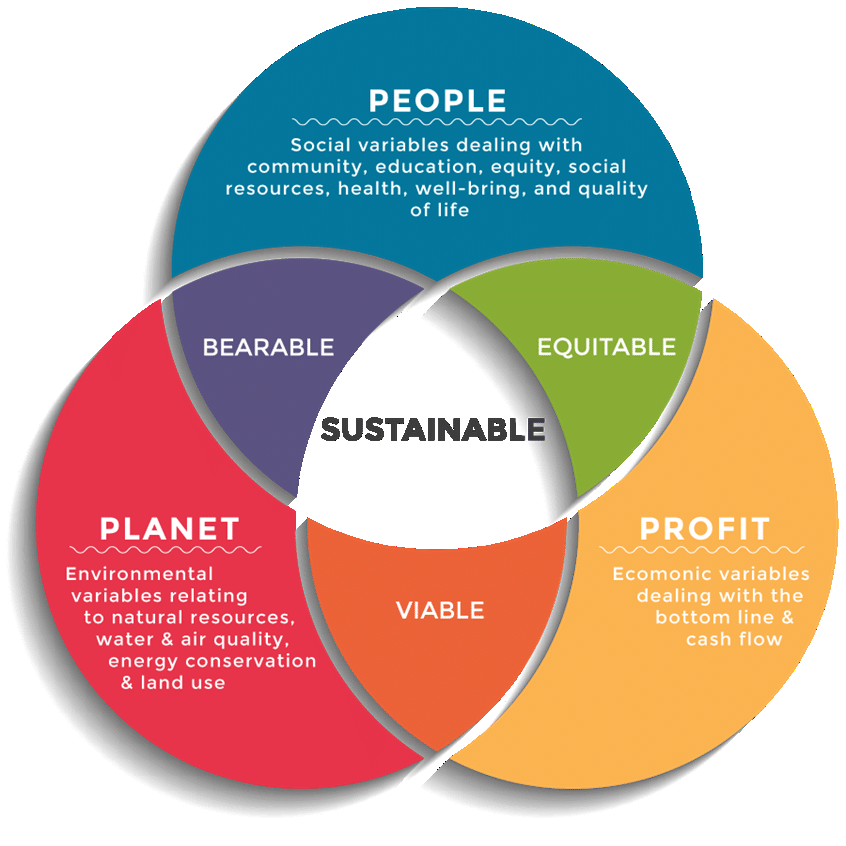
When the focus is only on two of the three components, the approach is not called sustainability but :
- Bearable: When it intersects the environmental and social aspects of the TBL. Sustainability is considered bearable when it does not compromise the planet’s health or the well-being of the people living on it. In other words, it’s about ensuring that environmental practices are not only ecologically sound but also socially acceptable and beneficial. For example, a company might focus on reducing emissions (good for the environment) in a way that also improves community health (good for people).
- Viable: When it intersects the economic and environmental pillars. A sustainable practice is viable when it is both environmentally friendly and economically feasible. This means finding solutions that not only reduce environmental impact but also make economic sense for the business. For instance, implementing energy-efficient technologies can reduce costs in the long run while also reducing the environmental footprint.
- Equitable, when it intersects the social and economic aspects. A practice is equitable when it fairly distributes economic benefits without compromising social equity. It’s about ensuring that economic activities contribute to social welfare and that all members of society have fair access to these benefits. For example, a business practice is equitable when it provides fair wages and safe working conditions, contributing to the economic stability of workers and their communities.
Sustainability is the intersection of the three pillars of the Triple Bottom Line (TBL) – economic viability, social responsibility, and environmental stewardship. Any approach that aims at less than that is therefore NOT sustainability. At its best, sustainability is a dynamic equilibrium where each aspect supports and reinforces the others, creating a model of business that can endure and prosper over the long term while contributing positively to the world.
APPLYING THE TBL : The Textile Dye Example from “Cradle to Cradle”
An excellent illustration of the TBL in action is found in “Cradle to Cradle,” specifically regarding the textile dyeing process. The traditional dyeing process in the textile industry is notorious for its environmental and social impacts. It often involves toxic chemicals that pollute water sources, harm aquatic life, and pose health risks to workers and nearby communities.
The authors of “Cradle to Cradle,” however, present an innovative approach where they want to break from the linear model of Take, Make, Dispose for textiles. They describe a new dyeing technique that not only eliminates the use of harmful chemicals but also turns the whole process into a positive one, where the production of a sweater is not harming people or the planet and where you could even eat your sweater at the end of its lifecycle. This method uses safe, non-toxic dyes and a closed-loop system that recycles water and materials, significantly reducing environmental harm and many other benefits to all stakeholders.

Applying TBL to the Textile Dye Example
In this case, the TBL approach leads to a holistic transformation of the dyeing process, where the author tried to eliminate any chemical dye and ended up selected only a few organic and harmless products, with impressive results for each of the stakeholders :
- Profit: Economically, the new dyeing method proves beneficial. It cuts costs on waste management and environmental compliance by an estimated 50%, while also reducing raw material usage. This efficiency leads to an approximate 20% reduction in overall production costs. Furthermore, market research indicates a growing consumer preference for sustainably produced textiles, opening new market opportunities.
- People: The health and safety impact on workers is markedly improved, with a reduction in toxic exposure leading to a reported 40% decrease in health-related complaints and absenteeism. It even led to high employee retention as the work environment no longer felt like a lab, but a safe place to work in. In local communities, improved water quality has led to a 30% decrease in waterborne diseases, highlighting the method’s profound social impact.
- Planet: Environmentally, the closed-loop water system and reduced chemical usage have led to a 70% decrease in water pollution and a 60% reduction in carbon emissions. These improvements showcase the method’s alignment with environmental sustainability goals.
The textile dye example is a microcosm of the broader implications of the TBL. It demonstrates how innovative thinking and sustainability can create a harmonious balance between profitability, social responsibility, and environmental stewardship. Businesses adopting the TBL framework can lead to transformative changes, paving the way for a more sustainable future.
Conclusion
The Triple Bottom Line is more than a concept; it’s a roadmap for businesses to contribute positively to the world. By balancing economic viability with social and environmental responsibilities, companies can achieve long-term sustainability and set new standards in their industries. The textile dye example from “Cradle to Cradle” is a testament to the power of sustainable innovation, embodying the essence of TBL. As businesses continue to navigate the complexities of the 21st century, the TBL offers a guiding light towards a more sustainable and equitable world for all.
In the next articles, we will deep-dive into the circular economy, which is really at the heart of this foundational book “cradle to cradle”