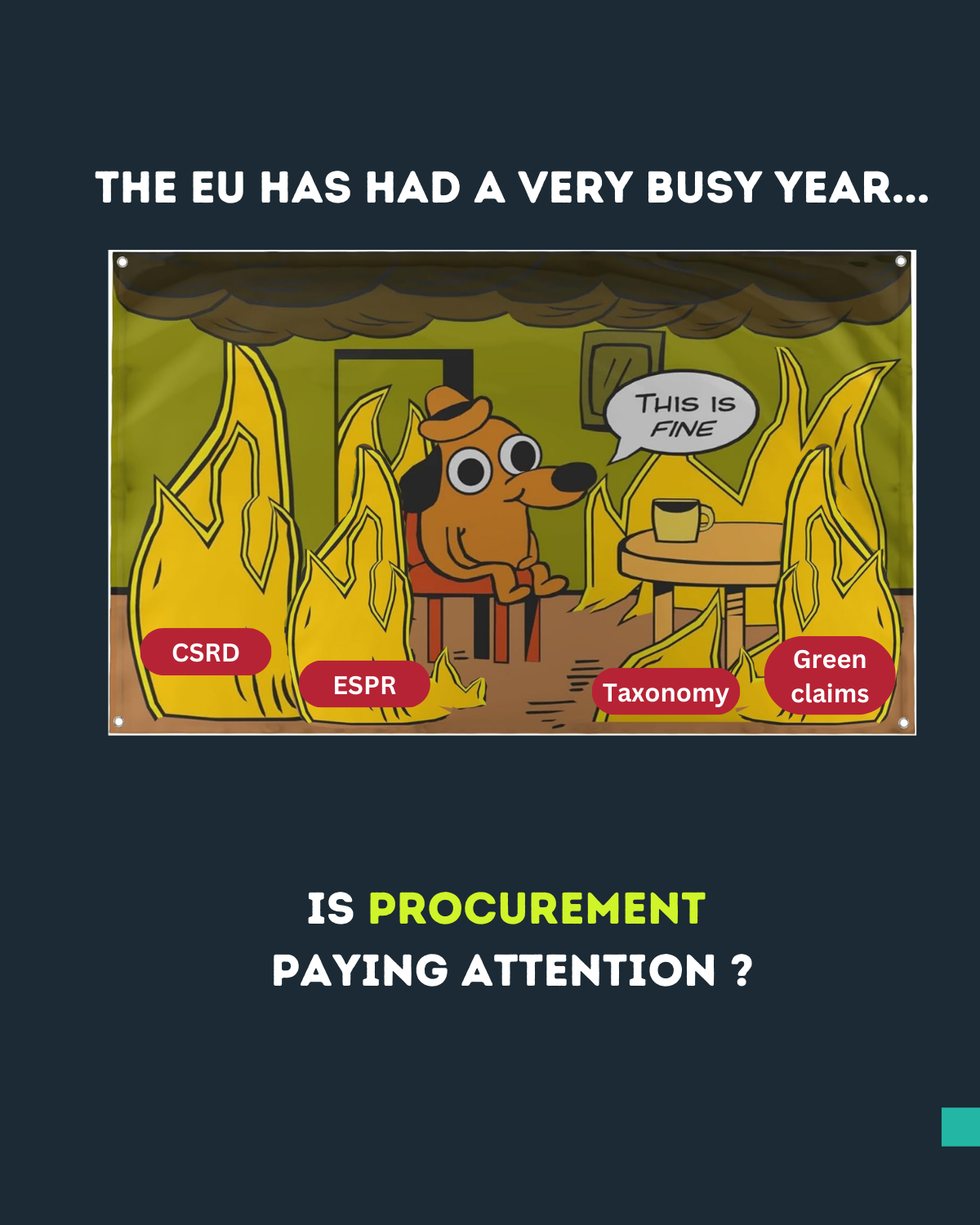
The EU has had a busy year launching sustainability regulations. It has been advancing its goal to become the first climate-neutral continent by 2050, introducing multiple new regulations designed to increase corporate accountability, sustainability, and transparency.
From stricter corporate reporting rules to mandatory due diligence in supply chains, and from eco-design standards to tighter controls on green claims, the EU’s focus has been clear: transparency, accountability, and sustainability. The summer’s developments are particularly significant, as they not only build upon existing frameworks but also introduce new measures that are set to redefine how businesses operate within and outside the EU.
These regulations come at a critical time when environmental degradation and human rights issues are increasingly in the spotlight, and consumers are demanding more responsible behavior from businesses. With major legislation like the Corporate Sustainability Reporting Directive (CSRD) and the Corporate Sustainability Due Diligence Directive (CSDDD) now in full swing, companies will face new compliance pressures—but also opportunities to lead the way in ethical and sustainable business practices.
Procurement teams are going to play a central role in ensuring these regulations are implemented effectively across supply chains. With fines as high as 5% of global revenue, compliance is essential and Businesses are going to rely heavily on procurement (and sustainability) teams to address these challenges.
So let’s have a look at the key changes and how they are going to reshape procurement.
1. Corporate Sustainability Reporting Directive (CSRD) 📝
Summary:
The Corporate Sustainability Reporting Directive (CSRD) expands the requirements for corporate sustainability reporting, building on the previous Non-Financial Reporting Directive (NFRD). It mandates companies to report detailed information on their environmental, social, and governance (ESG) performance, with a strong focus on double materiality: how sustainability affects the company and how the company impacts society and the environment.
Procurement Impact:
- Procurement teams will need to gather ESG data from suppliers to ensure the company meets its reporting obligations.
- Align supplier practices with the company’s sustainability reporting requirements, requiring transparency and traceability in sourcing materials and services.
- Procurement departments may be tasked with verifying the accuracy of supplier sustainability claims, ensuring they meet reporting standards under the European Sustainability Reporting Standards (ESRS).
2. Corporate Sustainability Due Diligence Directive (CSDDD) 🔍
Summary:
The Corporate Sustainability Due Diligence Directive (CSDDD) obliges companies to identify, mitigate, and prevent adverse impacts on human rights and the environment throughout their supply chains. Companies will face legal consequences, including civil liability, if they fail to manage these risks.
Procurement Impact:
- Procurement teams will be responsible for assessing risks in the supply chain, particularly with high-risk suppliers operating in sectors like textiles, mining, or agriculture.
- Supplier contracts and agreements will need to be reviewed or renegotiated to incorporate due diligence requirements, ensuring compliance with the directive.
- Procurement professionals will need to establish stronger screening processes to identify and mitigate risks related to human rights abuses or environmental degradation in their supply chains.
3. Eco-Design for Sustainable Products Regulation (ESPR) ♻️
Summary:
The Eco-Design for Sustainable Products Regulation (ESPR) mandates that products sold in the EU must be designed to be durable, repairable, and recyclable. This supports the EU’s transition to a circular economy by reducing waste and promoting product longevity.
Procurement Impact:
- Procurement must source products that meet eco-design criteria, ensuring suppliers provide goods that adhere to these new standards.
- Collaboration with suppliers will be essential to promote circular economy practices, such as incorporating recycled materials and designing products for a longer lifecycle.
- Procurement teams will need to actively seek out suppliers who can provide sustainable materials and demonstrate their products’ compliance with Digital Product Passports, which track a product’s lifecycle and sustainability credentials.
4. Green Claims Verification 🏷️
Summary:
The Green Claims Verification regulation is designed to tackle greenwashing, ensuring that any environmental claims made by companies, such as “eco-friendly” or “carbon neutral,” are verified and substantiated by third-party auditors.
Procurement Impact:
- Procurement will be required to verify the environmental claims made by suppliers, ensuring they are backed by robust data to avoid reputational risks and legal penalties.
- Stricter screening processes will need to be implemented when onboarding new suppliers, particularly those that market themselves as sustainable.
- Procurement teams will play a key role in ensuring that the company’s entire supply chain adheres to validated environmental claims, reducing the risk of greenwashing.
5. EU Sustainability Taxonomy 📊
Summary:
The EU Sustainability Taxonomy is a classification system that defines which economic activities are considered sustainable. It aims to direct investment toward projects that align with the EU’s environmental goals and prevent greenwashing.
Procurement Impact:
- Procurement teams will need to ensure that the company’s purchasing decisions align with the EU Taxonomyguidelines, particularly when selecting suppliers for projects that must qualify as sustainable.
- Collaboration with suppliers will be necessary to ensure that procurement aligns with the Taxonomy’s criteriaon sectors like manufacturing, agriculture, and energy.
- Procurement teams will also need to ensure suppliers’ compliance with sustainability standards, as these will increasingly influence financing and investment decisions.
Conclusion: Procurement’s Central Role in Sustainability Compliance
As the EU continues to enhance its sustainability regulations, procurement teams are at the forefront of ensuring compliance across supply chains. With regulations like CSRD, CSDDD, ESPR, and Green Claims Verification, the responsibility of sourcing sustainable and compliant products and services falls largely on procurement. The ability to collect, verify, and report ESG data, manage due diligence processes, and engage in circular economy practices will be essential in meeting these regulatory requirements and avoiding significant fines.
Reach out to me if you need support in this transition, either as support or training !